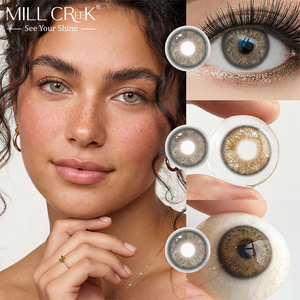
 HEMA 40%
Immediate Wholesale & Custom OEM/ODM Solutions
High-Performance Contact Lenses & Medical-Grade Packaging
Explore our certified catalog comprising high-oxygen cosmetic color lenses, daily/yearly hydrogel matrices, precision cases, and eco-friendly packaging designed to meet international pharmacy and optical retail standards.
HEMA 40%
 CE Compliant
 Eco Recyclable
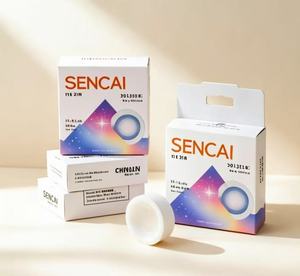
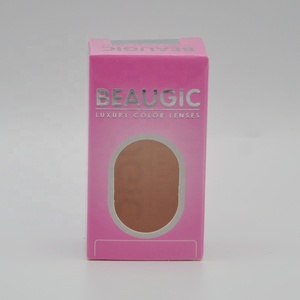 Private Label
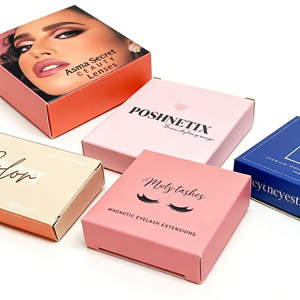 Rigid Box
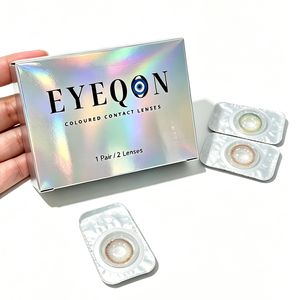 Foldable Design
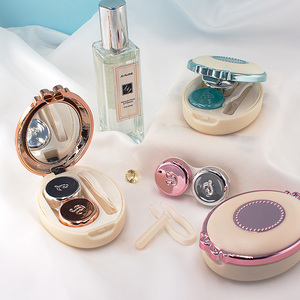 Medical ABS
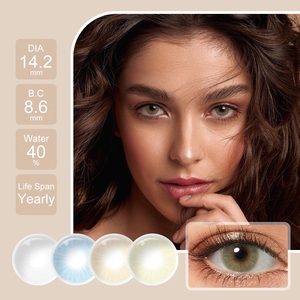 Global Best
Technical Whitepaper & Regulatory Standard
Navigating CE Certification Under EU MDR (2017/745): What Global Importers Must Audit
The global ophthalmic industry has entered a rigorous era of regulatory scrutiny. For international optical chains, healthcare brands, and cross-border distributors, procuring contact lenses requires deep technical vigilance that transcends surface aesthetic appeal. In the European Union, the transition from the legacy Medical Device Directive (MDD 93/42/EEC) to the stringent Medical Device Regulation (EU MDR 2017/745) has reclassified all contact lenses—including zero-power plano cosmetic lenses—into tightly supervised medical categories. In regulatory terms, cosmetic contact lenses fall strictly under Annex XVI of the MDR, requiring identical clinical evaluation, biological risk assessment, and Notified Body surveillance as corrective refractive lenses.
As a seasoned CE certified contact lens manufacturing company and global exporter, our cleanroom infrastructure, chemical formulation, and quality management systems operate under direct audit against EN ISO 13485:2016. To secure genuine CE certification under EU MDR, our engineering and regulatory affairs departments maintain comprehensive Technical Files and Design Dossiers demonstrating compliance with General Safety and Performance Requirements (GSPR). We provide our B2B clients with fully verifiable Declaration of Conformity (DoC), valid Notified Body certificates, Clinical Evaluation Reports (CER), and biocompatibility cytotoxicity validations conforming to ISO 10993 biological evaluation series.
Key Audit Point for B2B Importers: Under EU MDR 2017/745, importing companies share legal liability for placing compliant medical devices on the market. Always verify your manufacturer's 4-digit Notified Body identification number, check their Single Registration Number (SRN) on the EUDAMED database, and demand documented proof of biological safety including ocular irritation testing (ISO 10993-10) and systemic toxicity testing (ISO 10993-11).
ISO 13485
Certified Facility
Class 100K
Cleanroom Standard
MDR Annex XVI
Full CE Compliance
100% AVI
Automated Visual QA
Beyond regulatory documentation, the mechanical and ocular safety of contact lenses rests upon polymer physics and manufacturing reproducibility. Contact lenses manufactured via automated cast-molding guarantee micron-level edge uniformity, superior base curve consistency, and optimized tear exchange dynamics. In the colored contact lens category, dye safety is paramount. Our proprietary Semi-Embedded Sandwich Encapsulation Technology locks non-toxic, non-leachable bio-pigments safely between two micro-thin layers of poly-HEMA hydrogel, ensuring that colorants never touch the corneal epithelium or palpebral conjunctiva directly, completely mitigating risks of corneal abrasions, toxic keratopathy, and giant papillary conjunctivitis.
Enterprise Operational Strengths
Why Tier-1 Global Distributors Partner With Our Shenzhen Facility
Combining world-class high-precision automated manufacturing lines with rapid-response supply chains, Shenzhen Lensesgoo Co., Ltd provides an end-to-end framework from concept prototyping to international regulatory customs clearance.
Full Regulatory Dossier Support
We provide full technical documentation dossiers for worldwide health authorities: CE MDR for Europe, PMDA Class III documentation for Japanese Marketing Authorization Holders (MAH), FDA 510(k) master files, and Latin American COFEPRIS/ANVISA regulatory packages.
Proprietary Cast-Molding & Sandwich Tech
Equipped with sub-micron CNC mold-making machinery and fully enclosed pneumatic polymer injection systems, our automated cast-molding lines eliminate human contamination and guarantee identical center thickness, spherical aberration control, and smooth rounded edge profiles.
Agile Turnaround & Flexible Scale
We bridge the gap between lean startups and major pharmacy chains. Ready catalog inventory dispatches within 7 days with low MOQ, while customized bespoke private-label orders achieve complete production, blister sealing, and boxing within ~20 days.
Comprehensive Product Diversification
Our expansive production capabilities span standard 14.0mm–14.5mm natural cosmetic lenses, clear vision correction contact lenses, 17.0mm mini sclera designs, 22.0mm full sclera costume FX contacts, and CE-compliant isotonic multipurpose contact lens care solutions.
Custom Graphic ODM & Color Science
Our in-house design lab analyzes seasonal beauty trends in Tokyo, Seoul, Paris, and Los Angeles. We engineer custom micro-dot printing matrices, realistic limbal transitions, and multilayered pigment architectures that merge seamlessly over both dark and light natural irises.
End-to-End Packaging & Sterilization
From medical-grade foil-sealed PP blister packs and glass vials to customized folding boxes with UV CMYK printing, anti-counterfeit holographic stamping, and validated steam autoclave sterilization cycles (SAL 10⁻⁶), your brand arrives ready for retail shelves.
Engineering Matrix
Comprehensive Technical Specifications by Lens Classification
A reference guide for clinical buyers, retail procurement officers, and private label brand managers specifying optical geometries and chemical formulations.
| Classification Line | Base Curve (BC) | Diameter (DIA) | Water Content | Material Formulation | Sterilization & Shelf-Life |
|---|---|---|---|---|---|
| Natural Cosmetic Series | 8.50 mm – 8.60 mm | 14.0 mm – 14.5 mm | 38% – 42% | Poly-HEMA (Sandwich Encapsulation) | Steam Autoclave / 5 Years |
| Silicone Hydrogel (SiHy) | 8.40 mm – 8.70 mm | 14.2 mm | 45% – 55% | Silicone Hydrogel (Dk/t > 100) | Steam Autoclave / 3–5 Years |
| Clear Prescription (Rx) | 8.60 mm | 14.0 mm – 14.2 mm | 38% – 58% | HEMA / GMA Copolymer | Steam Autoclave / 5 Years |
| Mini Sclera FX (Cosplay) | 8.60 mm – 9.00 mm | 17.0 mm | 38% – 40% | Poly-HEMA (Theatrical Grade) | Steam Autoclave / 5 Years |
| Full Sclera FX (SFX Makeup) | Flat / Custom Curve | 22.0 mm | 38% | Poly-HEMA (Professional SFX) | Steam Autoclave / 3 Years |
Market Intelligence & Forecasting
Future Procurement Trends: Where the Contact Lens Industry Is Heading
Strategic analysis on polymer innovations, eco-responsible supply chains, and evolving consumer buying behaviors shaping contact lens manufacturing through 2030.
1. Mass Migration Toward Silicone Hydrogel in Cosmetic Segments
While traditional 2-HEMA materials have historically dominated colored contact lenses due to dye compatibility, next-generation procurement is aggressively shifting toward Silicone Hydrogel (SiHy). The primary technological catalyst is oxygen transmissibility: high-Dk/t silicone formulations dramatically reduce corneal hypoxia, neovascularization, and end-of-day dryness, allowing consumers to wear cosmetic nuance lenses comfortably for 12+ hours during demanding digital work environments.
2. Zero-Waste Packaging & Sustainable Blister Architectures
Global environmental mandates—notably the European Green Deal and Extended Producer Responsibility (EPR) regulations—are penalizing excessive secondary plastic packaging. Forward-thinking distributors are demanding minimized polypropylene (PP) blister vessels, 100% biodegradable FSC-certified art paper boxes, water-based non-toxic soy printing inks, and ultra-thin aluminum foil seals that reduce the plastic carbon footprint per box by over 38% without compromising sterile integrity.
3. Photoprotective & Digital Defense Matrix Technologies
With global screen time escalating, optical buyers are specifying dual-action contact lenses that integrate Class 1/Class 2 UV blocking (intercepting >90% UVA and >99% UVB radiation) alongside high-energy visible (HEV) blue-light absorbing monomers. By integrating selective filtering chemistry directly into the prepolymer mix prior to UV curing, the lens acts as a permanent optical shield preventing oxidative damage to the crystalline lens and macular tissues.
4. Nuance Micro-Graphics & Hyper-Natural Eye Contouring
The cosmetic market is shifting rapidly from opaque, artificial block-color lenses to sophisticated "nuance" aesthetics. Inspired by Japanese and Korean beauty minimalism, modern consumers seek delicate ash-browns, olive-greiges, soft lavender greys, and feathered limbal rings that subtly accentuate the iris without an artificial rim. Achieving this demands sub-micron automated pad-printing resolution that simulates natural iris stroma fibril structures.
Professional B2B FAQ
Frequently Asked Questions for Contact Lens Buyers & Brand Owners
Direct technical and operational answers to assist medical procurement managers, regulatory compliance teams, and private label startup founders.
How can an importer verify that your CE certification is genuine and valid under EU MDR?
Legitimate CE certification requires verification of the Notified Body's designation under the European NANDO database. Shenzhen Lensesgoo Co., Ltd provides our international clients with full, unredacted copies of our ISO 13485:2016 certificate and Notified Body-issued CE certificate stating conformity to EU MDR 2017/745 (including Annex XVI for cosmetic lenses). Furthermore, we supply our Single Registration Number (SRN), Product Basic UDI-DI codes, and the official Declaration of Conformity (DoC), allowing your legal team to cross-verify compliance directly on the official EUDAMED portal before submitting import customs documentation.
What is the standard Minimum Order Quantity (MOQ) for OEM private labeling versus wholesale catalog stock?
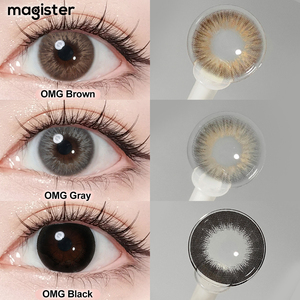
To empower brand agility, we offer structured tiers. For wholesale purchases of our established catalog designs (such as Freshgo, Magister, and Hidrocor series), we maintain continuous buffer stock allowing trial orders with an accessible MOQ of as low as 50 to 100 pairs across mixed models, ready to dispatch within 7 business days. For fully customized OEM private-label production—which includes your own bespoke branded blister foil lids, customized folding paper boxes, customized base curve/diameter, and personalized batch numbering—our standard MOQ is typically 500 to 1,000 pairs per SKU/color, completing production within approximately 20 business days.
Can you provide technical documentation for registration with health authorities like Japan PMDA, US FDA, or Brazil ANVISA?
Yes. We regularly supply foreign market authorization dossiers. In Japan, colored and corrective contact lenses are classified as Class III Highly Controlled Medical Devices under the PMD Act; we provide full Master Files, Stability Test Reports (accelerated and real-time under ISO 11987), Physical/Chemical/Biological Test Reports, and packaging specifications directly to your designated Japanese Marketing Authorization Holder (MAH). Similarly, for Latin America, Southeast Asia, and the Middle East, our regulatory team compiles Certificate of Analysis (CoA), Free Sales Certificates (FSC), Good Manufacturing Practice (GMP) audit summaries, and biocompatibility dossiers according to local registration guidelines.
How do you guarantee that color pigments will never leach or rub off on the patient's cornea?
Pigment safety is governed by our zero-contact Sandwich Encapsulation Technology. Unlike substandard manufacturers that spray pigments onto the external surface of cast lenses, our process deposits approved biocompatible pharmaceutical colorants between two distinct hydrogel monomer layers. Subsequent thermal and UV crosslinking forms a monolithic, non-porous polymer matrix where the pigments are physically trapped inside the core. We conduct extensive rub-off friction testing, chemical extraction tests with organic solvents, and cell viability assays in accordance with ISO 10993-5, conclusively proving zero pigment elution and zero surface toxicity.
What quality control checkpoints are conducted prior to batch release and international dispatch?
Every manufactured production lot undergoes a 5-stage Quality Assurance (QA) gate. First, automated optical cast molds are inspected for micro-defects. Second, 100% of cured lenses pass through high-speed Automated Visual Inspection (AVI) cameras running sub-pixel edge detection algorithms to catch tears, inclusions, bubbles, or centering errors. Third, dimensional parameters (Diameter, Base Curve, Center Thickness) and optical diopter power are validated via computerized focalizers. Fourth, sealed blister packs undergo high-pressure steam autoclave sterilization validated to achieve a Sterility Assurance Level (SAL) of 10⁻⁶. Finally, random statistical samples undergo sterility incubation tests, endotoxin testing (LAL test < 0.5 EU/ml), and package burst testing (ASTM F1140) before lot release.
What is the standard shelf-life and packaging integrity specification for export shipments?
Our soft contact lenses carry a validated 5-year sterile shelf-life from the date of manufacture. The lenses are immersed in buffered isotonic saline solution (pH 7.0–7.4, 290–320 mOsm/kg) enclosed in medical-grade medical plastic blisters hermetically heat-sealed with multi-ply composite aluminum foil. The sterile barrier system complies strictly with ISO 11607 standards and undergoes accelerated aging tests simulating 60 months of storage in tropical conditions without seal degradation, liquid evaporation, or micro-bacterial ingress.
Step-by-Step Methodology
End-to-End OEM/ODM Production Lifecycle: From Design to Market Shelf
Launching a private label contact lens brand or scaling an established optical franchise requires an accountable and synchronized manufacturing path. When you partner with Shenzhen Lensesgoo Co., Ltd, our engineering and commercial teams execute through an audited five-phase development process:
Phase 1: Concept & Optics
Collaborate on graphic diameter (GDIA), base curve (BC), center thickness, water content (38%-58%), prescription power curves (-0.00 to -10.00 D), and nuance dot-pattern color layering.
Phase 2: Prototyping & Trial
Sample lenses produced from stock molds or rapid CNC tooling dispatched for clinical fitting trials, slit-lamp movement assessment, and MAH regulatory confirmation.
Phase 3: Artwork & Compliance
Our graphics team designs compliant multilingual packaging—including Japanese labeling, CE mark Notified Body identifiers, UDI barcodes, expiry data, and package inserts.
Phase 4: Scaled Cleanroom Run
Full-scale cast molding in Class 100,000 cleanrooms, 100% automated visual inspection, blister sealing, and 121°C terminal steam autoclave sterilization cycles.
Phase 5: Release & Export Logistics
Issuance of lot Certificate of Analysis (CoA), customs clearance documentation, air/sea freight booking, and tracking straight to European, Japanese, American, or Asian distribution hubs.
Phase 6: Post-Market Surveillance
Continuous PMS tracking, regulatory updates conforming to ongoing MDR/PMDA guideline evolutions, and next-season color palette recommendations to sustain market edge.
Through this streamlined engineering process, international clients minimize supply chain risk, eliminate compliance pitfalls, and secure a predictable, high-margin pipeline of CE certified contact lenses manufactured to uncompromising medical standards.