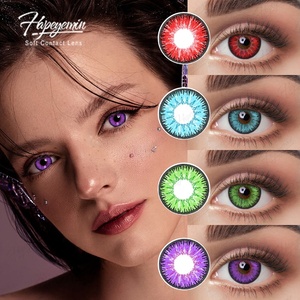
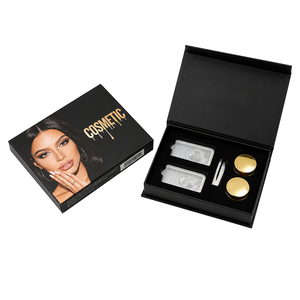
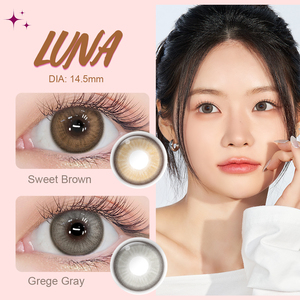
Engineered in compliance with stringent ISO 13485:2016 medical device standards and certified under the European Medical Device Regulation (EU MDR), our color contact lenses utilize proprietary cast-molding geometries and three-layer sandwich printing technologies to protect the corneal epithelium.
An industrial manufacturing whitepaper on micro-pigment safety, polymer matrix cross-linking, and automated cleanroom manufacturing under ISO 13485:2016 and EU MDR (Regulation EU 2017/745).
In the global medical device landscape, cosmetic colored contact lenses (frequently categorized as plano aesthetic lenses or corrective tinted prosthetics) represent an intricate synthesis of ophthalmological safety, optical physics, and chromatic precision. Historically viewed merely as cosmetic accessories, international regulatory bodies—including the European Union under the Medical Device Regulation (EU MDR 2017/745 Annex XVI), the US FDA, and the Japanese Ministry of Health, Labour and Welfare (MHLW) under the PMD Act—now regulate colored contact lenses as Class IIa, Class IIb, or Class III medical devices. Shenzhen Lensesgoo Co., Ltd engineers its complete production line to exceed these non-negotiable international benchmarks.
The primary hazard associated with substandard cosmetic lenses is direct chemical toxicity or mechanical abrasion resulting from exposed dyes. When inorganic pigments leach into the tear film or physically contact corneal epithelial cells, chronic hypoxia, giant papillary conjunctivitis (GPC), and infectious microbial keratitis can ensue. As a certified manufacturer, our facility operates strictly with Sandwich Color-Lock Technology (Pigment Encapsulation). Under this proprietary process, micro-ground, FDA-approved ophthalmic pigments are printed onto an initial hydrogel matrix layer and subsequently encapsulated entirely within a secondary cross-linked polymer envelope. At no point does active pigment touch ocular tissue or the palpebral conjunctiva.
Automated cast molding, curing, and demolding occur in hermetically isolated Class 100,000 cleanrooms under strict microbial particulate monitoring.
Micro-encapsulated organic and mineral pigments remain locked inside the hydrogel polymer layers, preventing pigment leaching and abrasion completely.
Inventory stock lines dispatch within 7 business days; fully customized private-label production runs complete in approximately 20 business days.
We supply full Technical Documentation Files (TDF), biocompatibility profiles (ISO 10993), stability reports, and localized packaging support for Japan MAH.
Beyond optical clarity and colorfastness, oxygen transmissibility (Dk/t value) serves as the primary clinical indicator of contact lens comfort and physiological health. Traditional cosmetic contact lenses suffered from low Dk/t values due to heavy pigment densities choking water absorption and oxygen passage. Our R&D center has overcome this limitation by deploying an optimized dot-matrix halftone micro-pigment distribution that leaves ample interstitial micro-channels across the optic zone. This configuration ensures consistent tear exchange during natural blinking dynamics and promotes sustained corneal metabolic balance.
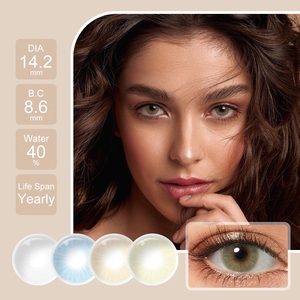
How leading beauty conglomerates, optical retail chains, and digital-native cosmetic brands are adjusting their supply chain criteria to manage regulatory transitions, consumer shifts, and technological shifts.
While annual (yearly) PolyHEMA lenses continue to drive dominant volume in developing retail segments due to cost advantages, Tier-1 beauty retailers in the US, Europe, and Japan are aggressively moving toward daily disposable Silicone Hydrogel (SiHy) formats. Procurement teams prioritize high Dk/t materials (exceeding 80 Dk/t) with high water gradients to meet consumer demand for health-first beauty routines.
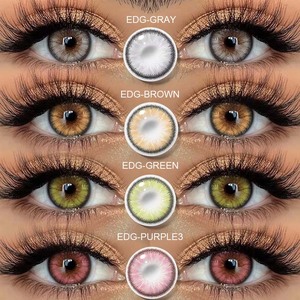
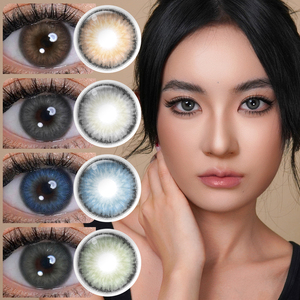
The aggressive, opaque block-colors that defined the 2010s have ceded market dominance to hyper-natural nuance aesthetics—such as soft olive-hazel, greige, smoky ash, and misty brown. Advanced procurement teams require factory partners capable of multi-tone gradient micro-halftones that blend smoothly with dark brown irises without showing pixelation under close inspection.
The transition periods of the European MDR have permanently eliminated non-certified OEM brokers. Institutional buyers now exclusively procure from audited manufacturing plants holding current ISO 13485:2016 certifications and fully compliant Unique Device Identification (UDI) barcoding down to the primary blister package level, mitigating cross-border seizure risks.
Modern cosmetic contact lens brands avoid over-leveraged upfront inventory risks. Future B2B procurement models leverage Agile Hybrid Sourcing: utilizing low-MOQ catalog stock sampling (10 to 50 pairs per SKU) to test localized consumer appetite via social commerce and e-commerce campaigns, followed immediately by 20-day high-volume automated production runs upon demand confirmation. Our facility is engineered specifically to accommodate this modern procurement workflow.
| Evaluation Parameter | Conventional PolyHEMA Lenses | Lensesgoo Precision Encapsulated PolyHEMA | Next-Gen Silicone Hydrogel (SiHy) |
|---|---|---|---|
| Oxygen Permeability (Dk/t) | 8.5 – 12.0 | 18.0 – 24.5 (Micro-channel optimized) | 85.0 – 120.0+ |
| Pigment Isolation Process | Surface pad printing (exposed) | Sandwich Bio-Encapsulation (Zero contact) | Dual-layer embedded cast molding |
| Equilibrium Water Content | 36% – 38% | 40% – 42% (Extended hydration) | 48% – 55% with low wetting angle |
| Wear Schedule Versatility | Monthly to Yearly | Daily, Monthly, Quarterly & Yearly | Daily & Monthly Disposables |
| Target Retail Channel | Low-tier cosmetic shops | Drugstores, Salons, Medspas & E-commerce | Premium Optical Chains & Dermatology Clinics |
From smart photochromic pigment molecules to sustainable biopolymer blister packs, examine the engineering innovations defining our factory's research and development agenda.
Integrated chemical monomers providing broad-spectrum protection against UVA (>85%) and UVB (>95%), defending corneal structures against accelerated photoaging.
Copolymerization with Hyaluronic Acid (HA) and Polyvinylpyrrolidone (PVP) creates a moisture-locking cushion, lowering the surface contact angle under 35 degrees.
Precision-balanced rotational stabilization and large-diameter lathe cut engineering for 17mm mini-sclera and 22mm full-sclera theatrical lenses without corneal compression.
Reduced-plastic secondary packaging, medical-grade recyclable aluminum foils, and FSC-certified structural paperboard boxes with high-density EVA shock inserts.
A crucial technical bottleneck in high-pigment cosmetic contact lens production has always been peripheral edge lift and lens thickness variation. Irregular thickness across the lens profile induces localized tear stagnation, creating discomfort and visual aberrations. Through computerized sub-micron lathe tooling and robotic cast-molding lines, our manufacturing facility achieves edge thickness uniformity within ±0.005 mm across large production volumes. This exactitude guarantees smooth eyelid transit during blink cycles and consistent optical centering over the pupil, ensuring that both cosmetic impact and visual clarity remain uncompromised.
Authoritative insights into minimum order quantities, OEM/ODM customizations, regulatory compliance, quality control assays, and international shipping protocols.
Our manufacturing facilities operate under a comprehensive quality management system certified to ISO 13485:2016 (Medical Devices). Our core colored lens collections hold current CE certification under European Medical Device Directives/MDR, enabling legal distribution across EU member states. For the Japanese market, we provide full technical dossiers and product testing reports directly to our clients' licensed Marketing Authorization Holders (MAH) to satisfy PMD Act Class III requirements.
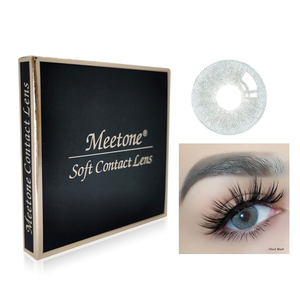
To empower emerging optical entrepreneurs and independent beauty labels, our in-stock branded inventory (Freshgo, Meetone, Magister, etc.) features an exceptionally flexible MOQ starting at just 50 pairs with mix-and-match style allowances. For fully bespoke OEM Private Label orders (custom blister foil printing, personalized cartons, and custom graphic diameters), our baseline MOQ starts at 500 to 1,000 pairs depending on the complexity of packaging engineering.
We strictly implement proprietary Sandwich Encapsulation Technology. The color layer is applied via precision pad-printing onto a partially cured hydrogel base, followed immediately by an enveloping top polymer layer that cross-links under controlled thermal and UV conditions. Each production batch undergoes rigorous acetone rub and autoclave stability testing to verify that zero pigment particles migrate to the anterior or posterior surfaces.
Orders pulled from our catalog stock ship within 7 business days following payment verification. Custom OEM and private-label formulations require approximately 20 business days for production, blister thermoforming, sterile autoclaving, and automated optical inspection. Shipments are dispatched worldwide via priority express (DHL, FedEx, UPS) or direct air-freight, typically arriving in major international hubs within 3 to 7 transit days.
Yes. For our Japanese retail partners and brand importers, our packaging engineering division manufactures primary blister foils, folding cartons, package inserts (添付文書), and tamper-evident outer cartons directly using client-supplied or MAH-approved Japanese artwork. We ensure all statutory data fields—including MAH license number, lot identification, expiration dating, and sterilization symbols—meet Japanese regulatory mandates precisely.
Absolutely. We maintain warehouse stock of all catalog color variants, graphic designs, and diameter options (14.0mm to 22.0mm). Sourcing directors and clinical consultants can request sample evaluation kits to assess physical parameters, center thickness, on-eye optical centering, hydration longevity, and cosmetic nuance before issuing commercial purchase orders.
Every finished batch undergoes a three-stage release protocol: 1) Automated Optical Inspection (AOI) for edge chips, tears, and air bubbles; 2) Interferometric & Spectrophotometric Analysis for dioptric power precision, base curve radius, and color density consistency; and 3) Microbiological Sterility Assurance validating a minimum Sterility Assurance Level (SAL) of 10⁻⁶ post-steam autoclaving at 121°C.
Yes. While cosmetic lenses are extensively sold in plano (0.00 diopter) for aesthetic enhancement, our primary lines support myopic correction ranging from -1.00D to -8.00D (in 0.25D increments up to -6.00D, and 0.50D increments up to -8.00D). We can also co-develop bespoke toric geometries for astigmatic cosmetic wearers under our ODM design partnership program.
Whether you require fast-dispatch wholesale stock from proven international collections, or full-scope OEM private-label development with custom blister packaging and complete medical regulatory dossiers, our Shenzhen production team is standing by to assist your procurement roadmap.