Precision-Engineered Aesthetic Optics & Packaging
Engineered to meet the stringent physiological parameters of the European Medical Device Regulation (MDR) and global health standards, delivering premium comfort and aesthetic realism.
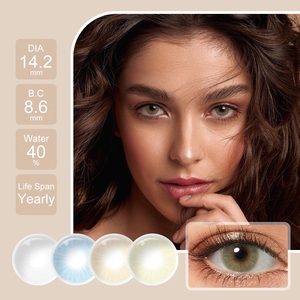
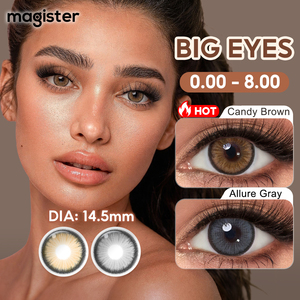
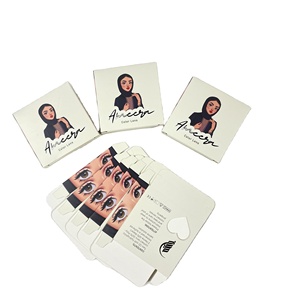
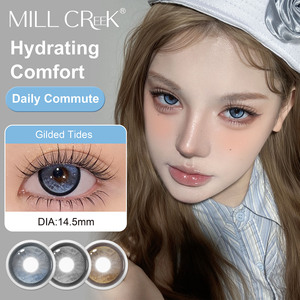
Advanced Photolithography & Pigment Encapsulation in Korean Contact Lens Manufacturing
The global ocular aesthetics sector has transitioned beyond basic decorative enhancements into an era dominated by ocular biocompatibility, micro-fluidic oxygen transport, and high-precision chromatic dot dispersion. As a leading manufacturer delivering CE-certified and internationally compliant colored contact lenses, our production lines synthesize advanced Korean Cast-Molding and semi-cast technologies. Unlike archaic pad-printing methodologies that risk pigment leeching onto the corneal epithelium, modern Class IIa and Class III medical-grade contact lenses utilize a proprietary sandwiching (dual-encapsulation) technique.
In this structural morphology, non-toxic biocompatible iron oxide and organic reactive dyes are micro-embedded between two distinct layers of poly-HEMA (poly-2-hydroxyethyl methacrylate) or silicone-hydrogel matrices. This architectural isolation guarantees that pigment particles never achieve direct physical contact with either the palpebral conjunctiva or the corneal tissue, thereby eliminating the incidence of mechanical abrasion, microbial adhesion vectors, and toxicological sensitization.
Furthermore, our micro-layer lathe-cutting and computerized laser-guided edge design yield an ultra-slim tapered periphery. This structural edge reduces blinking friction coefficient against the eyelid margin, promoting natural tear film exchange and minimizing hypoxia-induced neovascularization during long-duration daily wear cycles.
| Material Classification | DK/t (Transmissibility) | Water Matrix % | Manufacturing Technology | Recommended Replacement Cycle |
|---|---|---|---|---|
| Enhanced Poly-HEMA | 18 - 24 × 10⁻⁹ | 38% – 42% | Full Cast-Molding / Semi-Cast | Daily / Monthly / Yearly |
| Silicone Hydrogel (SiHy) | 85 - 130 × 10⁻⁹ | 45% – 55% | Precision Micro-Matrix Polymerization | Daily Disposable / Bi-Weekly |
| Hydrophilic Dual-Copolymer | 22 - 28 × 10⁻⁹ | 38% – 40% | Lathe-Cut Optical Posterior Curve | Specialty FX / Mini-Sclera (17mm) |
Future Sourcing & Procurement Trends in Cosmetic Optics
Strategic analysis for enterprise importers, chain optical clinics, and private-label beauty brands navigating supply chain shifts from 2026 to 2030.
Shift to Daily Silicone Hydrogel Consumables
B2B procurement portfolios are migrating rapidly from conventional yearly replacement hydrogels toward daily disposable silicone hydrogel (SiHy) systems. Heightened consumer education surrounding ocular health has rendered oxygen permeability (DK/t) an indispensable buying criteria across North American and European retail landscapes.
Regulatory Hardening Under EU MDR & FDA 510(k)
Stringent implementation of EU Regulation 2017/745 (MDR) Class IIa classification for colored contact lenses has raised compliance barriers. Procurement directors now prioritize manufacturers maintaining comprehensive Technical Documentation, ISO 13485:2016 verification, full supply chain traceability, and designated EUDAMED registration.
Photorealistic Iris Mapping & Micro-Limbal Rings
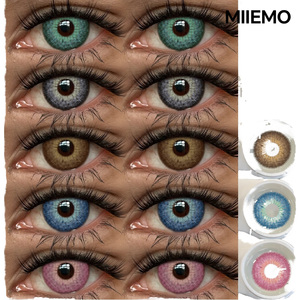
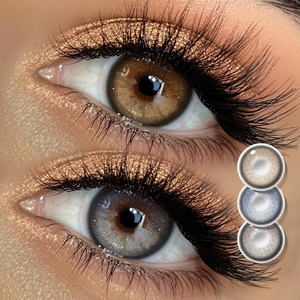
The global consumer preference has decoupled from exaggerated cartoon styling toward hyper-realistic chromatic blending. Brands demand multi-tone dot matrix printing (3-tone and 4-tone) featuring variable optical transparency that harmonizes natively with underlying dark brown irises without occluding peripheral vision.
Next-Generation Polymer Formulations & Surface Passivation
Modern contact lens synthesis demands sophisticated surface treatment chemistry to inhibit protein deposition and lipid film degradation. Our state-of-the-art cleanroom manufacturing utilizes plasma-activated surface modification coupled with internal wetting agents such as Polyvinylpyrrolidone (PVP) and Sodium Hyaluronate (HA). These embedded molecular moisture reservoirs create a permanently hydrophilic outer boundary layer, suppressing the tear breakup time (TBUT) and maintaining corneal hydration across extended 12-hour wear durations.
Additionally, integrated spectral filter technology delivers Class 1 and Class 2 photoprotective performance. By incorporating reactive ultraviolet absorbers (benzophenone compounds) directly into the monomer blend prior to thermal polymerization, our lenses systematically filter out over 90% of UVA and 99% of UVB radiation, safeguarding the intraocular lens and retina against cumulative phototoxic stress without disrupting visual color constancy.
Why Global Optical Leaders Partner with Our Facilities
Combining world-class Korean optical engineering discipline with high-velocity agile contract manufacturing.
Stringent Quality Assurance & CE Certification
Our production facilities operate strictly beneath ISO 13485:2016 quality management protocols. Every production batch undergoes 100% automated optical projection verification, center-thickness testing, edge integrity inspection, and biological sterility affirmation.
Comprehensive OEM/ODM Turnkey Ecosystem
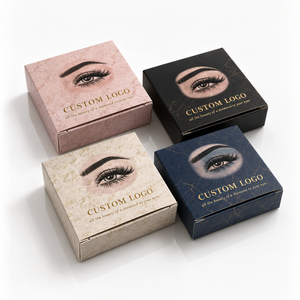
From initial iris graphic design and optical simulation to custom blister/vial packing, pharmaceutical-grade secondary foil sealing, and localized multi-lingual regulatory labeling (Japanese PMDA, EU MDR, US FDA), we provide an integrated launchpad for private labels.
Low Minimum Order Quantities & Agile Logistics
We empower growing beauty enterprises and established optical distributors alike. Catalogs maintain deep ex-stock availability supporting 7-day express dispatch for standard assortments, with custom private label runs achieving industry-leading turnarounds of just 20 days.
Frequently Asked B2B Sourcing Questions
Detailed technical, compliance, and commercial guidance for purchasing teams and regulatory affairs specialists.
Q: What is the significance of CE certification under the new EU MDR for colored contact lenses?
Under the European Medical Device Regulation (MDR 2017/745), colored contact lenses—even those without refractive power (plano)—are categorized under Annex XVI as devices with an aesthetic or non-medical intended purpose, requiring the same rigorous Class IIa conformity assessment, clinical evaluation, and Notified Body audits as corrective optical devices. Sourcing from a verified CE-certified manufacturer guarantees unhindered customs clearance across the EEA.
Q: How does the sandwich printing technology ensure ocular safety compared to surface printing?
Sandwich (encapsulated) technology embeds the colored pigments completely inside the hydrophilic polymer core. This isolates the colorants from both the sensitive corneal epithelium and the conjunctival membrane. Surface-printed lenses run the risk of physical friction peeling the pigment, causing ocular micro-abrasions, allergic reactions, and chemical leaching.
Q: What documentation do you furnish to support private-label brand registration?
We furnish complete Regulatory Dossiers including Certificates of Analysis (COA), ISO 13485:2016 audit certificates, CE Declarations of Conformity, Biocompatibility Test Reports (Cytotoxicity, Ocular Irritation, Systemic Toxicity according to ISO 10993 series), Accelerated Aging Stability reports, and localized artwork proofing compliant with regional labeling acts.
Q: What are the standard base curves (BC) and diameters (DIA) available for global distribution?
Our standard cosmetic lenses feature an ergonomic Base Curve of 8.5mm to 8.6mm, designed to accommodate over 95% of corneal geometries universally. Total diameters (DIA) typically measure between 14.0mm and 14.5mm, paired with Graphic Diameters (GDIA) ranging from 13.0mm to 13.8mm for authentic natural enhancement. Specialty theatrical lines range into 17.0mm mini-sclera and 22.0mm full-sclera sizes.
Q: Can private label orders accommodate split prescription (diopter) assortments?
Yes. For custom OEM/ODM manufacturing, we offer powers ranging from plano (0.00) down to -8.00D (in 0.25D steps up to -6.00D, and 0.50D steps thereafter). Specific MOQs apply per SKU/diopter combination, while in-stock catalog models allow flexible mix-and-match configurations for market testing.
Q: How does your cleanroom infrastructure maintain sterility and shelf stability?
Our filling and packaging lines run inside Class 100,000 (ISO Class 8) and Class 10,000 cleanrooms. Lenses are suspended in buffered, isotonic saline solution, hermetically sealed within medical-grade polypropylene blister packs or Type I glass vials, and undergo high-pressure moist-heat steam sterilization (autoclave at 121°C for 20 minutes), achieving a guaranteed Sterility Assurance Level (SAL) of 10⁻⁶ and a verified 5-year shelf life.
Ready to Engineer Your Next-Generation Contact Lens Portfolio?
Connect with our technical engineering team to request CE audit reports, full catalog spec-sheets, and bespoke sampling kits for commercial evaluation.
Send an Inquiry