Catalog Overview
Curated B2B Product Portfolios: Packaging, Color & FX Lenses
Explore our flagship product series engineered for optical brand owners, pharmacy chains, and international distributors across Korea, Japan, and Southeast Asia.
7 Days
In-House Brand Dispatch Speed
~20 Days
Custom OEM/Private Label Turnaround
100%
Sandwich Printing Pigment Isolation
Class III
Medical Device Regulatory Audit Readiness
Core Competencies
Engineering Capabilities of Shenzhen Lensesgoo Co., Ltd
Bridging cutting-edge cast molding fabrication with international regulatory alignment for wholesale distributors across Korea, Japan, and Western markets.
Medical-Grade Pigment Encapsulation
Our advanced sandwich color-locking technology embeds microscopic colorants entirely between dual biocompatible hydrogel layers. This ensures zero corneal friction, prevents color leaching, and guarantees absolute eye safety under continuous wear.
Rapid Dispatch & Scalable Batching
With deep warehouse reserves spanning classic hydrogel shades to avant-garde mini-sclera series, in-house catalogs dispatch within 7 business days. Bespoke private-label formulas and tailored packaging are completed within roughly 20 days.
Korea MFDS & Japan PMDA Audit Support
We supply complete technical dossiers—including biocompatibility assessments, cytotoxicity profiling, and accelerated aging stability logs—empowering our Korean and Japanese wholesaler partners to smoothly clear Class III medical device inspections.
Turnkey Private Label & Eco-Packaging
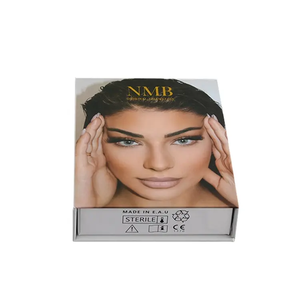
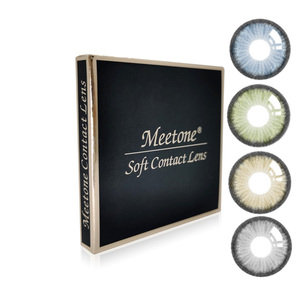
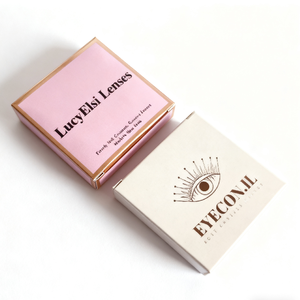
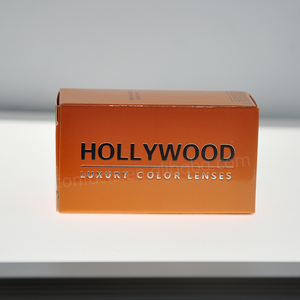
From recyclable clear-window paper folding cartons to high-density medical blister packs, our OEM packaging department assists with localized Hangul (Korean), Japanese, and English artwork verification, barcoding, and tamper-evident sealing.
SMB Growth & Flexible Low-MOQ Sourcing
We champion emerging e-commerce brands and boutique optical chains with flexible starting minimums. Importers can mix-and-match SKU palettes, testing target consumer segments across Seoul and East Asia without unmanageable capital overhead.
Technical Whitepaper
Navigating the China-Korea Contact Lens Manufacturing Axis: Sourcing Dynamics, Regulatory Hurdles, and Material Science
The global soft contact lens landscape is undergoing a systemic structural realignment. Historically, Korean wholesalers and Japanese distributors operated strictly within domestic optical supply networks or outsourced low-volume lines to regional boutique labs. However, as global digital commerce accelerates consumer demand for aesthetic eye wear—encompassing natural limbal enhancement lenses, vivid three-tone cosmetic lenses, and specialty theatrical cosplay optics—the limitations of legacy supply chains have become evident. Rising production costs, elongated turnaround times, and rigid tooling schedules in regional laboratories have pushed tier-one international buyers toward an optimized cross-border paradigm: collaborating directly with state-of-the-art Chinese manufacturing plants capable of high-throughput cast molding, combined with Korean distribution agility.
Shenzhen Lensesgoo Co., Ltd stands at the core of this industrial convergence. By pairing Shenzhen's massive precision manufacturing infrastructure, advanced optical polymers, and cleanroom automation with a nuanced understanding of the design preferences driving the Korean and East Asian beauty sectors, we provide an unparalleled sourcing platform for commercial volume distributors, e-commerce brand aggregators, and clinical optical providers.
1. Advanced Polymer Metallurgy & The Shift Toward High-Dk Silicone Hydrogel
In the evaluation of contact lens manufacturing excellence, raw material formulation dictates clinical safety, long-term wearability, and user satisfaction. Traditional hydrogel lenses constructed from Polymacon (HEMA) typically maintain an oxygen transmissibility (Dk/t) profile ranging between 15 and 25 barrers/cm. While sufficient for intermittent cosmetic wear of 4 to 6 hours, modern consumers demand extended comfort across 12-hour workdays in dry, air-conditioned environments.
To address this clinical imperative, our manufacturing lines have integrated high-performance Silicone Hydrogel (SiHy) formulations. Silicone hydrogel incorporates fluorosilicone macromers with hydrophilic monomers like N-vinylpyrrolidone (NVP), elevating oxygen permeation to upward of 80–120 Dk/t. This structural upgrade virtually eliminates end-of-day corneal hypoxia, neovascularization risks, and ocular fatigue. For Korean wholesalers who serve an exacting clientele accustomed to rigorous cosmetic standards, switching to hybrid silicone hydrogel matrices creates immediate brand differentiation.
| Polymer Specification | Standard Cosmetic Hydrogel (HEMA) | High-Permeability Silicone Hydrogel | Clinical & Commercial Impact |
|---|---|---|---|
| Base Material Matrix | 2-Hydroxyethyl Methacrylate (HEMA) | Fluorosilicone macromers + Hydrophilic NVP | Superior tensile strength, decreased edge tearing |
| Water Content Index | 38% – 42% (Low/Medium water) | 45% – 55% (Optimized internal balance) | Reduced tear evaporation, minimizes dry-eye symptoms |
| Oxygen Permeability (Dk/t) | 18 – 28 barrers | 85 – 115 barrers | Supports full-day (12h+) comfortable continuous wear |
| Color Pigment Layering | Surface Dot Matrix / Pad Printed | Tri-layer Full Encapsulation (Sandwich) | Zero direct pigment contact; 100% corneal protection |
| Production Lead Time | 7 Days (Catalog) / 20 Days (OEM) | 10 Days (Catalog) / 25 Days (Custom OEM) | Predictable supply velocity for global retail pipelines |
2. The Micro-Encapsulation Paradigm: Safeguarding Ocular Health
A primary friction point in global cosmetic contact lens wholesale is consumer ocular safety. Substandard manufacturing operations often rely on external pad printing, where colorants—such as iron oxides, titanium dioxides, and phthalocyanine pigments—are applied directly to the concave or convex surface of the lens. Over time, friction against the palpebral conjunctiva and corneal epithelium can cause pigment detachment, epithelial micro-abrasions, allergic reactions, and persistent bacterial keratitis.
Shenzhen Lensesgoo Co., Ltd utilizes an uncompromising Full Sandwich Encapsulation Method. During the computer-controlled cast molding process, an initial optically transparent base layer of 0.04mm hydrogel is deposited. High-resolution multi-tone pigments are micro-injected precisely in alignment with the iris zone, deliberately avoiding the clear optical pupil center. A matching secondary hydrogel layer is subsequently polymerized atop the pigment bed under controlled UV radiation, permanently hermetically sealing the colorants inside the interior polymer matrix. The outer surfaces touching corneal tissue and ocular tear film remain pristine, perfectly smooth, and friction-free.
3. Global Purchasing Trends: Why Wholesalers Are Consolidating Production in China
Wholesalers operating across Seoul, Busan, Tokyo, and overseas retail corridors are adjusting procurement playbooks in response to three macro procurement trends:
- Shorter Product Lifecycle vs. Agile Cast Tooling: Consumer beauty micro-trends now move at digital speeds. An aesthetic lens palette popularized on social platforms must transition from graphic concept to retail shelf in weeks, not quarters. Chinese manufacturers utilize robotic CNC mold-making setups capable of developing, casting, and clinical-testing new graphic diameter (G.DIA) variants within 14 days, compared to the 60–90 day lead cycles common among older European or regional factories.
- Consolidated Full-Stack Packaging Solutions: Distributing optical goods requires robust tertiary protection. Sourcing blister packs, secondary cardboard folding cartons, multi-language instructional leaflets, and customized travel kits from separate vendors introduces massive logistical vulnerabilities. Top-tier Chinese manufacturers now deliver fully integrated OEM packaging systems—including biodegradable paper folding boxes, anti-counterfeit holographic stamping, and pre-sterilized travel cases—ready for retail shelves.
- Strict Class III Compliance Verification: As global regulatory authorities tighten oversight on colored contact lenses—designating them as Class III medical devices alongside cardiac stents and surgical implants—distributors require transparent, auditable quality systems. Reliable manufacturers operate under certified ISO 13485 cleanroom facilities and furnish exhaustive Technical Dossiers for Korea MFDS, Japan PMDA, and European CE regulatory clearances.
4. Navigating The Korea & East Asia Regulatory Framework
Entering the South Korean contact lens market necessitates thorough alignment with the Korean Ministry of Food and Drug Safety (MFDS) medical device protocols. Similarly, Japanese retail channels mandate strict compliance with PMDA (Pharmaceutical and Medical Devices Agency) statutes under the Pharmaceutical and Medical Device Act. Contact lenses—whether powered for refractive correction or Plano (zero power) for pure aesthetics—are classified as Class III High-Risk Devices.
Shenzhen Lensesgoo Co., Ltd provides an end-to-end documentary bridge for international wholesale buyers. When partnering with a domestic Korean Medical Device Marketing Authorization Holder (MAH) or an authorized importer, our regulatory compliance division supplies full device Master Files, containing:
- Detailed raw monomer purity and residual chemical volatility certifications.
- ISO 10993 cytotoxicity, ocular irritation, and systemic toxicity testing summaries.
- Accelerated three-year shelf-life stability data and blister seal vacuum integrity analytics.
- Standard operating procedure (SOP) blueprints for automated visual sorting and 100% optical power inspection.
This comprehensive technical foundation eliminates guesswork, enabling our wholesale partners to clear customs audits, obtain MFDS product licenses, and safeguard their brand reputation against product recalls.
Procurement FAQ
Frequently Answered Sourcing Inquiries for Global Wholesalers
Essential technical, financial, and logistical details to guide your volume procurement decisions.
? What are the typical Minimum Order Quantities (MOQ) for OEM/ODM customization versus stock wholesale?
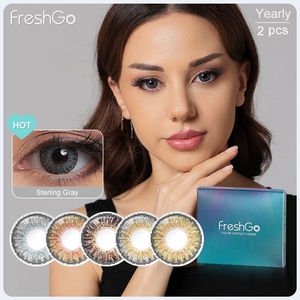
For in-stock catalog collections (such as our Freshgo, Magister, and standard natural cosmetic lines), we accommodate low-risk procurement starting as low as 50 to 100 pairs with mix-and-match SKU flexibility. For custom private-label OEM collections featuring unique graphic patterns, specialized base curves, or bespoke branded packaging, typical production MOQs begin at 500 to 1,000 pairs per color variant to optimize cast molding calibration.
? How does the factory ensure color safety and prevent pigment leakage on cosmetic lenses?
Every cosmetic contact lens produced in our facility is created using an advanced Cast Molding Sandwich Process. Pigments are embedded strictly between two layers of hydrogel polymer, curing them inside the body of the lens. No printing ink touches the cornea or the conjunctival eyelid surface, ensuring full biocompatibility, smooth tear fluid dynamics, and total protection against color migration.
? Can your production lines support multi-language packaging for Korean, Japanese, and Western markets?
Yes. Our in-house structural and packaging design department produces fully customized blister packs, vial labels, and outer paper box sets. We regularly execute bilingual and trilingual artwork integration (including Korean Hangul, Japanese Kanji/Katakana, and English), complete with localized warning labels, EAN/UPC barcodes, LOT numbers, and sterilization expiry dates matching regional medical device standards.
? What are standard order fulfillment lead times and logistical options for shipments to Korea and Asia?
Standard warehouse stock orders are dispatched within 7 business days following payment verification. Custom OEM private label manufacturing cycles average 20 to 25 days depending on tooling complexity. Logistical routes include direct air express (DHL, FedEx, UPS) with 3–5 day transit to Incheon or Tokyo, as well as dedicated maritime consolidated freight for large containerized distribution orders.
? What quality assurance protocols are conducted before lenses are cleared for international dispatch?
Our ISO 13485 cleanroom infrastructure maintains a multi-stage Quality Inspection System. Every batch undergoes 100% optical power verification via automated projection focimeters, edge-profile smoothness laser profiling, blister seal leak testing under thermal stress, and autoclave steam sterilization cycles at 121°C. Retained batch samples and certificates of analysis (COA) accompany every export shipment.
? Can our optical brand request custom base curves (BC), water content, and specialty diameters?
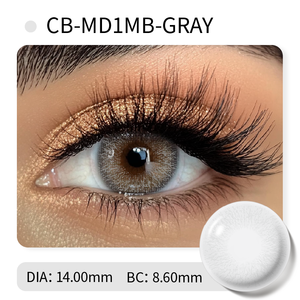
Absolutely. While our standard cosmetic models feature an optimized universal 8.5mm to 8.6mm Base Curve with a 14.0mm–14.5mm diameter, our ODM engineering team can fabricate specialty runs. This encompasses high-water formulations (up to 55%), mini-sclera 17mm lenses, 22mm full-sclera SFX lenses, and tailored diopter powers spanning Plano (0.00) down to -10.00D for corrective cosmetic lines.