Certified Ophthalmic & Aesthetic Color Lens Lines
Explore specialized product series manufactured under strict ISO 13485 cleanroom protocols, spanning natural hydrogel cosmetics, high-impact specialty SFX formulations, and bespoke luxury packaging systems.
Industry Whitepaper: The Paradigm Shift in Chinese Contact Lens Manufacturing
The global contact lens market has progressed beyond standard corrective optics into high-growth aesthetic, therapeutic, and cultural subsectors. As international retailers, distributors, and direct-to-consumer (D2C) brands look to scale, China has solidified its position as the premier manufacturing and export powerhouse. Modern Chinese cleanroom facilities have replaced antiquated spin-casting methodologies with cutting-edge full-mold cast automation and micro-encapsulation pigment locking. This technical evolution ensures that cosmetic lenses satisfy stringent physiological requirements, maintaining optimal corneal oxygenation and tear exchange without compromising visual appeal.
Sourcing contact lenses requires evaluating clinical safety, biocompatibility profiles, polymer chemistry, and regulatory certifications. Importers must bridge the gap between regional health compliance frameworks—such as the Japanese PMDA (Pharmaceutical and Medical Device Act), European CE Marking (MDR 2017/745), and US FDA 510(k) clearances—and technical manufacturing capabilities. As a leading manufacturer and exporter in Shenzhen, China, our infrastructure delivers complete supply chain transparency, rapid prototyping, and high-volume consistency to support global brands at scale.
| Technical Metric | Standard Market Hydrogel | Advanced PolyHEMA Cast-Molded | Next-Gen Silicone Hydrogel (SiHy) |
|---|---|---|---|
| Oxygen Permeability (Dk/t) | 12 - 18 x 10-9 | 22 - 28 x 10-9 | 80 - 130 x 10-9 |
| Water Content (Hydration) | 38% - 42% | 38% - 45% (Equilibrium State) | 33% - 48% (Low modulus) |
| Pigment Encasement Technique | Surface pad printing (risk of exposure) | Sandwich Micro-Encapsulation | Molecular Matrix Embedded |
| Base Curve (BC) Tolerance | ± 0.10 mm | ± 0.03 mm | ± 0.02 mm |
| Wearing Lifecycle | Daily / 1-Month / 6-Month | Daily / 6-Month / 1-Year | Daily Disposable / Bi-weekly |
Strategic Procurement Trends: How Global Buyers Are Scaling in 2025–2028
International optical procurement is experiencing structural shifts driven by omnichannel retail models and evolving consumer expectations. Sourcing directors are refining their supply chain models to mitigate inventory risks while meeting shorter product lifecycles.
Agile Low-MOQ & Rapid SKU Launches
Buyers are shifting away from rigid multi-thousand-unit initial order thresholds. Strategic partnerships now emphasize flexible initial production runs (50–100 pieces per colorway) to field-test seasonal color palettes and nuanced pupil diameters before deploying capital into mass-scale batches.
Audited Biocompatibility & Clean Hydrogels
Cosmetic lenses are subject to stricter scrutiny from ophthalmic health authorities worldwide. Sourcing managers increasingly demand verifiable cytocompatibility, low bacterial adherence metrics, and non-migrating bio-pigments over commoditized, unverified pricing models.
Integrated Secondary Packaging Logistics
Leading buyers consolidate secondary paperboard packaging, custom blister labeling, and lens manufacturing under a single supply partner. This turnkey model prevents batch mismatches, shortens lead times, and ensures retail-ready presentation across regional channels.
Technological & Aesthetic Evolution of Contact Lens Design
Contact lens research and development is advancing at the intersection of material science and aesthetic customization. Modern manufacturing has transformed contact lenses into multi-functional ocular products characterized by several foundational innovations:
1. Sandwich Encapsulation Architecture: A key baseline for physiological safety in tinted lenses is total isolation of the dye matrix. Unregulated pad-printing processes leave pigment particles exposed directly to corneal epithelium, creating mechanical abrasion hazards and potential toxic leaching. Leading Chinese manufacturing utilizes cast sandwich layering, permanently embedding organic and inorganic micro-pigments between inert PolyHEMA layers. The ocular surface and eyelid margin touch only silky, smooth hydrophilic polymers.
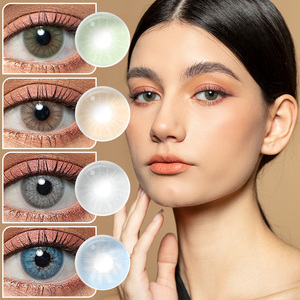
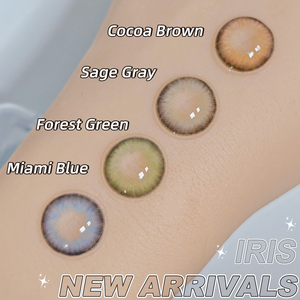
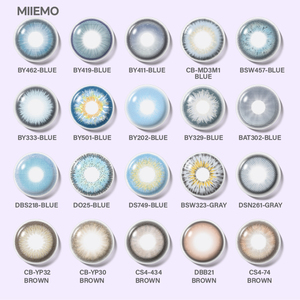
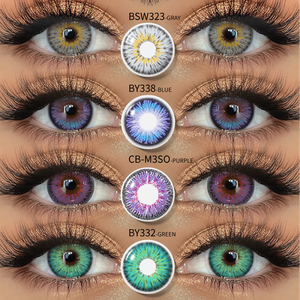
2. Biomimetic Nuance Dot Patterns: Aesthetic preferences in high-demand markets like Japan, South Korea, Europe, and North America favor subtle iris textures over flat, opaque graphics. Through high-density digital micro-dot matrices, modern lenses mimic natural trabecular networks with greige, hazel, ash-brown, and dual-tone limbal gradients. These designs enhance pupil depth while integrating seamlessly with native eye color variations.
3. Extreme Dimension Engineering (Cosplay, FX & Sclera Form Factors): Beyond standard 14.0mm to 14.5mm cosmetic lenses, precision tooling allows the production of 17mm mini-sclera and 22mm full-sclera theatrical lenses. These extreme-diameter profiles require specialized curvature mathematics (dual or triple base curves) to prevent ocular hypoxia, maintain tear film circulation, and ensure stable on-eye centration during extended wear.
B2B Optical Sourcing: Frequently Asked Questions (FAQ)
What is the typical lead time for custom OEM vs. in-stock wholesale orders?
Catalog styles and stock collections dispatch within 7 to 10 working days. For comprehensive private-label OEM runs—including tailored secondary outer cartons, custom foil blister sealing, and bespoke multi-tone graphic printing—production lead times typically average 20 to 25 days following final artwork approval.
Can you provide technical documentation for local medical device compliance (e.g., PMDA, FDA)?
Yes. Corrective and cosmetic lenses are classified internationally as Class II or Class III medical devices. As your manufacturing partner, we furnish complete technical dossiers, ISO 13485 audit summaries, raw material MSDS, biostability reports, and sterilization validation data to support your local Marketing Authorization Holder (MAH) or regulatory filings.
How do you guarantee that pigments will not leach onto ocular tissues?
All cosmetic series are manufactured using clean cast-molding sandwich technology. Colorants are permanently sealed between internal monomer layers and polymerized as an integrated unit. The pigments never contact the cornea or palpebral conjunctiva, fully complying with ISO 10993 cytotoxicity and ocular irritation safety standards.
What are the minimum order quantities (MOQs) for boutique brands and startup lines?
We maintain an agile SMB Growth Program. Emerging retailers and beauty entrepreneurs can initiate stock product orders with low baseline quantities, mixing and matching colorways across catalogs to validate their distribution channels before scaling into high-volume custom production runs.
Our Enterprise Capabilities: Complete Optical Supply Chain Infrastructure
Located in Shenzhen, China, our manufacturing facilities integrate precision ophthalmic molding, sterile packaging solutions, and custom cosmetic carton fabrication into an efficient, unified production model:
ISO 13485 Cleanrooms
Production takes place within certified cleanrooms with automated environmental controls, minimizing particulate contamination and maintaining reliable batch sterility.
In-House Pattern Lab
Our optical design team engineers proprietary iris models, gradient nuance shades, and bold costume prints to keep your portfolio aligned with current consumer trends.
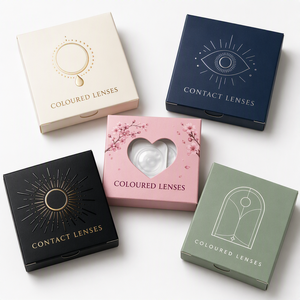
Custom Structural Packaging
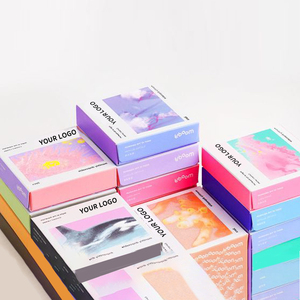
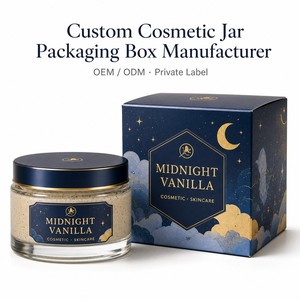
From luxury soft-touch folding cartons to blister foil printing, we provide complete, retail-ready packaging solutions that elevate your brand's shelf appeal.
Global Air Express Logistics
Reliable freight partnerships allow us to dispatch orders quickly via international express or air cargo directly to hubs across Tokyo, Osaka, Europe, and North America.
Ready to Build or Scale Your Contact Lens Line?
Connect directly with our engineering and procurement team for confidential technical assessments, physical sample kits, and OEM/ODM private-label quotes tailored to your market.
Send an Inquiry