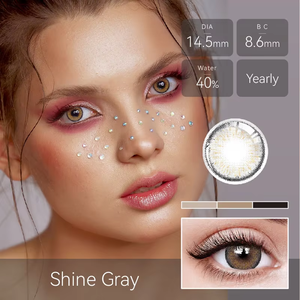
Natural 3-Tone Matrix
Manufactured with medical-grade Poly-HEMA hydrogel polymers, multi-layer sandwich pigment lock, and precision edge profiles. Direct factory allocation for volume distributors, private labels, and optical chains.
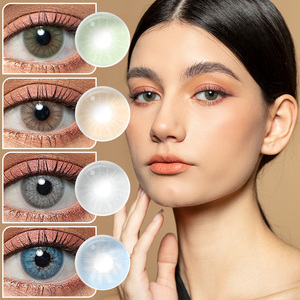
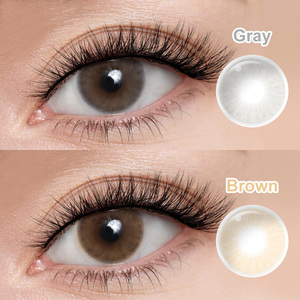
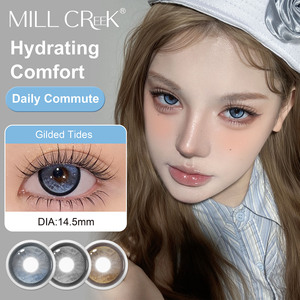
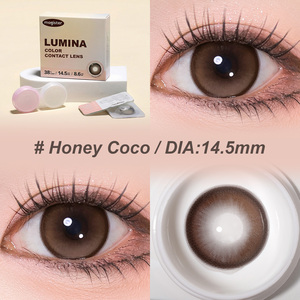
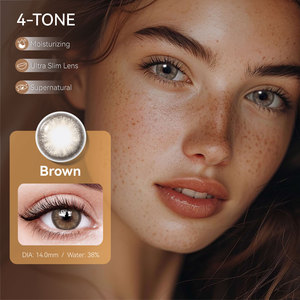
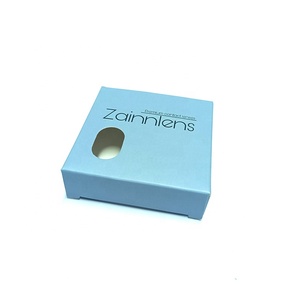
Strategically integrated within the East China medical optical apparatus corridor and linked with our South China export operations, our manufacturing complex integrates full-automated robotic cast molding with strict international compliance.
Unlike obsolete lathe-cutting methods that introduce microscopic surface striations, our automated optical cast-molding system ensures sub-micron dimensional stability. Every optical surface exhibits uniform curvature (BC 8.5 to 8.7 mm) and smooth lens edge beveling, directly reducing corneal friction and foreign body sensation for daily wearers.
Our proprietary color-locking technology isolates bio-compatible micro-pigments completely between two ultra-thin layers of hydrogel monomer. Zero colorant touches the epithelial cells or palpebral conjunctiva. Laboratory solvent-extraction tests confirm zero heavy-metal leaching and exceptional color stability under autoclave sterilization (121°C).
Eliminating the traditional barrier of high minimum commitments, we allow growing brands to mix-and-match in-stock colors with 7-day dispatch. Fully bespoke private-label orders, complete with custom blister foils, barcodes, and Japanese/European regulatory labeling, complete production in approximately 20 business days.
Navigating medical device regulations is an essential competitive advantage. We provide complete technical files (Design History Files, biocompatibility tests ISO 10993, cytotoxicity, ocular irritation, and stability testing) to directly support Japanese PMDA Marketing Authorization Holders (MAH), EU CE MDR, and Americas regulatory submissions.
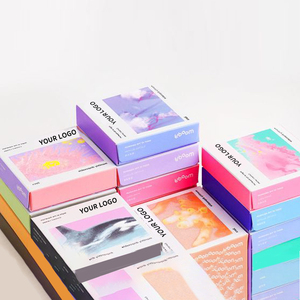
From multi-color custom offset folding cartons and tamper-evident foil blisters to multi-piece cosmetic starter gift boxes, we engineer packaging lines conforming to international pharmacy, drugstore, and DTC shipping durability requirements, incorporating QR serial codes and GS1 barcode structures.
Our production incorporates high-resolution machine vision inspection (AOI) to examine 100% of manufactured contact lenses. Automated CCD cameras verify edge integrity, dioptric power accuracy, graphic ring concentricity, and void-free polymer consistency prior to ultrasonic sealing and high-pressure steam sterilization.
In the contemporary contact lens contract manufacturing landscape, the choice of substrate polymer dictates corneal oxygen transmissibility ($Dk/t$), wettability, tensile modulus, and cosmetic pigment compatibility. While conventional Poly-HEMA hydrogel formulations (water content between 38% and 42%) remain the global benchmark for cosmetic colored contacts due to their supple mechanical modulus and superior pigment bonding fidelity, our R&D engineering center in Zhejiang has successfully integrated internal wetting agents (such as Polyvinylpyrrolidone - PVP) directly into the monomer formulation. This prevents midday tear evaporation and minimizes lipid deposits on the ocular surface.
The cosmetic eyewear sector has migrated permanently away from flat, opaque pigment zones toward natural iris-replicating micro-dot patterns. Through high-precision pad printing on mold pins prior to polymer injection, our color arrays incorporate radial striated iris spokes, secondary warmth rings, and graduated soft limbal edges. By maintaining the outer peripheral rim at a variable opacity of 30% to 60%, the lens enlarges the visible corneal diameter (graphic diameter 13.0 mm to 13.8 mm) without creating an unnatural or artificial appearance.
| Technical Parameter | Zhejiang High-Precision Factory | Standard Mass OEM Workshops | Domestic EU/US Foundries |
|---|---|---|---|
| Molding Methodology | Automated Cast-Molding (Sub-micron precision) | Lathe-Cutting or Semi-Cast | Automated Cast-Molding |
| Pigment Isolation | Tri-Layer Sandwich Polymer Lock | Single-Sided Surface Printing | Sandwich Encapsulation |
| Minimum Order Quantity (MOQ) | 50-500 Pairs (Agile Brand Scaling) | 5,000-10,000 Pairs Fixed | 20,000+ Pairs Minimum |
| Production Lead Times | 7-10 Days (Stock) / 20 Days (OEM) | 45-60 Days | 90-120 Days |
| Regulatory Support | PMDA, CE MDR, US FDA 510(k) Ready Data | Domestic License Only | Full Regulatory Filings Included |
Procurement executives and brand directors must align their supply chains with shifting consumer preferences, omnichannel retail dynamics, and evolving global regulatory policies.
Global consumers increasingly demand natural aesthetics over exaggerated novelty effects. Subtle transitional tones—including olive ash, milk tea brown, and soft charcoal halos—are capturing market share across pharmacy, beauty salon, and high-street cosmetic channels.
While monthly and annual lenses remain popular in cost-conscious and costume segments, daily disposable (1-Day) modalities are accelerating at a 9.2% CAGR. Importers are partnering with high-throughput factories capable of high-speed strip packaging.
Customs authorities in North America, Europe, and Asia (e.g., Japan PMDA Class III) are tightening oversight of cosmetic contacts. Buyers require agile manufacturers that provide traceable ISO 13485 quality documentation and transparent batch testing.
Brand owners are shifting toward minimized secondary packaging, FSC-certified paperboards, and reduced-plastic PP blister cups. Sustainable packaging design is transitioning from an optional differentiator to a critical retail procurement requirement.
Essential technical, operational, and regulatory guidance for professional purchasers, importers, and e-commerce brand founders.
Contact lenses are universally regulated as medical devices (Class II in the United States, Class IIb under EU MDR, and Class III under Japan's Pharmaceutical and Medical Device Act). To clear customs and retail legally, importers require factory ISO 13485:2016 audit certificates, valid Declarations of Conformity, and technical data sheets verifying bio-compatibility, non-toxicity, and sterilization validity. Our facility delivers complete regulatory filing packages to your nominated Marketing Authorization Holder (MAH) or authorized representative.
Traditional screen printing places organic colorants directly on the outer concave or convex lens surface, where tears and blinking friction can cause micro-abrasions. Our sandwich encapsulation prints the color design inside the lens matrix, enclosing it between two chemically bonded layers of Poly-HEMA hydrogel monomer. The smooth, unprinted surface contacts the ocular tissue, ensuring zero pigment migration and consistent biocompatibility.
Yes. While our standard universal base curve of 8.5–8.6 mm accommodates over 95% of corneal sagittal depths globally, we produce customized tooling inserts for specialized ergonomic requirements. Total diameter (DIA) options span 14.0 mm, 14.2 mm, and 14.5 mm up to specialized 17.0 mm mini-sclera and 22.0 mm theatrical full-sclera variants, paired with tailored graphic diameters (GDIA) based on brand specifications.
To support both emerging direct-to-consumer (DTC) brands and high-volume retail chains, we maintain a flexible tiered order matrix. For existing catalog designs packaged under private labels, MOQs begin at just 50 to 500 pairs per SKU with an average 20-day production turnaround. For completely bespoke ODM pattern generation and custom blister tooling, bulk production typically ships within 25 to 30 business days following pilot sample sign-off.
Color variation is the most frequent consumer complaint in cosmetic lenses. We address this using spectrophotometric digital formulation balancing. Each pigment batch is indexed against master chromaticity coordinates (CIE L*a*b* values). High-precision robotic pad printing maintains uniform ink viscosity and print pressure, ensuring exact color matching across reorders.
We supply both pharmaceutical-grade type-I borosilicate glass vials with anodized aluminum tear-off caps (ideal for annual replacement lenses and salon distribution) and modern polypropylene (PP) blister strip packs with peelable medical foil. Our blisters use buffered saline enriched with hyaluronic acid (HA) to maintain lens hydration, reduce dry-eye sensations, and streamline shipping weight for e-commerce deliveries.