Featured Wholesale & Private Label Product Lines
Explore high-turnover cosmetic contact lenses, sterile medical-grade packaging, and bespoke ocular solutions fabricated according to ISO 13485 and GMP standards.
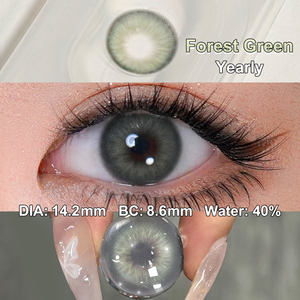
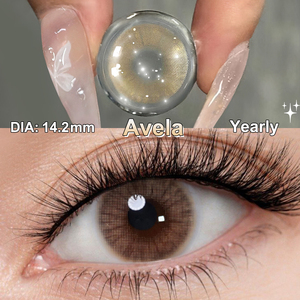
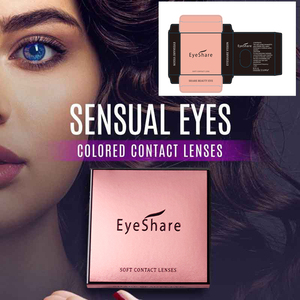
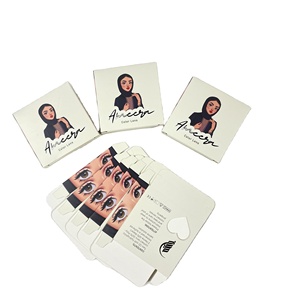
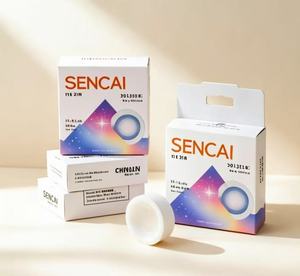
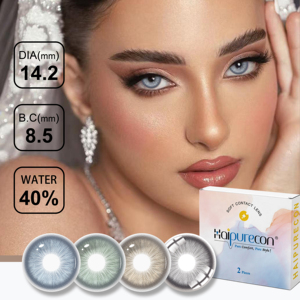
Engineering Excellence & Turnkey Supply Chain Infrastructure
Shenzhen Lensesgoo Co., Ltd provides an accountable, vertically integrated production ecosystem designed to help private label brands penetrate regulated ocular health and beauty markets worldwide.
Sandwich Encapsulation
Our proprietary 3-layer color locking process micro-encapsulates organic pigments inside the hydrogel polymer. Zero colorant ever touches the corneal epithelium, guaranteeing zero ocular cytotoxicity.
Regulatory Compliance Dossiers
We supply complete Technical Dossiers for Japanese PMDA Class III approvals, CE 0197 certifications under EU MDR, US FDA 510(k) clearances, and ISO 13485:2016 quality management system audits.
End-to-End Private Labeling
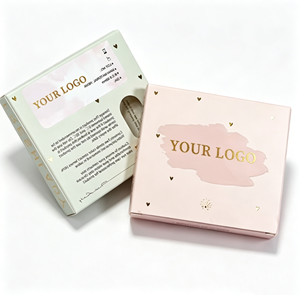
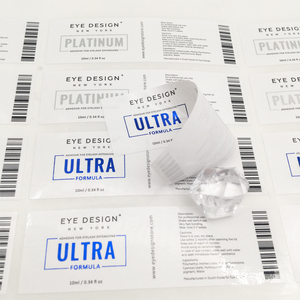
From blister cup thermoforming and sterile foil lidding to multilingual secondary carton printing, custom barcodes, and GS1 compliance, we deliver shelf-ready or DTC-ready retail packages.
Agile Small-Batch Scaling
We empower emerging D2C e-commerce brands and established medical retail chains alike with flexible minimum order quantities (low MOQs), rapid sample dispatch from stock, and 20-day production cycles.
The Strategic B2B Blueprint for Contact Lens Sourcing & Manufacturing
The global contact lens industry is undergoing a structural paradigm shift. No longer bifurcated strictly into medical corrective devices and low-cost aesthetic novelty accessories, the modern cosmetic lens market demands medical-grade precision across all product tiers. Sourcing directors, brand incubators, and optical chain procurement managers require an in-depth understanding of hydrogel polymer chemistry, manufacturing mold repeatability, biocompatibility standards, and localized regulatory frameworks. As a premier China contact lens manufacturer and exporter, Shenzhen Lensesgoo Co., Ltd provides the technical foundation, verified testing data, and logistical stability required to build and scale private label ocular brands globally.
Polymer Material Engineering: Hydrogel vs. Silicone Hydrogel Matrix
The foundation of any superior soft contact lens lies in the formulation of its cross-linked monomer matrix. Traditional hydrophilic hydrogels formulated with 2-Hydroxyethyl Methacrylate (HEMA) and N-Vinylpyrrolidone (NVP) remain the global standard for color cosmetic contact lenses due to their superior wettability, low modulus (softness), and structural flexibility. However, international consumer demand is increasingly pushing toward hybrid formulations that balance high oxygen transmissibility (Dk/t) with stable tear film dynamics.
| Polymer Category | Core Monomer Chemistry | Water Content (%) | Oxygen Permeability (Dk) | Modulus (MPa) | Ideal Clinical Indication |
|---|---|---|---|---|---|
| HEMA Hydrogel (Group I) | Poly-HEMA + EGDMA | 38% – 42% | 9 – 12 Barrers | 0.30 – 0.45 | Annual/Monthly Cosmetic Wear, High Form Retention |
| High-Water NVP (Group II) | HEMA + NVP + MAA | 55% – 58% | 18 – 25 Barrers | 0.35 – 0.50 | Daily Disposable, High Initial Comfort |
| Silicone Hydrogel (SiHy) | Fluoro-siloxane Macromers | 33% – 48% | 80 – 120 Barrers | 0.65 – 1.10 | Extended Wear, Cornea Oxygenation Critical Markets |
| Non-Ionic Bio-Polymacon | Crosslinked Hydroxy Methacrylate | 38% – 40% | 10 – 14 Barrers | 0.40 – 0.55 | Resistant to Protein & Lipid Surface Deposition |
Shenzhen Lensesgoo Co., Ltd utilizes high-purity, non-ionic polymers that suppress lipid and tear-protein denaturation on the lens surface. When formulating cosmetic lenses, our R&D department calibrates the base curve radius (B.C 8.50mm – 8.60mm) and sagittal depth to accommodate diverse global corneal topographies—from the flatter ocular profiles common in East Asian cohorts to the steeper corneas typical in Western and Middle Eastern demographics.
Cast-Molding Technology & Pigment Encapsulation Protocols
Inferior colored contact lenses produced via surface-printing methods present severe medical liabilities: pigment leaching, corneal abrasion, micro-roughness that accelerates microbial keratitis, and uneven refractive distribution. To eliminate these clinical vulnerabilities, our manufacturing facilities utilize fully automated cast-molding lines combined with advanced pad-printing sandwiched technology.
During the automated casting sequence, optical-grade stainless steel or copper core tooling creates disposable polypropylene (PP) molds. The decorative visual pattern—featuring complex multi-tone radial limbal rings, pupillary blend zones, and natural iris filaments—is printed onto the anterior mold using FDA-listed medical colorants (including iron oxides, titanium dioxide, and phthalocyanine pigments). The liquid monomer mix is dispensed, the posterior mold is seated under controlled pneumatic pressure, and the assembly undergoes thermal or UV photo-polymerization.
The resulting lens completely encapsulates the pigment layer between two smooth layers of clear hydrogel material. Scanning Electron Microscopy (SEM) surface roughness tests confirm that our lenses maintain a continuous, atomically smooth surface texture with Ra values under 8 nanometers, ensuring maximum lubricity between the palpebral conjunctiva and the corneal surface during blink cycles.
Sterilization, Packaging, and Quality Verification Protocols
Every batch manufactured for export undergoes strict bio-burden control inside our Class 100,000 cleanrooms. Automated saline dosing stations fill medical-grade polypropylene blister packs or glass vials with buffered isotonic saline solution (pH 7.2 ± 0.2, Osmolality 290 ± 15 mOsm/kg), fortified with non-cytotoxic wetting agents to ensure long-term shelf stability without compromising biocompatibility.
Sealed units are subjected to moist-heat terminal steam autoclave sterilization cycles at 121°C (250°F) for a validated dwell duration exceeding 20 minutes, securing a Sterility Assurance Level (SAL of 10^-6). Post-sterilization inspection employs computerized optical metrology systems to inspect 100% of lots for edge tears, foreign matter, center thickness variance (±0.01mm tolerance), and dioptric power accuracy using Hartmann-Shack wavefront analysis.
Future Sourcing & Procurement Trends (2025–2030)
Stay ahead of global consumer demand and supply chain volatility by aligning your private label brand with next-generation manufacturing capabilities.
Transition to Daily Disposable (1-Day) Color Formats
While annual and monthly replacement lenses retain strong market share in specialized cosmetic and costume sectors, global urban markets (such as Japan, South Korea, and Western Europe) are rapidly migrating to daily disposables. Daily modalities eliminate lens case maintenance, lower infection rates to near-zero, and generate high repeat lifetime value (LTV) for e-commerce and subscription brands.
Functional Cosmetic Convergence: UV400 & Blue-Light Filtering
Modern buyers demand hybrid functionality. Next-generation color contacts integrate intrinsic UV-blocking monomers (Class II UV absorbers blocking >70% UVA and >95% UVB) and micro-dispersed lutein or blue-violet light filtration. This transforms aesthetic lenses from simple beauty accessories into protective wellness devices for digital screen users.
Hyper-Localized Compliance & Eco-Packaging
Regulatory bodies—from Japan’s PMDA to the US FDA and EU Notified Bodies—are enforcing strict serialization (UDI - Unique Device Identification) and local language patient inserts. Simultaneously, leading brands are demanding FSC-certified biodegradable cartons, reduced blister foil mass, and recyclable secondary packaging to meet ESG criteria.
Frequently Asked Questions for Sourcing Managers & Importers
Find authoritative answers to critical technical, regulatory, and logistical questions regarding contract lens manufacturing in China.
What are your standard Minimum Order Quantities (MOQs) for custom private label orders?
For our catalog-stocked colors and established brands (Freshgo, Eyeshare, Magister), our MOQ starts at as low as 50 to 100 pairs with mix-and-match capabilities. For bespoke private-label packaging (custom designed blister foil and outer branded paper box), our standard MOQ is typically 500 to 1,000 units per SKU. Fully customized iris pattern tooling (ODM molding) begins at 5,000 pairs per design.
How do you ensure our brand can sell contact lenses legally in Japan, the EU, or the US?
Contact lenses are classified as Class III medical devices in Japan and the US, and Class IIa under EU MDR 2017/745. As a compliant manufacturer, Shenzhen Lensesgoo Co., Ltd provides complete technical files, stability testing reports, biocompatibility documentation (ISO 10993 series), and factory audit reports to your domestic Marketing Authorization Holder (MAH) or US Agent to streamline registration and clearance.
What is the difference between OEM and ODM in contact lens manufacturing?
OEM (Original Equipment Manufacturing) allows you to select existing, proven lens formulations and color designs from our technical library and market them under your custom brand name and packaging artwork. ODM (Original Design Manufacturing) involves custom formulation, proprietary graphic patterning, bespoke diameter/B.C. combinations, and unique structural packaging developed from scratch specifically for your brand.
What is the verified shelf life of your sterile packaged contact lenses?
All our soft contact lenses in blister packaging or glass vials have a validated sterile shelf life of up to 5 years from the date of terminal steam autoclave sterilization. Our packaging undergoes rigorous accelerated aging studies (ASTM F1980) and real-time stability testing to ensure pH, osmolality, seal integrity, and polymer tensile strength remain stable over the entire cycle.
Can we print local-language regulatory packaging (Japanese, French, Arabic, German)?
Yes. Our in-house packaging and prepress engineering team handles dielines, vector typography, local medical device warning symbology (ISO 15223-1), and required legal verbiage across all target jurisdictions. Whether you require Japanese PMDA approval codes, EU CE mark with Notified Body numbers, or Arabic bilingual warning inserts, we verify every detail prior to mass printing.
What are the standard production lead times and shipping methods?
Catalog styles in stock are dispatched within 7 business days. Custom OEM orders featuring branded blister foil and custom boxes are produced and quality-checked within 20 to 25 business days. We partner with DHL, FedEx, UPS air express for fast international door-to-door delivery (3 to 6 days), as well as sea freight and air cargo forwarders for commercial volume consignments.
Launch or Scale Your Private Label Contact Lens Brand Today
Collaborate with Shenzhen Lensesgoo Co., Ltd—your dedicated China contact lens private label manufacturer and exporter. Request complete technical catalogs, factory audit reports, and certified product samples today.