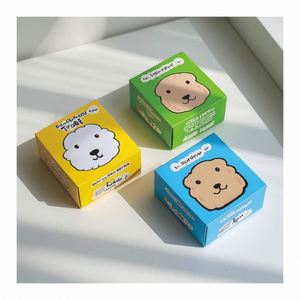
Precision Manufacturing Portfolio
Featured Wholesale Optical & Aesthetic Collections
Factory-direct volumes manufactured under Class III cleanroom protocols. Available for rapid sampling, white-label packaging, and scalable procurement contracts.
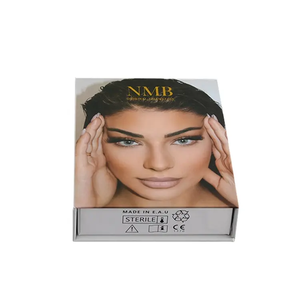
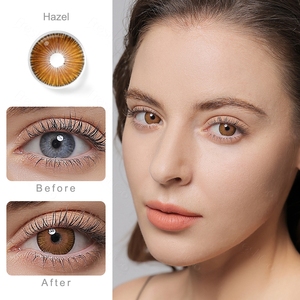
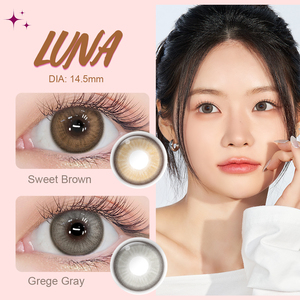
7 Days
Rapid Dispatch for In-Stock Catalogs
~20 Days
Turnaround for Custom Private Labels
100,000
Class Cleanroom Sterile Facilities
100%
PMDA, CE & Medical Class III Dossiers
Strategic Industry Whitepaper
Engineering Excellence in Modern Contact Lens Contract Manufacturing
A comprehensive examination of macro supply shifts, regulatory harmonization, polymer science, and production economics for international B2B distributors and optical chain owners.
The global contact lens landscape has entered an era of profound transformation. Historically anchored in capital-intensive Western and Japanese manufacturing clusters, contract production for both aesthetic (カラコン) and corrective hydrogel optics has rapidly concentrated within specialized Chinese manufacturing hubs like Shenzhen and Jiangsu. Driven by multi-million-dollar capital outlays in automated cast-molding lines, sub-micron precision tool lathing, and stringent Class III medical device compliance, China has shifted from a low-tier assembly region into the world’s leading hub for high-yield, high-reproducibility optical manufacturing.
For overseas wholesalers, ophthalmology groups, and e-commerce beauty consolidators, navigating this ecosystem requires an acute technical understanding of polymer engineering. Contact lenses are not cosmetic goods; they are strictly classified medical devices intended for prolonged ocular surface contact. Under current ISO 13485:2016 quality management frameworks and regional directives such as the Japanese PMD Act, the EU Medical Device Regulation (MDR 2017/745), and the US FDA 510(k), manufacturers must provide uncompromised biological safety, cellular biocompatibility, and batch traceability from pure monomer to sealed blister.
Modern procurement directors no longer evaluate suppliers purely on Unit FOB cost. Sustainable brand valuation now hinges on three engineering pillars: Oxygen Transmissibility (Dk/t) that prevents corneal hypoxia, Sandwich Pigment Micro-Encapsulation that eliminates colorant leaching, and Edge Geometry Precision that maintains adequate tear exchange during blinking. Below, we break down the technological architecture and long-term procurement trajectories shaping the global optical sector through 2030.
Core Polymer Technologies
Technological Architecture: From Monomer Cast to Final Blister
How advanced production factories eliminate corneal abrasion risks and achieve unprecedented optical clarity through state-of-the-art automation.
Full Sandwich Micro-Encapsulation
Unlike outdated pad-printing processes that apply pigment directly onto the lens surface, our advanced cleanroom lines apply micro-dot bio-compatible colorants fully embedded between two ultra-thin layers of poly-HEMA or silicone hydrogel monomers. This creates a zero-friction, smooth surface preventing pigment from coming into physical contact with the corneal epithelium or palpebral conjunctiva.
Cast-Molding Micro-Fluidics
Employing high-precision CNC diamond-turned optical inserts, our automated injection molding machines produce identical polypropylene male and female mold assemblies with sub-micron tolerances. The liquid monomer blend is metered via micro-fluidic dispensers, followed by controlled thermal and ultraviolet polymerization cycles that virtually eliminate internal optical stress patterns and edge burrs.
AOI Laser Optical Inspection
Every single manufactured lens undergoes in-line Automated Optical Inspection (AOI). Multi-camera artificial intelligence systems verify optical clarity, diopter precision, center thickness, perimeter integrity, and graphic dot uniformity in hydrated states, instantly rejecting units with microscopic tears, bubble voids, or particulate inclusions before packaging.
| Performance Dimension | Legacy HEMA Hydrogel Lines | 3rd-Gen Silicone Hydrogel (SiHy) | B2B Procurement Advantage |
|---|---|---|---|
| Oxygen Permeability (Dk/t) | 18 – 28 Dk/t (Standard Daily) | 85 – 140 Dk/t (Extended Wear) | Eliminates end-of-day redness; complies with EU/US clinical wear safety. |
| Water Content Equilibrium | 38% – 58% (High initial softness) | 33% – 45% (Low evaporation rate) | Reduces moisture extraction from the tear film, ideal for dry climates. |
| Colorant Encapsulation | Pad Printed / Edge Embedded | True Multi-Layer Polymeric Sandwich | Passes the rigorous PMDA and FDA rubbing and elution toxicity tests. |
| Modulus (Stiffness, MPa) | 0.3 – 0.5 MPa | 0.6 – 0.8 MPa | Provides superior handling and insertion ease for end-consumers without sacrificing comfort. |
| Toric & Astigmatism Accuracy | Prism Ballast ± 0.50D | Dynamic Auto-Balancing ± 0.25D | Clinical precision correcting irregular astigmatism, opening lucrative Rx optical sales. |
Market Intelligence
Future Procurement Trends: Where the Optical Sector Is Heading
Anticipate shifting consumer demographics, regulatory changes, and technical requirements to build an agile, defensible retail brand.
1. Dominance of Daily Disposables
Monthly and annual wear lenses are steadily giving way to 1-Day Daily Disposable formats across Europe, North America, and East Asia. Driven by ocular health education and convenience, B2B buyers are investing in high-speed blister packing lines to capture recurring monthly subscription revenues.
2. "Micro-Tone" Nuance Color Graphics
Exaggerated cosplay designs remain stable seasonal sellers, but mainstream sales are dominated by subtle "nuance" palettes: olive greige, dusty ash brown, and low-contrast multi-layer limbal gradients. Consumers seek natural iris brightening rather than dramatic artificial enlargement.
3. Rigorous Class III Dossier Auditing
Global customs enforcement is targeting uncertified optical importers. Sourcing directors must partner exclusively with manufacturers capable of delivering full stability study documentation, cytotoxicity test reports (ISO 10993), and authorized MAH dossier packages for smooth port entry.
4. Low-MOQ Agile Sourcing Iterations
Traditional 100,000-unit minimum order barriers are obsolete. Successful optical brands now rely on agile hybrid models: ordering curated stock catalogs with 7-day dispatch to validate regional trends before executing customized 5,000-to-20,000 unit private label production runs.
OEM / ODM Production Authority
Shenzhen Lensesgoo Co., Ltd: Integrated Optical Manufacturing
Operating advanced production facilities across Guangdong and Jiangsu, we combine clinical ophthalmic engineering with flexible white-label packaging solutions. From everyday natural aesthetic lines to specialized medical toric parameters and theatrical sclera effects, our vertically integrated supply chain provides overseas brands with unmatched agility and price stability.
- ISO 13485:2016 Medical Certified
- 7-Day Dispatch for Stock Catalogs
- ~20 Days Turnaround for Custom OEM
- Japanese PMDA MAH Documentation Ready
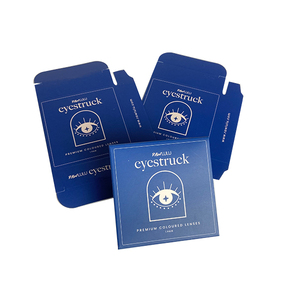
- Full In-House Graphic & Box Packaging
- Small-Medium Business (SMB) Scale Support
Whether you require sterile blister units, glass vials, custom multilingual packaging sleeves, or FDA-compliant labeling, our team works directly with your compliance officers to ensure seamless customs clearance.
Initiate Your B2B Contract Today
Consult with an optical sourcing engineer, request free sample kits from stock, or receive an immediate OEM packaging quote.
Send an Inquiry
Procurement Due Diligence
Frequently Asked Questions for Contact Lens Importers
Clear, direct answers regarding medical certifications, minimum order quantities, private label lead times, and regulatory support.
What quality certifications do your manufacturing plants hold?
Our contract manufacturing partners operate under strict ISO 13485:2016 Medical Device Quality Management Systems and comply with GMP (Good Manufacturing Practice) standards. Finished lens series feature CE compliance, NMPA Class III registration in China, and technical dossiers supporting FDA 510(k) and Japanese PMDA filing requirements.
What is the standard Minimum Order Quantity (MOQ) for OEM/ODM?
For ready-to-ship catalog brands (such as Magister or Freshgo), the minimum starting quantity is as flexible as 50 pairs to support market testing. For customized private label branding (bespoke color boxes, customized foil blister lidding, and personalized bottle caps), the standard MOQ typically starts at 500 to 1,000 pairs per design, with volume discounts kicking in above 10,000 units.
How do you support Japanese Class III medical device regulations?
In Japan, colored contact lenses are strictly regulated as Class III highly controlled medical devices under the PMD Act. They can only be legally marketed by a licensed Japanese Marketing Authorization Holder (MAH). As the production factory, we supply all required material safety data, biocompatibility test results, sterilization process validation, and factory audit documentation to your nominated MAH.
What are the lead times for catalog vs. private-label production?
Orders for in-house catalog styles with standard sterile packaging are dispatched within 7 business days via major express couriers or designated air freight forwarders. Completely customized OEM private-label projects—including bespoke multi-color box printing, graphic prototyping, and customized blister sealing—are completed within roughly 20 to 25 calendar days.
How do you guarantee that pigment will not leach or irritate eyes?
We implement true Sandwich Polymeric Encapsulation technology. The cosmetic ink is fully embedded within the inner matrix of the lens material. Before volume batch release, random sample batches undergo rigorous isopropyl alcohol (IPA) and saline mechanical friction rubbing tests to confirm zero pigment migration, strictly fulfilling international ISO 18189 ophthalmic standards.
Can you provide customized packaging in localized languages?
Yes. Our packaging division produces blister foils, user instruction leaflets (IFUs), barcode labels (EAN/UPC), and outer carton display boxes in any language, including Japanese, English, Spanish, Arabic, French, and German. We strictly adhere to your region's mandatory regulatory font sizes, CE mark placement, and expiry date formatting.
What sterilization methods are applied to blister and vial packs?
All finished contact lenses are pre-sealed in pharmaceutical-grade polypropylene blister packs or neutral borosilicate glass vials containing buffered physiological saline solution (pH 7.2 ± 0.2). Sterilization is conducted via moist heat industrial autoclaving (121°C for 30 minutes), ensuring a validated Sterility Assurance Level (SAL) of 10-6.
Can I order mixed diopters and mixed colors in a single order?
Yes. We understand that optical retailers and e-commerce stores need wide diopter spreads (-0.00 to -8.00D or higher) without holding excessive inventory on niche power ratings. We accommodate mixed diopter, mixed base curve, and mixed color assortments across your bulk purchase orders.
How are samples handled before committing to full production?
Sample orders are dispatched rapidly directly from stock. Sourcing directors can order complete physical sample rings, individual blister pairs of trending tones, and empty packaging mockups to evaluate tint opacity, water equilibrium, edge beveling, and cardboard finish prior to issuing commercial purchase orders.
What payment and international logistics terms are supported?
We accommodate standard international trade methods including Wire T/T (Bank Transfer), Documentary L/C for high-volume container shipments, PayPal, and credit card for rapid sampling. Standard shipping terms include EXW, FOB Shenzhen/Shanghai/Hong Kong, CIF, and DDP (Delivered Duty Paid) via express couriers or bonded freight forwarders.