Factory Catalog Showcase
Featured Wholesale Cosmetic & Specialty Contact Lenses
Explore our top-tier catalog of medical-grade colored contact lenses, cosplay FX series, prosthetic lenses, and private-label custom packaging solutions engineered for global distributors.
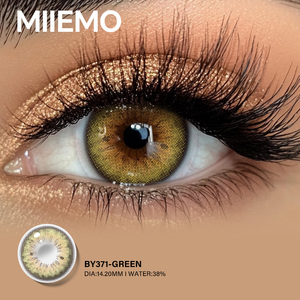
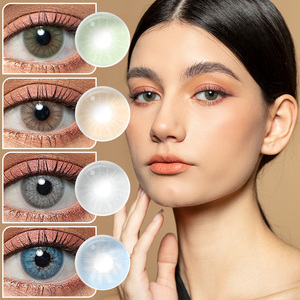
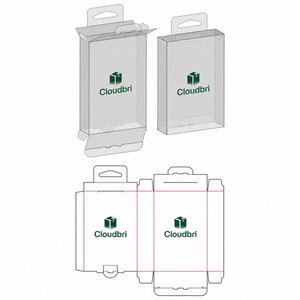
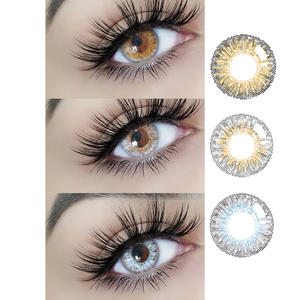
7 Days
In-Stock Ready Dispatch
~20 Days
Custom OEM Turnaround
100%
Biocompatibility Inspected
ISO13485
Medical Device Cleanroom
Factory Advantage
Leading Cosmetic Contact Lens Manufacturer in China
As a leading manufacturer and exporter (Shenzhen Lensesgoo Co., Ltd.), we specialize in high-precision polymer contact lens engineering, private-label branding, and international compliance documentation.
Fully Automated Cast-Molding Lines
Our state-of-the-art cleanrooms utilize high-speed cast molding systems that deliver superior edge symmetry, precise base curve consistency (8.5mm - 8.6mm), and ultra-smooth polymer surfaces for enhanced corneal comfort.
Double Sandwich Color Technology
Safety is paramount. Our proprietary micro-encapsulation "Sandwich" printing seals bio-compatible color pigments between two inert hydrogel layers, guaranteeing zero dye leaching or direct corneal contact.
Class III Regulatory Dossier Support
We supply complete technical documentation, ISO 13485 test data, CE certificates, and quality assurances required by local authorities (such as Japan's PMD Act Class III MAH license holders and European notified bodies).
Flexible Low-MOQ & Fast Fulfillment
Whether you are an emerging boutique cosmetic brand or a large wholesale importer, leverage our low-MOQ mix-and-match catalog stock with 7-day express shipping or ~20-day private-label OEM manufacturing.
China Wholesale Cosmetic Contact Lens Manufacturing: Comprehensive B2B Sourcing & Technical Whitepaper
The global market for cosmetic colored contact lenses, corrective prescription lenses, and specialized theatrical FX ocular optics is undergoing a profound structural evolution. Driven by cosmetic beauty trends across Asia, Europe, and North America, B2B buyers—ranging from optical store chains and cosmetic e-commerce brands to theatrical costume providers—are increasingly seeking direct partnerships with specialized China wholesale cosmetic contact lens factories and original equipment manufacturers (OEMs).
However, importing contact lenses demands far more than basic aesthetic evaluation. Soft contact lenses are classified as highly controlled medical devices across major international jurisdictions. Ensuring ocular safety, high oxygen permeability (Dk/t), surface wetting stability, and strict pigment isolation requires deep technical expertise, advanced polymer chemistry, and rigorous cleanroom quality control protocols.
Executive Summary for Importers: Partnering with an established Chinese contact lens manufacturer allows global brand owners to access automated cast-molding technologies, proprietary sandwich color printing, low minimum order quantities (MOQs), and custom private-label box packaging sets while maintaining full international medical compliance.
1. Technical Blueprint: Optical Polymer Formulations & Safety Technologies
At Shenzhen Lensesgoo Co., Ltd., contact lens engineering centers on balancing physiological eye health with rich, vibrant visual patterns. Modern hydrogel contact lenses manufactured in China predominantly utilize hydrophilic polymers such as Poly-HEMA (Hydroxyethyl Methacrylate) copolymerized with N-Vinylpyrrolidone (NVP) and Methacrylic Acid (MAA).
- Hydrogel Water Content Calibration (38% - 42%): Maintaining water content within the optimal 38% to 42% range reduces environmental dehydration and tear film evaporation. This range is ideal for daily, monthly, and yearly replacement schedules, resisting protein deposits while retaining structural tear resistance.
- Oxygen Transmissibility (Dk/t): The lens matrix incorporates micro-channels that allow adequate oxygen flux to the corneal epithelium, preventing hypoxia, edema, and neovascularization during extended cosmetic wear.
- Double-Layer Sandwich Pigment Isolation: Unlike low-grade uncertified contacts where colorant is printed on the lens surface, our factory employs a full double-cladding "sandwich" process. The cosmetic pattern is locked inside two biocompatible hydrogel layers, eliminating direct pigment contact with the cornea and conjunctiva.
- Bevel Edge & Comfort Profile Engineering: Utilizing CNC precision molds, each lens edge features a multi-tapered micro-radius bevel. This design optimizes tear film exchange beneath the lens with every blink, mitigating foreign body sensation and dry-eye fatigue.
Manufacturing Technical Parameters & Standards Matrix
| Parameter Category | Standard Commercial Range | Specialty / FX & Sclera Series | Quality Standard / Method |
|---|---|---|---|
| Material Matrix | Poly-HEMA / Hydrogel | Enhanced Hydrogel / Silicone Hydrogel | ISO 10993 Biocompatibility |
| Water Content | 38% – 42% | 40% – 45% | Gravimetric Analysis |
| Base Curve (BC) | 8.50 mm – 8.60 mm | 8.60 mm – 9.00 mm (Sclera) | Optical Interferometry |
| Overall Diameter (DIA) | 14.0 mm – 14.5 mm | 17.0 mm (Mini) / 22.0 mm (Full Sclera) | Projection Micro-Measurement |
| Color Printing Tech | 3-Tone Sandwich Printing | Multi-Layer Micro-Pigmentation | Zero-Surface Dye Leak Test |
| Power Range (Rx) | 0.00 to -8.00D (Myopia) | Plano (0.00) / Custom Rx | Refractometric Verification |
| Sterilization Method | High-Pressure Steam Autoclave | High-Pressure Steam Autoclave | ISO 17665 Validation |
2. Taxonomy of Wholesale Contact Lenses: Key Categories for Distributors
A multi-category portfolio enables B2B buyers to target diverse consumer demographics. China's mature supply chain facilitates production across multiple specialized sub-categories:
A. Natural Cosmetic Colored Lenses (1-Tone, 2-Tone, 3-Tone)
The natural cosmetic category represents the largest consumer demand sector worldwide. Featuring soft rim designs, hazel, brown, ash gray, greige, and blue tones, these lenses enhance iris depth without appearing artificial. 3-tone blends utilize outer limbal rings, primary iris color, and subtle gold/honey inner accent rings to simulate natural human iris histology.
B. Clear Prescription (Rx) Vision Correction Lenses
Essential for optical chains, clear hydrogel prescription contact lenses focus purely on visual acuity, high hydration, and mechanical flexibility. Available in standard diopter steps (-0.50D to -8.00D), clear lenses represent consistent recurring repeat-order volume.
C. Costume, Anime & Cosplay Special Effects (FX) Lenses
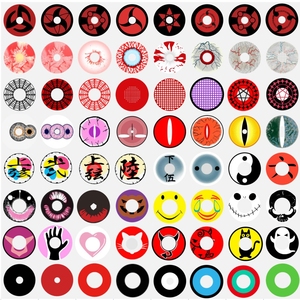
Driven by Halloween, theatrical productions, and anime conventions, the cosplay series (such as Sharingan anime motifs, crazy white-out, cat-eye vertical pupil, and neon shades) demands vivid, high-opacity pigment coverage. The challenge is preserving vibrant color visibility on dark eyes without compromising peripheral vision alignment.
D. 17mm Mini Sclera & 22mm Full Sclera Lenses
For high-impact theatrical performance, film production, and professional SFX makeup artists, sclera lenses cover extended portions of the bulbar conjunctiva. 17mm mini-sclera contacts enlarge the iris effect dramatically, while 22mm full-sclera lenses transform the entire visible eye surface. Due to their dimensions, precise curvature molding and clear wearing guidelines are enforced.
E. Ocular Prosthetic Lenses for Corneal Disfigurement & Blind Eye Applications
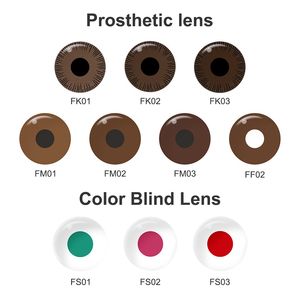
Specialized prosthetic contact lenses are designed for patients suffering from corneal opacity, leukoma, aniridia, or ocular trauma. By printing realistic iris patterns over an opaque black-backed hydrogel lens, these prosthetic options restore aesthetic symmetry to a disfigured or blind eye, dramatically boosting patient confidence.
F. Private Label Packaging, Cases, and Ocular Accessories
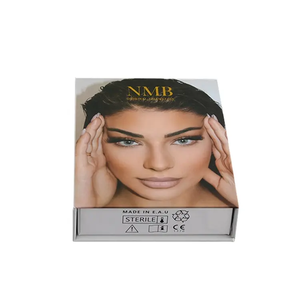
Complete B2B brand launches require co-packaged items. Manufacturers produce custom-printed paper folding boxes, blister strip foils, customized lens storage cases, tweezers, applicator kits, and hydrating eye drop solutions (10ml drops formatted specifically for colored contact lens wearers).
3. Global Sourcing & Market Trends (2026–2030)
Understanding shifting consumer preference patterns allows importers to optimize inventory selection. Key trends shaping the contact lens market include:
- Transition Toward Daily Disposables (1-Day Lenses): While monthly and annual lenses remain popular in price-sensitive markets, higher-income demographics are migrating to 1-day daily disposable colored lenses due to convenience and zero maintenance hygiene.
- Rise of "Nuance Tones" in Daily Beauty Routines: Strong high-contrast colors are giving way to subtle muted shades—ash brown, olive gray, milk tea brown, and soft amber—which consumers integrate into daily office and lifestyle cosmetics.
- Expansion of Private Label E-Commerce Brands: Influencers, cosmetic retailers, and online brands are launching proprietary lens collections. Factories offering low MOQs, customized packaging boxes, and fast turnarounds empower these SMBs to enter the market quickly.
- Rigorous Regulatory Enforcement: Regulatory bodies across LATAM, Asia (e.g., PMDA in Japan), Europe (MDR), and North America (FDA) are increasing enforcement against uncertified decorative lenses. Sourcing from certified factories with robust technical documentation is critical for legal clearance.
4. OEM & ODM Private Label Customization Workflow
Building a successful private label lens line requires a structured, step-by-step manufacturing workflow:
- Concept & Pattern Design (ODM): The buyer submits artwork or selects base designs from our catalog. Our graphics engineering team optimizes pattern density and radial gradient tone separation.
- Sampling & Color Prototyping: Test samples are produced via precision lathe-cutting or prototype molds to verify color opacity on dark and light iris baselines.
- Packaging Artwork Approval: Custom paper boxes, blister label foils, and multi-lingual user instruction inserts (e.g., Japanese, English, Spanish, Arabic) are designed and proofed against local compliance labeling rules.
- Cleanroom Mass Production: Automated liquid polymer injection, UV polymerization curing, hydrated edge inspection, and high-pressure steam autoclaving occur inside certified ISO 13485 facilities.
- Quality Assurance & Sterility Verification: Every batch undergoes bio-burden analysis, dimensional interferometry testing, dye leakage testing, and visual defect sorting prior to dispatch.
Buyer Knowledge Base
Frequently Asked Questions for B2B Importers
Get authoritative answers regarding regulatory compliance, manufacturing timelines, minimum order quantities, and custom packaging support.
What minimum order quantities (MOQs) are required for wholesale and custom OEM orders?
For catalog in-stock styles (under our standard factory packaging), starting order quantities are exceptionally flexible—allowing small and medium businesses to test market demand by mixing and matching colors and diopters. For fully custom private-label OEM orders (including custom blister foil stamping and bespoke printed outer boxes), MOQs typically start at low factory thresholds per color style, depending on packaging complexity.
How does your factory ensure pigment safety and prevent color leaching?
We utilize an advanced Double-Layer Sandwich Micro-Encapsulation technology. Color pigments are chemically embedded and locked between two outer layers of biocompatible hydrogel material. This ensures that the pigment layer never makes physical contact with the user's corneal epithelium or conjunctiva, completely preventing color migration, leaching, or ocular staining.
Can your factory support regulatory clearance for strict markets like Japan (PMD Act)?
Yes. In Japan, cosmetic contact lenses are regulated as Class III highly controlled medical devices. While local distribution requires an authorized Marketing Authorization Holder (MAH) within Japan, as the manufacturer, Shenzhen Lensesgoo Co., Ltd provides complete technical files, biocompatibility data, ISO 13485 documentation, and production flow audits required by your MAH partner for regulatory submission.
What are the production lead times for in-stock and customized private label orders?
Standard orders selected from our existing catalog stock are dispatched rapidly within 7 business days. For customized OEM private label orders involving bespoke box printing, custom blister foils, and specific prescription power allocations, complete manufacturing and quality control release usually takes approximately 20 business days.
Are sample packs available for quality and wearing testing prior to placing bulk orders?
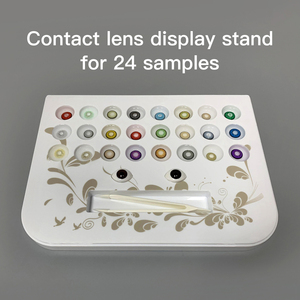
Absolutely. We encourage all prospective distributors, brand owners, and optometric professionals to order evaluation sample kits. We maintain comprehensive stock across all color series, allowing rapid dispatch of test units for comfort, color rendering, tear hydration, and mechanical flexibility verification.
What packaging options are available for custom brand manufacturing?
We offer end-to-end packaging solutions: sterile polypropylene blister packaging strips, glass vial bottles, printed folding paper boxes, magnetic gift box sets, multi-lingual instruction inserts, barcode/QR code serialization, and complementary accessories including custom lens cases, tweezers, insertion kits, and lubricating eye drops.
Ready to Launch or Scale Your Contact Lens Brand?
Partner with China's leading cosmetic contact lens factory. Request catalog pricing, order sample kits, or discuss your private label OEM/ODM project with our senior engineering sales team today.
Send an Inquiry