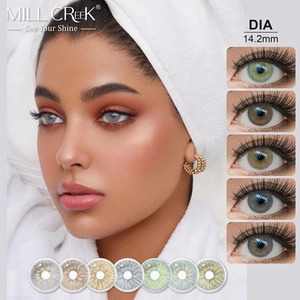
Medical Device Portfolio
Engineered Contact Lenses & OEM Packaging Solutions
Precision-cast hydrogel and poly-HEMA optics manufactured in compliance with ISO 13485 cleanroom protocols and international ophthalmic standards.
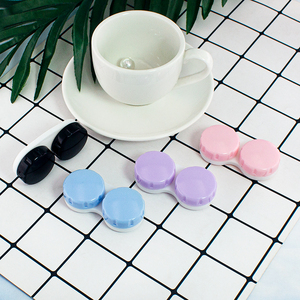
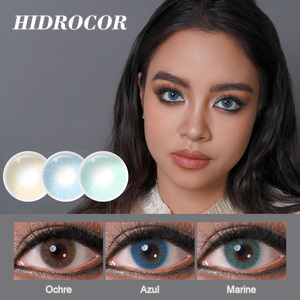
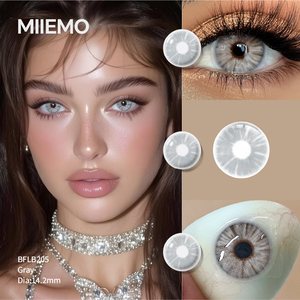
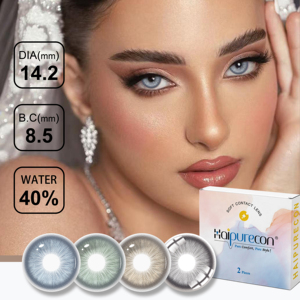
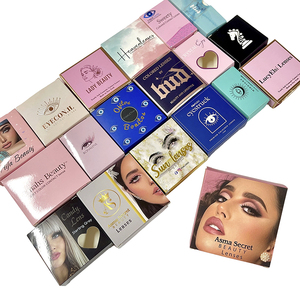
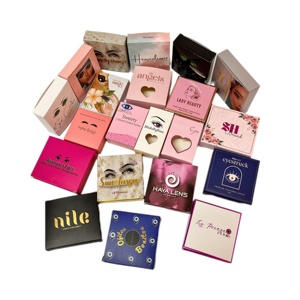
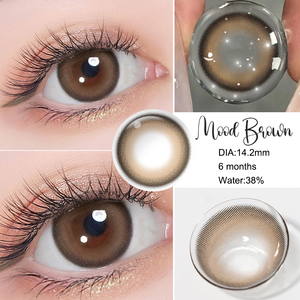
100K+
Class 100,000 Cleanroom Area (m²)
7 Days
Stock Orders Dispatch Speed
~20 Days
Full Custom Private-Label Turnaround
100%
Biocompatibility Pigment Sealing
Executive Industry Analysis
OEM Contract Manufacturing & Global Sourcing Architecture
The manufacturing of cosmetic and prescription contact lenses has transitioned from traditional commodity contract assembly into an advanced discipline of bio-compatible polymeric chemistry and micro-optical engineering. For global procurement specialists, optical brand aggregators, and clinical distributors, securing a reliable Custom OEM contact lens factory in the industrial corridor of Dongguan and Shenzhen represents an operational hedge against fluctuating regulatory demands, sub-par pigment leach risks, and extended supply chain lead times.
In contemporary ophthalmology, a cosmetic lens cannot be viewed merely as an aesthetic beauty accessory; it remains a Class II/Class III regulated medical device requiring exact surface wettability, verified oxygen transmissibility (Dk/t), and zero-exposure pigment sandwich printing. As brand owners navigate evolving clinical standards—ranging from the Japanese PMDA (Pharmaceuticals and Medical Devices Agency) Class III enforcement to US FDA 510(k) clearances and European MDR (EU 2017/745) directives—the choice of an OEM supplier rests fundamentally on rigorous engineering validation.
Full Sandwich Cast-Molding
Pigment layers are molecularly sealed between two micro-thin layers of poly-HEMA or silicone hydrogel. Color inks never make contact with corneal epithelial tissue or the palpebral conjunctiva.
Polymer Rheology & Hydration
Engineered formulations offering 38% to 58% equilibrium water content (EWC), calibrated edge-lift profiles, and minimal contact angle metrics for reduced lipid deposition and high tear exchange.
Multi-Channel Turnkey Packaging
Integrated sterile blister packaging lines with Japanese-language, European, or multilingual artwork handling. Automated foil induction, barcoding, batch validation, and secondary carton stamping.
Strategic Outlook
Emerging Procurement Trends in Contact Lens Manufacturing
B2B buyers in the contact lens domain are rapidly shifting their vendor selection parameters. Historical sourcing relied primarily on unit pricing; modern procurement focuses on agile minimum order thresholds (MOQs), multi-tier regulatory traceability, and hybrid cosmetic-therapeutic utility. Based on production insights across our manufacturing centers in Dongguan and Shenzhen, five critical shifts are defining commercial purchase orders for the coming multi-year cycle:
1. Rise of Silicone Hydrogel in Color Segments
While traditional poly-HEMA dominates volume, buyers are increasingly specifying third-generation silicone hydrogel substrates (Dk/t > 80) for color collections, minimizing hypoxia complaints during extended cosmetic wear.
2. Micro-Drop Batch Flexibility
Brand incubators are abandoning rigid 50,000-unit minimums. Modern factories are expected to support rapid test-launch cycles: short initial production runs across wide color palettes (8–12 shades) paired with dynamic replenishment triggers.
3. MAH-Ready Technical Dossiers
Procurement teams demand pre-compiled biocompatibility data, extraction studies (ISO 10993), stability reports, and sterilization validation to immediately satisfy domestic regulators (such as Japan’s PMDA MAH requirements).
R&D Horizons
Technological Roadmaps & Design Evolution
The physical profile of contact lenses is evolving from simple spherical, mono-color geometries into multi-zonal, biometric optical matrices. For distributors competing in competitive Asian, European, and American markets, staying ahead of design trends is essential to maintaining customer retention.
1. Aspheric Edge Designs for Continuous Tear Replenishment: Our engineering pipelines utilize high-precision micro-lathe and precision-molded tooling to fabricate sub-micron aspherical taper edges. This drastically reduces mechanical friction across the limbus, enhancing all-day wear comfort even in air-conditioned or digital-screen work environments.
2. Micro-Dot Matrix Pigment Mapping: High-definition color depth requires precise droplet volume control. Moving beyond legacy screen-printing methods, automated pad and digital micro-injection systems allow our facility to produce organic iris striations, subtle limbal feathering, and complex 3-tone gradient structures (such as seen in our Angeles and MOOD NIGHT lines) without increasing lens thickness.
3. Hybrid Specialty Optics: Market demand extends beyond standard 14.0mm–14.5mm cosmetic lenses. Scaled manufacturing of 17mm Mini Sclera and 22mm Full Sclera designs requires specialized annealing techniques to prevent structural warping and maintain peripheral oxygen diffusion during theatrical, film, and cosplay applications.
Manufacturing Capabilities
Why Partner with Our Dongguan & Shenzhen Facility
Shenzhen Lensesgoo Co., Ltd provides an end-to-end industrial platform tailored for optical enterprises seeking dependable scale, regulatory clarity, and design leadership. By combining advanced cleanroom automation with dedicated OEM/ODM branding services, we convert product concepts into commercially validated inventory.
Agile Turnaround Timelines
Immediate catalog styles dispatch within 7 days. Full custom OEM formulations, private label packaging boxes, and tailored foils are ready for distribution within approximately 20 days.
Global Commercial Terms
Seamless international settlement pathways including T/T, PayPal, credit cards, and accredited commercial instruments, providing frictionless transactions for businesses globally.
Turnkey Packaging & Finishing
Internalized box production with hot-foil stamping, spot UV, barcode serialization, and localized regulatory declarations (e.g., Japanese, French, Spanish, English) for immediate shelf clearance.
B2B Knowledge Base
Frequently Asked Procurement & Manufacturing Questions
Critical operational answers for brand managers, procurement directors, and regulatory consultants.
What is the minimum order quantity (MOQ) for custom private label projects?
For catalog styles operating under private packaging label runs, MOQs start low to facilitate market testing across diverse color palettes. For complete bespoke mold development or custom graphic diameter (GDIA) prints, MOQs are determined by cleanroom run volumes. Contact our engineering team for flexible SKU mix-and-match models.
How do you guarantee color stability and bio-safety in colored lenses?
We employ Cast Molding Pigment Sandwich Technology. Organic and inorganic cosmetic pigments are permanently sealed between hydrogel monomer layers before thermal or UV polymerization. This isolates the pigment completely from tear film interaction, preventing cellular abrasion or cytotoxicity risks.
Can your facility provide documentation for regulated markets like Japan or the EU?
Yes. While our factory does not act directly as a domestic Marketing Authorization Holder (MAH) in Japan, we deliver technical dossiers, factory audits, ISO 13485 records, biocompatibility test data, and sterile barrier validation reports required by your authorized domestic representative.
What are the standard lead times for custom OEM production?
Off-the-shelf and standard brand orders dispatch from our facility within 7 days. For fully customized private-label runs—including printed packaging, customized foil lids, specific base curves (BC), and localized labeling—typical factory turnaround is approximately 20 business days.
Do you provide pre-production samples for physical and clinical review?
Yes. We maintain active inventory across our full portfolio of natural tones, FX designs, and sclera models. Physical samples can be expedited via international air express for wear testing, slit-lamp assessment, and regulatory submission prior to volume commitment.
Can you customize primary blister packs and secondary cartons?
Our manufacturing scope encompasses complete packaging engineering: medical PP blister packs with high-barrier foil lidding, glass vials, custom cartons with hot-foil embossing, multi-fold instruction leaflets, and retail display master cartons tailored to regional marketing regulations.