Turnkey Private Label Optical Formulations & Packaging Lines
Browse our factory-direct color formulations, clinical clear prescription powers, and bespoke secondary packaging configurations engineered for seamless market penetration across Japan (PMDA), Europe (CE MDR), and the Americas.
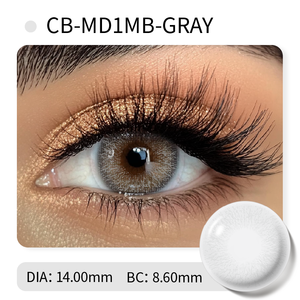
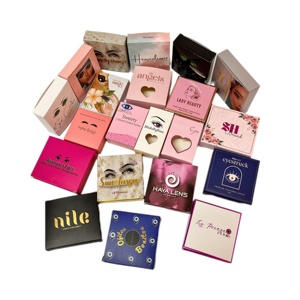
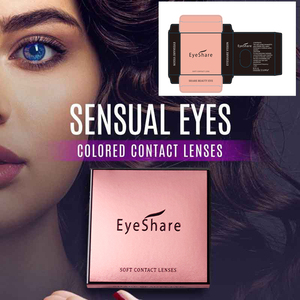
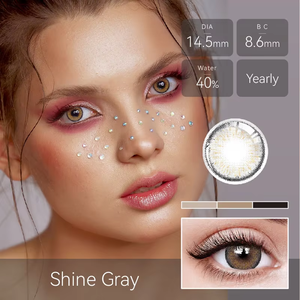
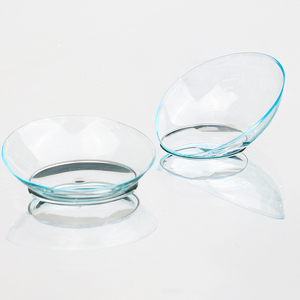
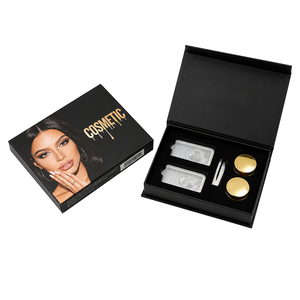
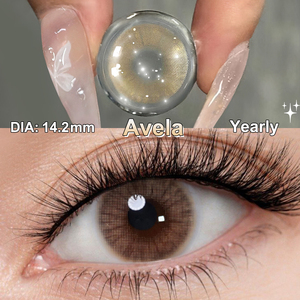
Cast Molding, Sandwich Printing & Biocompatibility Standards
Modern contact lenses are regulated as medical devices because they interact directly with corneal tissue and tear film. Our cleanroom facilities employ cast molding processes coupled with multi-layer color entrapment to deliver maximum oxygen transmissibility and physiological safety.
Proprietary Sandwich Color Lock
Unlike entry-level pad-printed lenses where pigments can rub against epithelial cells, our sandwich encapsulation beds mineral pigment entirely between two ultra-thin transparent hydrogel polymer strata. The cornea touches only pure, sterile hydrogel, completely eliminating mechanical abrasion and allergic keratitis.
Cast-Molding Edge Profile
We utilize precision-machined optical steel molds paired with computer-controlled liquid polymer injection. This guarantees a multi-curve bevel profile that optimizes tear exchange beneath the lens body during involuntary blinks, reducing hypoxia risks and dry-eye fatigue throughout extended 14-hour daily wear cycles.
Optical Asphericity & Low UV Index
Our optical geometry features front-surface aspheric curvature corrections that resolve common peripheral visual distortions and coma aberrations under low-light conditions. Built-in Class II UV blockers absorb over 70% of UVA and 95% of UVB radiation without degrading color clarity or luminous transmission.
Future Procurement Trends in the Global Contact Lens Industry
Strategic supply chain directors must navigate technological pivots and shifting international compliance frameworks. Here are the core structural transformations defining B2B contact lens procurement through 2030.
1. The Transition to High-Dk/t Silicone Hydrogel in Color Cosmetics
Historically, colored contact lenses relied almost exclusively on HEMA-based hydrogels due to the ease of pigment suspension. However, institutional buyers in mature markets like the US, EU, and Japan now demand high oxygen transmissibility (Dk/t > 80 Barrers). Our factory is pioneering advanced fluorosilicone hydrogel co-polymers that integrate rich color encapsulation without sacrificing the oxygen permeability required for corneal metabolism.
2. Heightened Regulatory Scrutiny: PMDA, MDR & FDA 510(k)
Governments worldwide have reclassified cosmetic contact lenses into higher-risk medical device categories (Class III in Japan under the PMD Act; Class IIa/IIb in Europe under MDR 2017/745). Procurement teams can no longer source from informal trading agents. Reliable factory partners must supply complete Device Master Files (DMF), biological evaluation reports (ISO 10993 cytotoxicity, ocular irritation), and validation data for ethylene oxide (EtO) or high-pressure steam autoclave sterilization.
3. Rapid Customization & Low-MOQ Agile Brand Launches
The rise of social-first beauty incubators, influencer collaborations, and fast-fashion eyewear retailers has upended traditional 50,000-unit minimum order quantities. Sourcing directors require tiered MOQ models. Our flexible production lines allow private-label brand testing with starting runs as low as 500 to 1,000 units per SKU, paired with pre-sterilized stock blisters and custom digitally printed secondary cartons.
4. Sustainable Packaging & Eco-Blister Architectures
ESG compliance is transforming primary and secondary packaging. Forward-thinking wholesalers are moving away from bulky glass vials towards ultra-compact polypropylene blisters that cut plastic consumption by 65% and reduce global freight volume by 40%. Biodegradable soy-based ink printing on FSC-certified secondary paper boxes is rapidly becoming a standard B2B tender prerequisite across Western European and Scandinavian markets.
OEM vs. ODM vs. Turnkey Private Label: Capability Matrix
Selecting the appropriate contractual framework balances capital deployment, speed to market, and proprietary intellectual property ownership. Evaluate our core production service tiers below.
| Evaluation Metric | OEM Private Label | ODM Custom Development | Wholesale Distribution |
|---|---|---|---|
| Primary Target | Established brands launching rapid SKU extensions | Proprietary brands seeking unique iris artwork & curves | Retailers & clinics requiring pre-certified stock items |
| Pattern & Tint Design | Selected from 800+ proven catalog color formulations | Bespoke graphic diameters, pupil apertures & layering | Factory brand formulations (Magister, Freshgo, etc.) |
| Tooling & Mold Costs | Zero Mold Fee | Tooling required for proprietary base curves/diameters | Zero Mold Fee |
| Production Lead Time | Approximately 15 – 20 business days | 35 – 55 business days (including prototyping) | 5 – 7 business days (shipped from warehouse stock) |
| Regulatory Dossier Support | Full tech pack, CE certificate copies & CoA provided | Custom clinical trial data & full DMF documentation | Standard product release certificates & batch sterility |
| Secondary Packaging | Full custom carton, blister foil printing, inserts & barcodes | Exclusive packaging geometry, luxury rigid boxes, kits | Standard brand retail-ready packaging |
Why Top Global Brands Partner with Our Shenzhen Manufacturing Complex
Shenzhen Lensesgoo Co., Ltd provides an accountable, end-to-end medical device manufacturing infrastructure designed to de-risk overseas sourcing for optical distributors, salon networks, and e-commerce entrepreneurs.
ISO 13485 & GMP Quality Systems
Our operations comply strictly with ISO 13485 medical device quality management systems and Good Manufacturing Practices (GMP). From incoming raw monomer spectrometry to post-autoclave batch sterility validation, each production stage operates under digital lot-traceability protocols.
Automated AOI Optical Inspection
We minimize human error through high-speed Automated Optical Inspection (AOI) vision hardware. Every single lens undergoes high-resolution digital imaging to screen for edge nicks, air inclusions, particulate impurities, and color print decentralization before entering autoclave chambers.
Comprehensive Regulatory Support (MAH)
Navigating foreign regulatory clearances can stall brand launches. For Japan, we collaborate directly with your appointed Marketing Authorization Holder (MAH) to supply approved factory inspection reports, stability testing data, and bilingual labeling specifications required under the PMD Act.
B2B Contract Manufacturing & Sourcing FAQ
Clear, authoritative technical answers addressing minimum order thresholds, chemical safety parameters, sterilization cycles, and overseas customs clearance.
What are the minimum order quantities (MOQ) for custom private-label color contact lenses?
For pre-formulated catalog colors using your custom private-label secondary packaging (outer cartons, blister foil design, and user manual inserts), our starting MOQ is typically 500 to 1,000 pairs total, with flexible power distribution across -0.00 to -8.00 diopters. For completely bespoke ODM pattern design and new tooling base curves, the standard production threshold begins at 5,000 pairs per design to offset mold precision calibration costs.
What sterilization methodology is utilized, and what is the shelf-life rating?
All contact lenses are sealed within pharmaceutical-grade polypropylene blister packs filled with buffered saline solution and sterilized via moist heat high-pressure autoclaving (121°C for a minimum of 20 minutes). This yields a Sterility Assurance Level (SAL) of 10^-6. Our packaged lenses maintain an accelerated aging-validated shelf life of 5 years from the date of manufacture when stored in cool, dry conditions away from direct sunlight.
How does your factory ensure pigment safety in cosmetic contact lenses?
We employ a proprietary sandwich encapsulation cast-molding technique. High-purity, bio-inert mineral iron oxide and mica pigments are chemically locked inside the matrix polymer core. Microscopic cross-section scanning electron microscopy (SEM) tests confirm that the outer surface is 100% smooth hydrogel, ensuring zero dye leach and zero direct mechanical contact with the user's corneal epithelium or conjunctiva.
Can you provide technical documentation for regulatory clearance in the US, EU, and Japan?
Yes. We provide complete technical documentation packages including ISO 13485:2016 quality system audit reports, CE Declaration of Conformity under EU MDR, biocompatibility test results (ISO 10993 cytotoxicity, sensitization, systemic toxicity, and ocular irritation), physical-chemical property profiles (refractive index, oxygen permeability, water equilibrium content), and continuous stability reports. For Japanese importers, we provide all technical factory files required by your Marketing Authorization Holder (MAH).
What are the standard production lead times and shipping turnaround schedules?
Orders for in-stock catalog brand products (Magister, Freshgo) ship within 5 to 7 business days via air express (DHL, FedEx, UPS) or direct air cargo forwarders. Custom OEM private-label production runs—including custom cardboard package fabrication, die-cutting, automated foil printing, blister sealing, and autoclave validation—require approximately 15 to 22 business days from the final approval of your packaging artwork proofs.
Can you assist with barcode assignment, UDI serialization, and packaging localization?
Absolutely. Modern medical device regulations necessitate Unique Device Identification (UDI) barcodes (GS1 standard) and explicit traceability data printed on secondary and primary packaging (lot number, expiry date, sterile barrier icons). Our in-house engineering and packaging artwork team assists buyers in placing compliant 2D DataMatrix or linear barcodes, multilingual warning warnings, and Japanese/European symbols according to international ophthalmic trade mandates.