Featured OEM/ODM Cosmetic & Optical Contact Lenses
Engineered through micro-sandwich color entrapment and high-precision cast molding. Each product line supports bespoke packaging, custom diopter ranges (-0.00 to -10.00), and rapid international distribution.
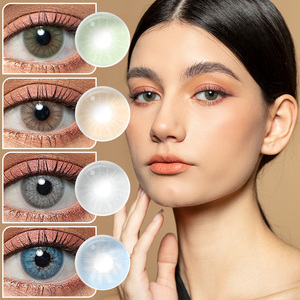
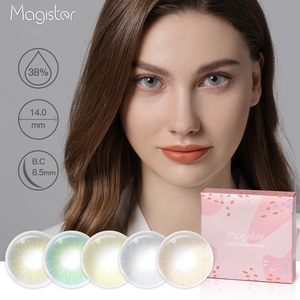
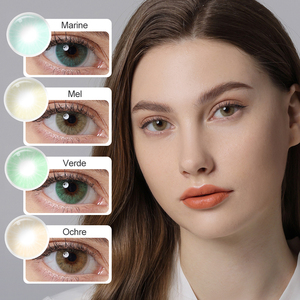
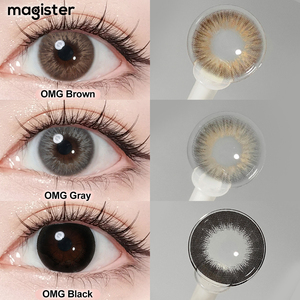
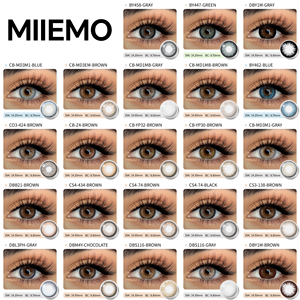
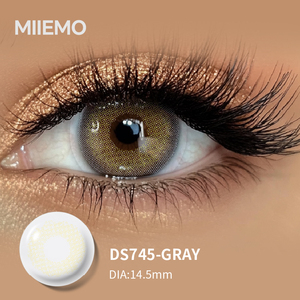
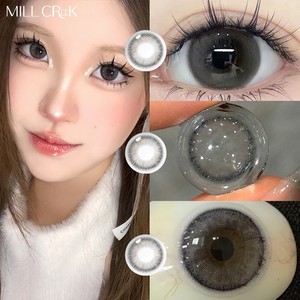
Enterprise Manufacturing Infrastructure: Shenzhen Lensesgoo & Dashicheng Industrial Ecosystem
In the global ophthalmic and beauty device sector, cosmetic contact lenses (popularly categorized as Color Contacts, Lentes de Contacto, or Japanese カラコン - Colorcon) demand a manufacturing framework that balances biomedical safety with dynamic cosmetic fashion aesthetics. Shenzhen Lensesgoo Co., Ltd., working in tandem with the Dashicheng manufacturing consortium, operates a specialized cleanroom manufacturing park engineered around ISO 13485:2016 standards and cGMP medical Class 100,000 cleanroom environments. Unlike non-regulated beauty accessories, colored contacts sit in direct contact with the human cornea, demanding uncompromising biological inertness, precise optical centering, and stable oxygen transmissibility (Dk/t).
Our OEM (Original Equipment Manufacturer) and ODM (Original Design Manufacturer) facilities utilize automated polymer cast-molding infrastructure alongside patented micro-sandwich pigment encapsulation technology. This ensures colorants (iron oxides, titanium dioxide, copper phthalocyanine) are molecularly locked inside the hydrogel matrix without migrating to the surface, protecting the wearer from corneal abrasion and toxic monomer leaching. Serving international pharmaceutical importers, private label beauty brands, and licensed optical chains in Tokyo, Osaka, Europe, and the Americas, our operational model bridges low starting Minimum Order Quantities (MOQ) for burgeoning e-commerce disruptors with multi-million unit monthly outputs for tier-one retail conglomerates.
Over 1,200 curated natural, cosplay, and mini-sclera variants maintained in real-time inventory for rapid wholesale fulfillment.
Complete end-to-end custom production including foil blistering, multi-language retail carton printing, and sterilization cycles.
Complete technical dossier generation (STED, biocompatibility cytotoxicity reports) tailored for Japanese MAH and international authorities.
Proprietary dual-coating encapsulation prevents color fading and ensures zero tactile surface roughness on the ocular epithelium.
Cutting-Edge R&D: Next-Generation Colored Contact Lens Technologies
The manufacturing paradigms of cosmetic contact lenses have evolved from simple lathe-cutting and pad-printing onto surface polymers into sophisticated molecular engineering and high-throughput optical casting. Understanding these technical transitions is vital for brand procurement managers who must differentiate their product lines in saturated retail landscapes.
Silicone Hydrogel (SiHy) Cosmetic Integration
Historically confined to clear medical lenses due to pigment-binding polymer incompatibilities, silicone hydrogel colored contact lenses represent the modern industry benchmark. By introducing siloxane macromers into the formulation, Dk/t values jump from 15–25 (standard PolyHEMA) to 80–120. This hyper-transmissibility minimizes corneal hypoxia, allowing daily wear times to safely extend beyond 14 consecutive hours without limbal hyperemia.
High-Definition Micro-Dotting & Biomimetic Iris Optics
The aesthetic trend has decisively transitioned away from opaque, pixelated circle prints toward multi-layer biomimetic iris simulations. Using nanoscale automated dot-matrix laser patterning, modern lenses blend three to four tonal strata: a delicate, feathered limbal boundary (13.2mm to 13.8mm Graphic Diameter), a textured stroma matrix that allows natural eye undertones to filter through, and a softly graduated pupillary transition zone.
Hydrophilic Surface Grafting (MPC & Hyaluronic Acid)
Ocular comfort hinges on surface wettability and tear-film stability. Cutting-edge ODM production integrates 2-methacryloyloxyethyl phosphorylcholine (MPC) copolymerization and Hyaluronic Acid (HA) soaking buffers directly into the sterile blister solutions. These polar molecules mimic cellular membranes, resisting protein/lipid adhesion and maintaining low wetting angles (<45°) throughout prolonged computer-screen exposure.
Technical Material Specification & Comparison Matrix
| Polymer Class | Water Content | Oxygen Permeability (Dk/t) | Sandwich Tech Layer | Primary Commercial Use | Target Regulatory Threshold |
|---|---|---|---|---|---|
| Standard Hydrogel (PolyHEMA) | 38% – 42% | 18 – 28 Dk/t | Dual-layer cast embed | Cost-effective annual & monthly retail lines | ISO 13485 / CE / FDA 510(k) |
| Ionic High-Water Hydrogel | 55% – 58% | 25 – 35 Dk/t | Micro-encapsulated core | 1-Day daily disposable comfort lines | Japanese PMDA Class III / US FDA |
| Advanced Silicone Hydrogel (SiHy) | 38% – 45% | 85 – 110 Dk/t | Siloxane-locked pigment barrier | Premium high-end boutique optical brands | Global Medical Class III Approvals |
| Costume / Sclera (17mm–22mm) | 38% | 20 – 25 Dk/t | Opaque triple-coat encapsulation | Theatrical, film, cosplay, SFX events | Heavy-metal screening & Cytotoxicity tests |
Future Procurement Trends: Navigating Market Dynamics Through 2030
Purchasing directors and retail brand builders must align their procurement pipelines with tectonic shifts in consumer behavior, environmental mandates, and regulatory oversight. B2B sourcing strategies implemented today will define market dominance over the next decade.
1. The Irreversible Pivot Toward Daily Disposables (1-Day Lenses)
While yearly and monthly replacement lenses retain strong demand in value-driven developing markets, mature markets such as Japan, South Korea, Western Europe, and North America exhibit an overwhelming shift toward single-use daily disposables. Daily contact lenses eradicate compliance issues surrounding lens cases and contact lens multi-purpose solutions, minimizing microbial keratitis risks. In procurement calculations, high-volume automated 1-day blister packaging machinery drastically reduces per-unit costs, generating recurring monthly subscription revenues for direct-to-consumer (DTC) brands.
2. "Nuance Tones" Overpower Dramatic Enlargement
The aesthetic paradigm has matured. The exaggerated "anime eye" or stark doll-like enlargement (14.5mm+ Graphic Diameter) has become a niche segment primarily reserved for subcultures and cosplay. In mainstream optical and cosmetic retail, demand is dominated by "nuance tones"—ash browns, greige (grey-beige), sheer olive undertones, and muted ambers. Modern professional wearers demand colored lenses that enhance iris brightness without appearing visibly synthetic under office daylight or high-resolution smartphones.
3. ESG-Driven Sustainable Blister & Cartridge Packaging
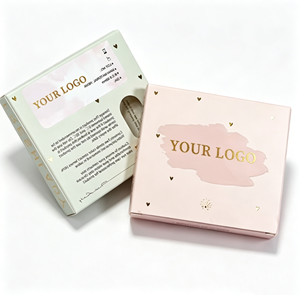
Environmental scrutiny over single-use plastics has prompted leading manufacturers to redesign the secondary and tertiary packaging chain. As reflected in Dashicheng's specialized custom cardboard packaging lines, forward-thinking brands are sourcing FSC-certified recyclable outer boxes, soy-based non-toxic printing inks, and ultra-thin polypropylene blister shells with reduced plastic grammage. Integrating sustainable product storytelling provides a proven margin premium in Western e-commerce.
4. Regulatory Tightening & Mandatory Supply Chain Traceability
Global regulatory bodies no longer tolerate the misclassification of colored contact lenses as mere "cosmetics." In Japan, under the PMD Act (Pharmaceutical and Medical Device Act), all cosmetic contacts are strictly classified as Class III Highly Controlled Medical Devices. Distributors must partner with a licensed Japanese Marketing Authorization Holder (MAH) and possess full Foreign Manufacturer Accreditation (FMA). In the EU, the transition from MDD to MDR (Regulation EU 2017/745 Annex XVI) demands clinical evaluation and unannounced factory audits even for zero-power aesthetic lenses. Sourcing from accredited facilities like Lensesgoo provides importers with rock-solid compliance documentation, mitigating shipment seizures and customs recalls.
B2B Strategic Sourcing Playbook: Evaluating Procurement Models
Selecting the optimal collaboration model between wholesale stock distribution, OEM private label manufacturing, or full-stack ODM co-development is a decisive strategic milestone. Below is an executive operational breakdown designed for supply chain managers:
| Operational Dimension | In-House Brand Wholesale (Freshgo / Magister) | OEM Private Label Production | ODM Bespoke Engineering |
|---|---|---|---|
| Target Business Profile | Emerging retailers, salon owners, e-commerce dropshippers, event vendors. | Established beauty brands, optical chains, drugstore private label brands. | Large optical conglomerates, international fashion houses, influencer brands. |
| Minimum Order Quantity (MOQ) | Ultra-low (50–100 pairs mix-and-match across stock catalogs). | Moderate (500–1,000 pairs per SKU / custom printed carton). | Higher (3,000–5,000 pairs per custom molded color/pattern). |
| Lead Time to Dispatch | Immediate: 3 to 7 working days from central warehouse. | Fast: 15 to 25 working days including packaging printing. | 45 to 60 working days (prototype tooling, pilot casting, color sampling). |
| Packaging Customization | Standard factory branded blister packs, vials, and barcodes. | Client's bespoke artwork, multi-language instructions, UPC/EAN barcodes. | Unique blister geometries, custom-molded cases, boutique rigid gift boxes. |
| IP & Design Exclusivity | Shared factory catalog designs. | Private label branding on proven, validated optical patterns. | Exclusive proprietary patterns, custom base curves, and bespoke diameters. |
Frequently Asked Questions: B2B Sourcing, Manufacturing & Logistics
Comprehensive technical and commercial clarity derived from decades of manufacturing consultation for international importers and brand founders.
How does your factory prevent pigment leakage in cosmetic lenses?
We employ proprietary Dual-Layer Cast Molding Sandwich Technology. Colored pigments are micro-encapsulated inside an inert, biocompatible hydrogel monomer matrix. Unlike cheap pad-printed lenses where pigments are directly exposed to the outer surface, our lenses ensure zero physical contact between color agents and the corneal or palpebral conjunctival tissues, verified via cotton-swab rub tests and ISO cytotoxicity assays.
What is the standard procedure for regulatory compliance in Japan?
Under Japan's PMD Act, colored contact lenses are regulated as Class III Highly Controlled Medical Devices. Foreign manufacturers must hold Foreign Manufacturer Accreditation (FMA), and products must be approved under a Shonin (Marketing Approval) held by a licensed Japanese Marketing Authorization Holder (MAH). Shenzhen Lensesgoo provides complete technical dossiers (STED), biocompatibility reports, cleanroom sterilization logs, and blister integrity data to your designated MAH.
Can we mix and match colors and diopter powers in small starting orders?
Yes. For our ready-to-ship stock catalog lines (Freshgo, Magister, and Emily Series), we actively support emerging e-commerce retailers and optical startups with low MOQ programs. You can mix and match across natural beauty tones, cosplay styles, and diopter strengths (from plano 0.00 up to -8.00 in 0.25D/0.50D increments) to test consumer appetite before committing to bulk OEM production.
What are your manufacturing lead times and international shipping options?
In-house stock catalog orders dispatch within 3 to 7 working days. Custom OEM private label projects typically ship within 15 to 25 days following artwork sign-off and blister foil prepress verification. We ship worldwide via tier-1 international air express (DHL, FedEx, UPS) with transit times of 3–5 days to Japan, Southeast Asia, Europe, and North America, or through your designated freight forwarder.
Can you manufacture theatrical, Halloween, and 17mm/22mm sclera lenses?
Yes. We specialize in regular theatrical FX lenses, 17mm mini-sclera contacts, and 22mm full-sclera custom lenses. These products undergo rigorous thickness-profile optimization and edge-contour polishing to ensure adequate tear exchange. Sclera and costume lines meet identical clinical safety and sterilization standards as our natural beauty lenses.
Do you support full packaging customization including local languages?
Absolutely. Our integrated packaging lines provide bespoke outer cardboard carton engineering, blister foil backing printing, multi-fold informational package inserts (package leaflets), and batch coding (Lot number, EXP date, sterile symbol). Packaging artwork can be fully prepared in Japanese, English, Spanish, French, Arabic, or German conforming to regional labeling laws.