Featured OEM/ODM Production Lines & Clinical Portfolios
From ultra-thin tri-tone color blends and Class III prosthetic tinted lenses to surgical fundus diagnostic optics, our automated cast-molding lines provide turnkey private label scalability with zero pigment leakage.
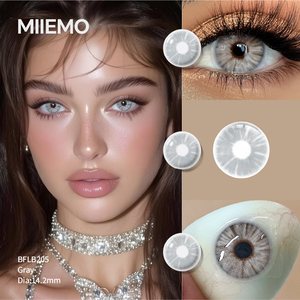
DSC Factory Half Year Disposable Soft HEMA Three Tone ISO 13485 Certified Dream Color Style Korean Design Safe Contact Lenses
- Patented sandwich color-lock encapsulation technology
- Smooth Korean design dot-matrix iris replication
- Extended durability cycle validated for 6-month comfort
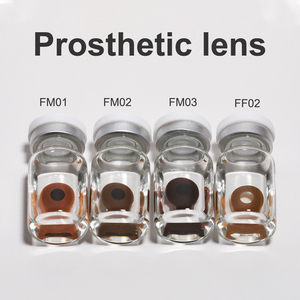
Free Shipping Soft Prosthetic Lens Contacts Factory Wholesale Red Green Brown Color Blind Eye Lens Colored Contact Lenses
- Medical-grade opaque backing for corneal scarring/aniridia
- Selective wavelength filtration for red-green deficiency
- Custom pupillary and iris diameters (3.5mm to 14.5mm)
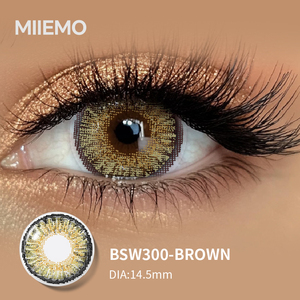
Bulk Order Soft Grey Colored Contact Lenses HEMA Material Best Selling Styles Wholesale Price
- Subtle ash-grey gradient tuned to East Asian aesthetic trends
- Non-ionic hydrogel matrix resistant to lipid deposition
- High-speed blister packaging compatibility with sterile foil
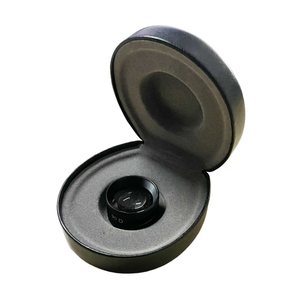
Best Selling Factory Price InnoVue Opto 90D Wide-Field Fundus Contact Lens for Laser Treatment in Ophthalmology
- High-index optical glass for photocoagulation clarity
- Multi-layer AR coating optimized for 532nm & 810nm lasers
- Ergonomic contact rim ensuring stable corneal docking
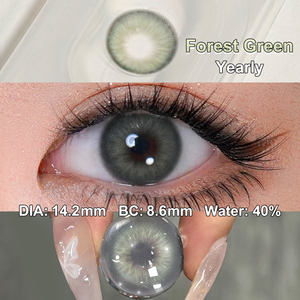
Free Shipping Freshgo Eye Contact Lenses New Wholesale 14.20mm Soft Black Contact Lenses 6 Months Beauty Eye Color Contacts
- Dense micro-limbal ring design for natural iris enlargement
- Advanced oxygen transmissibility Dk/t 24 for prolonged wear
- Turnkey branding available in twin-pack or vial packaging
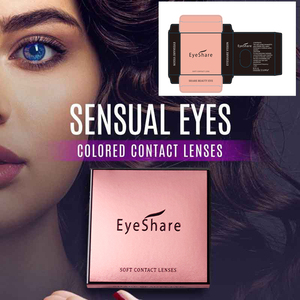
Eyeshare Natural Color Eye Contact Lens Paper Box Soft 2 Pieces Natural Cosmetic Eyewear Custom Box High Water Eye Lens
- Turnkey localized packaging conforming to PMDA & FDA
- Dual blister pack design featuring high-tensile sterile foil
- Hydrophilic edge contour reducing tear-film breakup
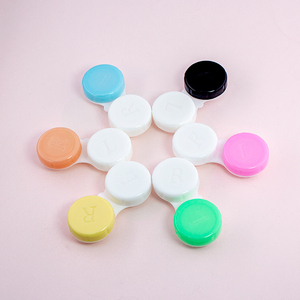
Portable High Quality Mini Square Contact Lenses Travel Insertion & Storage Case Kit
- BPA-free medical polymer injection with mirror & tweezers
- Leakproof screw-seal chambers preventing contamination
- Custom Pantone color matching and private label logo imprint
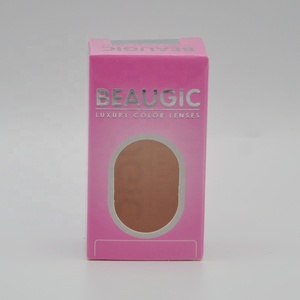
Beaugic Contact Lenses Paper Box Color Contact Lens Box Customized Cosmetic Contact Lenses Package
- Anti-counterfeiting holographic foiling & variable QR coding
- Integrated package inserts compliant with multilingual labeling
- Rigid structural integrity engineered for automated packing lines
Engineering Superiority & Cleanroom Production Architecture
Shenzhen Lensesgoo Co., Ltd provides an accountable, direct-from-factory contract manufacturing ecosystem. We combine Class 100,000 cleanroom environments, high-precision automated cast molding, and regulatory documentation assistance for Class III medical devices.
Low MOQ & SMB Growth Program
We break down barriers for emerging beauty brands, cosplay outlets, and optical retailers. Access flexible trial runs, mix-and-match SKU selection from our comprehensive catalog, and rapid market-testing pipelines without crippling capital commitments.
Sandwich Color Embedding Tech
Zero direct dye contact. Our automated multi-layer cast molding permanently locks pharmaceutical-grade micro-pigments between inert pHEMA layers, eliminating corneal abrasion, dye elution, and foreign body sensation for total clinical safety.
Ultra-Fast Dispatch & Logistics
Maintain market velocity. Off-the-shelf in-house brand inventory ships within 7 business days, while customized OEM/ODM private-label packaging and bespoke formulations are completed and packed in approximately 20 days with end-to-end forwarder tracking.
Class III Medical Device Dossiers
Selling into regulated markets like Japan (PMDA), the United States (FDA 510k), and the European Union (CE MDR)? We supply comprehensive biocompatibility reports, cytotoxicity assays, stability validation, and MAH-ready technical dossiers.
Full Customization (OEM/ODM)
From bespoke graphic diameters (GDIA 12.8mm to 13.8mm for natural enlarging effects) to extreme 17mm mini-sclera and 22mm full-theatrical FX contacts, our precision tooling accommodates any optical or cosmetic design requirement.
Turnkey Packaging & Barcoding
We print retail-ready Japanese, English, or multilingual boxes, package inserts, and serialized barcode labels. We support both high-speed PP blister packs and glass vial packaging, ensuring compliance with local drugstore labeling statutes.
Future Strategic Procurement Trends in Contact Lens Manufacturing (2025–2030)
Understanding material science transitions, regulatory tightening, and consumer behavioral shifts is vital for wholesale importers, pharmacy chains, and brand directors to maintain robust supply margins.
1. The Silicone Hydrogel (SiHy) Cosmetic Transition
While traditional pHEMA (poly-2-hydroxyethyl methacrylate) hydrogels dominate wholesale cosmetic lenses due to exceptional wettability and proven dye-affinity, international demand is aggressively shifting toward Silicone Hydrogel formulations. Delivering oxygen permeability ratings (Dk/t) exceeding 80–120 vs. 20–28 in standard hydrogels, SiHy eliminates corneal hypoxia during extended 12-hour daily cosmetic wear. Brand owners who invest in SiHy formulations gain defensible market share in high-margin optical retail channels.
2. "Nuance" Tones & Sub-Millimeter GDIA Tailoring
Consumer preferences have evolved from loud, artificial doll-eye patterns to subtle "nuance" cosmetics—ash browns, soft greiges, olive undertones, and broken micro-dot limbal rings that seamlessly blend with natural iris pigments. Graphic Diameter (GDIA) customization has become the primary battleground: brands are requesting exact GDIA gradations between 12.8mm and 13.4mm to offer an imperceptible cosmetic boost that satisfies strict corporate and school dress codes in Asian and European markets.
3. Automated AI Defect Screening & Zero-Elution Standards
Global health authorities (US FDA, Japan PMDA, EU notified bodies under MDR 2017/745) are enforcing zero-tolerance mandates on surface pigment elution. Manual spot-checking is no longer compliant. Our factory uses automated 360-degree sub-micron optical machine vision inspection to scan every molded lens for edge burrs, air bubbles, optical power deviations, and concentric dye alignment before automated ultrasonic saline rinsing and terminal steam autoclaving.
4. Eco-Conscious Packaging & Reduced-Microplastic Formats
As single-day and half-year disposables face environmental scrutiny, high-volume retail buyers are mandating reduced plastic footprints. Sourcing trends highlight polypropylene (PP) blister trays with 30% lower resin weight, fully recyclable FSC-certified paperboard outer cartons, and non-toxic soy-based printing inks. Transitioning to lightweight, stackable blister geometry also slashes international air-cargo freight costs by up to 22% per million units.
Technical Specification Comparison: Material & Manufacturing Methods
Selecting the appropriate combination of polymer composition, hydration equilibrium, and molding technology determines clinical tolerance, shelf stability, and landed unit cost.
| Parameter / Material | Conventional Hydrogel (pHEMA) | Silicone Hydrogel (SiHy) | Cast-Molding (Our Factory) | Lathe Cutting (Bespoke) |
|---|---|---|---|---|
| Oxygen Transmissibility (Dk/t) | 20 – 30 Dk/t (Standard Daily Wear) | 85 – 130 Dk/t (Extended Wear) | Uniform across optic zone | Varies by center thickness |
| Water Content Equilibrium | 38% – 45% (High dimensional stability) | 40% – 55% (Low lipid affinity) | Precise batch hydration control | Hydration post-polishing |
| Pigment Encapsulation | Dual-layer sandwich print | Plasma-treated internal layer | Hermetic sandwich mold closure | Surface tinting or post-cure |
| Mass Production Capacity | High volume (Millions / month) | Medium-High volume | Automated high-speed lines | Low volume / specialized custom |
| Production Lead Time | ~20 Days (OEM Private Label) | ~30 Days (Formulation dependent) | 7 Days (In-stock dispatch) | 15–25 Days (Custom Rx/Sclera) |
| Target Applications | Cosmetic / Natural | Medical Rx / Dry-Eye | Turnkey Retail Blisters | Prosthetic / 22mm Sclera |
Turnkey Private Label Workflow: From Concept to Container
Our standardized 5-stage manufacturing timeline removes friction, simplifies regulatory filing, and delivers sales-ready products into your domestic distribution centers.
Phase 1: Product Formulation
Select base parameters (BC 8.5–8.7mm, DIA 14.0–14.5mm, or 17mm/22mm sclera), hydration class, and iris aesthetic. Review existing stock formulations or develop proprietary multi-layer print geometries with our R&D team.
Phase 2: Prototyping & Sampling
We provide physical sterile samples from existing molds within 3 to 5 business days for clinical trial, slit-lamp bio-evaluation, on-eye color grading against dark Asian irises, and submission to your local regulatory authority or MAH.
Phase 3: Artwork & Packaging
Our graphics engineering unit verifies packaging die-lines, foil sealing peel strengths, and localized mandatory warning symbology (ISO 15223-1), ensuring compliant EAN/UPC barcoding and localized ingredient listings.
Phase 4: Automated Cleanroom Run
Precision injection cast-molding, automated sandwich printing, optical curing, automated hydration swelling, and 121°C terminal steam sterilization are completed within ~20 days, backed by batch-specific Certificates of Analysis (COA).
B2B Frequently Asked Questions: Compliance, MOQs & Import Logistics
Clear, actionable answers addressing the exact regulatory, financial, and operational criteria evaluated by procurement directors and optometrists.
Q What are the Minimum Order Quantities (MOQ) for custom private label vs. wholesale in-stock catalog orders?
For our ready-to-ship, catalog-branded soft contact lenses (including popular lines like Freshgo, Magister, and Eyeshare), we accommodate low MOQs starting at just 50 to 100 pairs with mix-and-match power and color options, dispatching in approximately 7 days. For custom OEM/ODM orders requiring proprietary branded foil, custom paperboard boxes, and localized regulatory inserts, the MOQ typically begins at 500 to 1,000 pairs per color SKU, with overall production cycles averaging around 20 days.
Q How do you assist foreign brand importers with Class III Medical Device registration (e.g., Japan PMDA, US FDA, EU MDR)?
Corrective and cosmetic contact lenses are regulated globally as Class III (or Class IIb in the EU) medical devices. As a direct manufacturer, Shenzhen Lensesgoo Co., Ltd provides your authorized domestic entity—such as your designated Japanese Marketing Authorization Holder (MAH) or US Agent—with full technical documentation. This includes ISO 13485:2016 quality system audit certificates, biocompatibility test results (ISO 10993 cytotoxicity, ocular irritation, systemic toxicity), extractable residue testing, stability shelf-life data, and sterile autoclave validation dossiers.
Q Can your production line print Japanese-language, Arabic, or European CE compliant retail packaging?
Yes. Our in-house packaging and structural engineering department produces fully localized blister foil lid-stocks, folding boxes, and internal instruction leaflets (IFUs). For Japanese distribution, we integrate standard Japanese Pharmaceutical and Medical Device Act (PMD Act) phrasing, approval numbers, lot tracking, and JAN barcoding. For European distribution, we format CE mark identifiers and official UDI (Unique Device Identification) symbols according to EU 2017/745 mandates.
Q What quality control mechanisms ensure zero pigment leakage in colored contact lenses?
We use proprietary automated Sandwich Color Embedding Technology. Instead of printing pigments onto the external surface of a cured lens, micro-pigments are pad-printed onto the internal virgin mold prior to full polymer matrix synthesis. The color layer is cast directly between two distinct layers of pHEMA hydrogel, hermetically polymerizing under UV and thermal curing. Mechanical swab testing, ultrasonic extraction assays, and human epithelial rub simulations verify that zero pigment makes contact with either the corneal surface or the palpebral conjunctiva.
Q What payment terms and international freight options are available for overseas shipments?
We accept standard international B2B payment methods, including Telegraphic Transfer (T/T), Letter of Credit (L/C) for qualifying volume contracts, PayPal, and credit card for sampling. Shipments are handled under Incoterms (EXW, FOB Shenzhen/Hong Kong, CIF, or DDP) via major international express couriers (DHL, FedEx, UPS) for time-critical dropship needs, or consolidated air/ocean freight for commercial scale inventory replenishment.
Q Do you produce high-power prescription toric (astigmatism) or multifocal colored contact lenses?
Our standard OEM/ODM production lines provide spherical powers ranging from 0.00 (plano cosmetic) down to -10.00 D in fine 0.25D and 0.50D increments. Custom toric molds featuring prism-ballast or perim-ballast stabilization for astigmatism, as well as progressive multifocal cosmetic designs, can be engineered under custom ODM agreements, supported by our advanced computer-numerical-controlled (CNC) optical mold machining centers.
Scale Your Contact Lens Brand with a Direct Manufacturer
Whether you are sourcing standard natural cosmetic contacts, launching custom-patterned private labels, or requiring specialized 17mm/22mm theatrical sclera lenses, our engineering team is ready to support your production run with competitive factory-direct pricing.