Featured Contact Lenses & Precision Packaging Systems
Direct factory production lines covering natural cosmetic soft lenses, specialized theatrical lenses, and bespoke secondary packaging for optical brands worldwide.
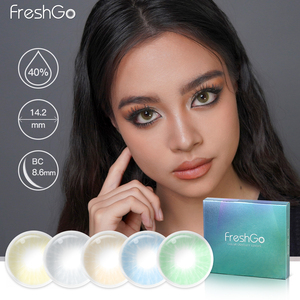
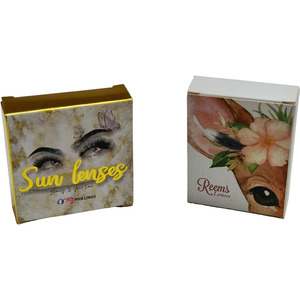
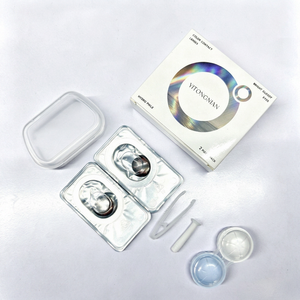
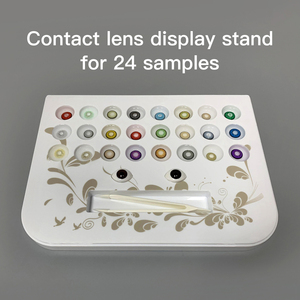
Why Global Brands Partner with Shenzhen Lensesgoo Co., Ltd
Operating as an integrated optical research, casting, and medical-grade packaging conglomerate, Shenzhen Lensesgoo provides institutional buyers with dependable, defect-free supply chains.
Medical Regulatory Governance
In highly regulated markets like Japan, colored contact lenses are controlled Class III medical devices under the PMD Act. We produce rigorous technical files, ISO 13485:2016 documentation, and biocompatibility dossiers to empower your local Marketing Authorization Holder (MAH).
- Complete PMA & MAH Support File
- Full ISO 13485:2016 Traceability
Advanced Cast-in-Mold Color Locking
Micro-pigment particles are hermetically locked between dual monomer layers of optical PolyHEMA using precision cast molds. Pigment never directly touches the corneal epithelium or palpebral conjunctiva, eliminating chemical leaching, pigment flaking, and rough tactile abrasion.
- Smooth Biocompatible Surface Finish
- Zero Pigment Abrasion In Vitro Tested
Turnkey OEM/ODM Integration
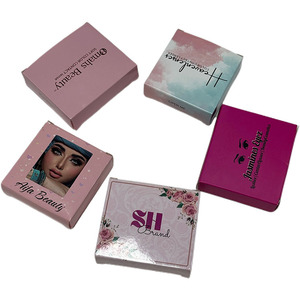
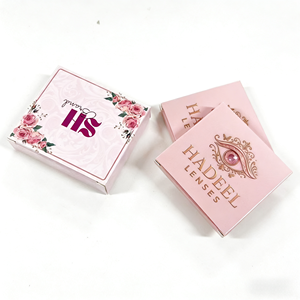
From graphic iris patterning (13.8mm to 22.0mm diameters) to localized Japanese, English, and EU multilingual labeling, foil stamping, anti-counterfeiting QR codes, and sterile blister packaging—we deliver shelf-ready or direct-to-consumer inventory within 20 working days.
- Low Starting MOQs for SMB Growth
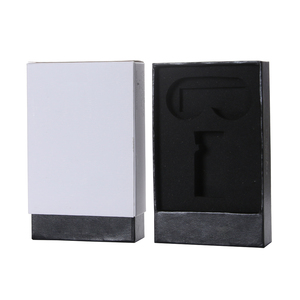
- Full In-House Packaging Fabrication
Top 10 Contact Lens Manufacturer China: Capability Matrix
When auditing Chinese contact lens manufacturers, professional procurement teams evaluate six core technical dimensions. Below is the comparative framework identifying top-tier suppliers.
| Evaluation Parameter | Top-Tier Supplier Standard (e.g., Lensesgoo) | Mid-Tier Contract Makers | Generic Wholesalers / Trading |
|---|---|---|---|
| Encapsulation Method | True 3D Cast Sandwich (Sandwich Tech) | Pad printing with single-side overcoat | Surface printing (High risk) |
| Polymer Chemistry | PolyHEMA, NVP Hydrogel, & Si-Hydrogel Formulations | Standard HEMA homopolymer only | Outsourced third-party bulk blanks |
| Oxygen Permeability (Dk/t) | Optimized thin-center profile (>20 to 85+ Barrer/cm) | Moderate (10 - 15 Barrer/cm) | Non-standardized / Unverified |
| Regulatory Dossiers | PMDA Class III, NMPA Class III, CE MDR, FDA 510(k) | Local domestic registration only | None; reliance on middle-tier certificates |
| Secondary Packaging | Integrated in-house GMP blister sealing & custom boxes | Outsourced printing houses (Slow) | Generic stock packaging |
| Batch Cycle & Dispatch | 7 Days (Stock Lines) / ~20 Days (Custom OEM) | 45 – 60 Days minimum | Unpredictable broker schedules |
Product Development & Polymer Trends
The global soft contact lens landscape is rapidly transitioning away from legacy thick-edge lathe-cut hydrogels toward precision double-sided cast-molded silicone hydrogels and high-moisture bionic polymers.
In the cosmetic and prescription sectors, three technological breakthroughs define competitive product pipelines for 2026 and beyond:
1. Biomimetic Hyaluronic Acid & MPC Wetting Agents: Factory formulations increasingly interlock Hyaluronic Acid (HA) and 2-methacryloyloxyethyl phosphorylcholine inside the polymer matrix. This creates a hydrophilic hydration shield that minimizes tear evaporation and digital eye strain.
2. Micron-Level Dot-Matrix Printing: Rather than flat solid rings, advanced optical design now utilizes multi-layered dot patterns as small as 15 microns. This allows natural eye color to show through the lens, creating an authentic translucent depth that fits modern "nuance" and "chuu" aesthetics in Asian and Western cosmetics.
3. Integrated HEV & UV Photoprotection: Monomers are modified with benzotriazole compounds to deliver Class I UV blocking (blocking >90% UVA and >99% UVB), while spectral filters shield against High-Energy Visible (HEV) blue light generated by digital screens.
Global Procurement & Sourcing Roadmap
Procuring contact lenses from Chinese original design manufacturers has transformed from simple price negotiation into a strategic partnership centered on agility, compliance, and sustainable packaging.
1. Dominance of the 1-Day Disposable Segment: While 1-year and monthly replacement lenses retain strong demand in costume, theatrical, and emerging markets, daily disposables (1-Day) represent the fastest-growing sector for high-volume cosmetic retailers due to lower risks of microbial contamination and superior user convenience.
2. Micro-Batch Testing (The SMB Growth Model): Forward-thinking manufacturers like Shenzhen Lensesgoo offer low minimum order quantities that let direct-to-consumer (D2C) brands test 10 to 20 color patterns simultaneously. This reduces dead inventory and frees up working capital.
3. Sustainable Secondary Packaging: Institutional retailers in the EU and Japan now mandate Forest Stewardship Council (FSC) certified paperboard, soy-based inks, and minimal blister plastic volume. Recyclable rigid kraft structures and plastic-neutral offset programs are key procurement factors.
4. Localized Regulatory Synchronization: Brand owners avoid regulatory delays by choosing suppliers with pre-audited cleanrooms and validated sterilization records (SAL 10⁻⁶), significantly reducing MAH dossier review times.
Frequently Asked Questions for B2B Importers
Direct answers to the most common technical, regulatory, and logistical questions encountered by brand owners purchasing contact lenses from China.
How does the factory guarantee color pigments will not leach onto the human cornea?
We use proprietary Sandwich Cast Molding Technology. Color pigments are printed onto an initial optical polymer layer and then encapsulated by a second protective polymer layer before thermal cross-linking. As a result, the pigment is completely enclosed within the lens matrix. In accordance with ISO 10993 biocompatibility standards, our lenses undergo rigorous extraction tests in organic and aqueous solvents, confirming zero pigment migration or chemical leaching.
What documentation do you provide for regulatory approval in Japan (PMDA) and Europe (CE MDR)?
Shenzhen Lensesgoo Co., Ltd provides a comprehensive technical documentation package. This includes raw material purity certificates (USP Class VI), accelerated and real-time 3-year aging stability studies, sterilization validation reports (ISO 11137 / ISO 17665 achieving SAL 10⁻⁶), optical performance evaluations, and biological safety assessments. In Japan, these files are supplied directly to your designated Marketing Authorization Holder (MAH) to support Class III medical device approvals.
What are the minimum order quantities (MOQs) for custom OEM private-label branding?
To help emerging brands expand into their local markets, our SMB Growth Program offers starter volumes with low MOQs across stocked, pre-approved shades. For full custom ODM designs—such as unique iris graphic diameters, specialized diopter curves, or custom-molded base curves—production runs start at roughly 500 to 1,000 pairs per power/color variant, complete with personalized blister foil lidding and retail packaging.
How do production lead times compare between catalog restocks and custom OEM lines?
Catalog styles kept in warehouse inventory—including our natural color ranges, mini sclera, and prescription clear lenses—dispatch within 7 business days via international air courier. Fully customized private-label manufacturing, which includes blister thermoforming, automated saline filling, autoclave steam sterilization, and custom box production, is typically completed within 20 working days following final artwork approval.
Can the factory produce mixed prescription diopters within a single private-label batch?
Yes. Our manufacturing facilities operate automated power-sorting and laser lot-coding systems. We accommodate diopter allocations ranging from plano (0.00) down to -8.00D (in 0.25D increments up to -6.00D, and 0.50D increments thereafter) within agreed batch sizes. Each blister package features high-contrast lot coding, diopter data, and expiry markings compliant with international traceability standards.
Can you manufacture specialty theatrical, 17mm mini sclera, and 22mm full sclera lenses?
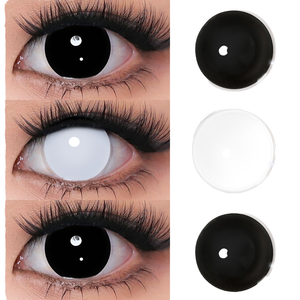
Yes. In addition to our natural 14.0mm to 14.5mm cosmetic collections, Shenzhen Lensesgoo maintains specialized casting equipment for 17mm mini sclera and 22mm full sclera lenses, as well as over 49 crazy/theatrical Halloween patterns. All specialty lenses use the same medical-grade PolyHEMA material and cast-molding safety standards as our daily prescription lines, ensuring both striking visual effects and reliable ocular safety.