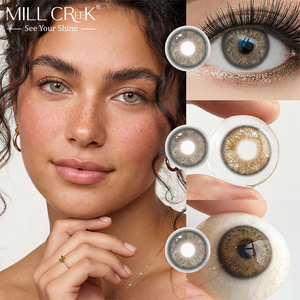
Production Portfolio
Verified OEM/ODM Form Factors & Optical Components
Direct supply line catalog ranging from medical-grade Class III cosmetic contact lenses and specialized therapeutic optics to ISO 13485-certified maintenance cases and automation optoelectronic assemblies.
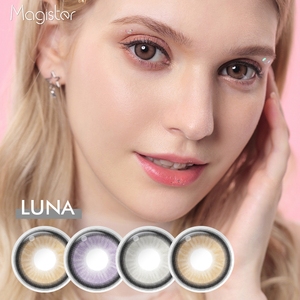
Polycarbonate Precision
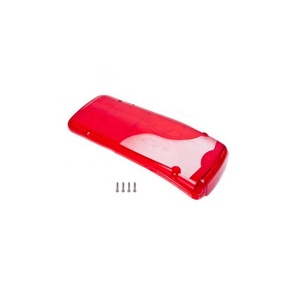
Combination Rear Light Lens 0008262056 0008262156 for MB Sprinter 906
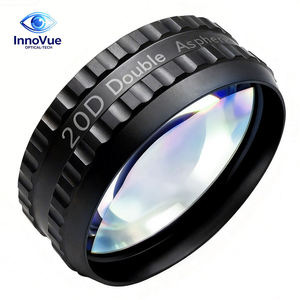
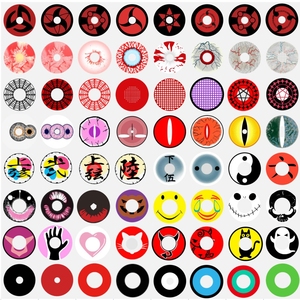
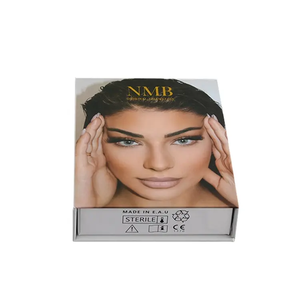
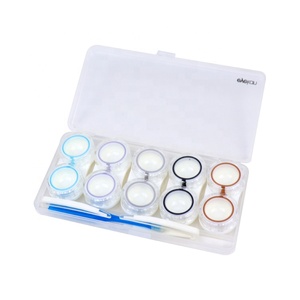
Medical Primary Packaging
Custom Eye Contact Lenses Complete Box Set with Logo Contact Lenses Packaging Box
7 Days
Dispatch SLA for In-House Standard Inventory
~20 Days
Turnkey Private-Label Lead Time (Molding to Sterilization)
100%
Micro-encapsulated Dye Isolation ("Sandwich" Cast Molding)
Class III
PMD Act & ISO 13485:2016 Regulatory Alignment
Strategic Sourcing Analysis
The Top 10 Contact Lens Manufacturers & Wholesalers Landscape
A multi-tiered competitive matrix mapping established global conglomerates alongside agile Tier-1 contract manufacturing organizations (CMOs) driving private-label expansion.
The "Big Four" Multinational Oligopoly
The global volume baseline remains anchored by Johnson & Johnson Vision (Acuvue), Alcon, CooperVision, and Bausch + Lomb. These legacy conglomerates control extensive intellectual property across silicone hydrogel monomers (such as senofilcon and comfilcon formulations) and high-speed fully automated cast-molding infrastructure.
However, their strict minimum order quantities (MOQs typically exceeding 100,000 units per SKU) and long lead times limit their suitability for rapid-turnaround cosmetic beauty collections, specialty theatrical lines, and independent retail private labels.
Specialized Asian CMO Giants (Taiwan & Korea)
Tier-1 Contract Manufacturing Organizations, notably St. Shine Optical, Pegavision, and Bescon, have long served as primary white-label partners for Japanese and Pan-Asian cosmetic eyewear brands. Their strength lies in combining automated cast-molding lines with precise lathe-cutting tools.
While their production tolerances are consistently high, surging operational overhead and lengthy slot reservation windows (often requiring 4-to-6-month advance production scheduling) have created space for leaner, more responsive manufacturing partnerships.
Agile Integrated Manufacturers (Shenzhen Ecosystem)
The contemporary procurement paradigm is defined by integrated suppliers like Shenzhen Lensesgoo Co., Ltd. These modern facilities bridge clinical safety requirements with beauty-industry speed. By operating in-house graphic design, sandwich-molding tooling, and localized regulatory dossier support, these manufacturers support both emerging retail brands and high-volume importers.
Key competitive differentiators include small-batch flexibility, in-stock catalog dispatch within 7 days, and custom OEM packaging lead times of just 20 days.
Industry Intelligence
Future Sourcing Trends & Material Engineering (2025–2030)
An executive analysis of next-generation biomaterials, micro-layer printing technologies, and tightening international compliance standards.
1. The Silicone Hydrogel Shift in Color Optics
Historically, cosmetic contact lenses (カラコン) have relied on standard poly-HEMA hydrogel polymers (typically 38% to 42% water content) due to their favorable mechanical properties during color printing. However, global buyer demand is steadily pivoting toward Third-Generation Silicone Hydrogel substrates.
By blending fluorosilicone macromers with hydrophilic monomers, next-generation lenses achieve oxygen transmissibility ratings (Dk/t) exceeding 80–100 Barrers/cm, reducing corneal hypoxia risks during extended daily wear without causing pigment de-lamination.
2. Sandwich "Zero-Contact" Pigment Encapsulation
Under both the US FDA 510(k) process and Japan's PMD Act (Class III Highly Controlled Medical Devices), pigment leaching presents a critical safety concern. Leading manufacturers have phased out surface printing in favor of Three-Layer Full Micro-Encapsulation ("Sandwich" Technology).
In this process, non-ionic iron oxide, titanium dioxide, and phthalocyanine colorants are sealed entirely between clear hydrogel matrices, preventing dye exposure to both the palpebral conjunctiva and the corneal epithelium.
3. Supply Chain Agility & Just-in-Time Private Labeling
Traditional B2B procurement models often locked brands into 120-day production cycles and rigid 10,000-unit-per-shade MOQs. Current best practices emphasize modular manufacturing setups: keeping clear pre-cast lenses and blister-ready inventory stocked, while applying custom secondary packaging on demand.
This approach allows Japanese and European distributors to respond rapidly to changing cosmetic trends (such as ash-olive rings, natural limbal enlargements, and 17mm mini-sclera conventions) with lower inventory risk.
Technical Sourcing Matrix: Contact Lens Form Factors & Mechanical Thresholds
| Category | Base Material Substrate | Water Content | Standard Diameters | Oxygen Permeability (Dk/t) | Core Application & Channel |
|---|---|---|---|---|---|
| Natural Cosmetic (Daily/Yearly) | Poly-HEMA / 2-HEMA Copolymers | 38% – 42% | 14.0mm – 14.5mm | 18 – 28 Barrers | Drugstores, Salons, D2C Beauty Brands |
| Medical Diagnostic & Clear Rx | Silicone Hydrogel (Lotrafilcon/Methafilcon) | 45% – 55% | 14.0mm – 14.2mm | 85 – 138 Barrers | Optometric Clinics, Prescription Vision Correction |
| Mini Sclera (Cosplay / SFX) | HEMA + NVP Cross-linked Polymer | 38% – 40% | 17.0mm | 20 – 25 Barrers | Cosplay Conventions, Halloween Retail, Film Makeup |
| Full Theatrical Sclera | Lathe-Cut Rigid / Semi-Rigid HEMA | 38% | 22.0mm | Clinical Guidance Only | Professional SFX, Cinematic Production, Stage Performance |
| Maintenance Containers & Cases | Medical-Grade Virgin ABS + Polypropylene | Hydrophobic | Standardized Wells | N/A (Liquid Barrier) | Preventing Acanthamoeba & Microbial Contamination |
Enterprise Value Proposition
Why Enterprise Importers Partner with Shenzhen Lensesgoo Co., Ltd
Bridging the gap between strict international medical device standards and flexible, market-responsive manufacturing.
Class III Regulatory Document Suites
Entering demanding regulatory environments—such as Japan’s PMD Act oversight or EU MDR regulations—requires comprehensive technical files. We furnish your licensed Marketing Authorization Holder (MAH) with detailed raw-material biocompatibility reports, cytotoxicity screenings (ISO 10993-5), ethylene oxide/autoclave validation records, and packaging integrity documentation.
End-to-End OEM/ODM Turnkey Execution
From custom iris graphics development—including micro-dot matrices, gradation rings, and limbal shading matching local consumer preferences—to secondary blister packaging, multilingual foil sealing, and localized barcoding, our end-to-end service allows you to launch shelf-ready inventory without handling separate intermediate suppliers.
Rapid Dispatch & Lower Inventory Burden
Protect working capital and shorten cash cycles. Access pre-screened in-stock catalog models ready for air-courier dispatch within 7 days, or run custom private-label productions within ~20 days. Our mix-and-match catalog ordering model empowers distributors to test seasonal beauty trends with minimal market exposure.
Procurement Due Diligence
Frequently Asked Sourcing & Operational Questions
Key procedural, operational, and regulatory clarifications for optical category buyers, corporate procurement heads, and private-label founders.
How does Shenzhen Lensesgoo Co., Ltd support Class III legal clearance in Japan?
Under Japan's Pharmaceutical and Medical Device Act (PMD Act), all cosmetic contact lenses with or without dioptric power are regulated as Class III Highly Controlled Medical Devices. Foreign manufacturers cannot sell directly to retail channels; sales must be routed through a licensed Japanese Marketing Authorization Holder (MAH). Lensesgoo delivers the complete medical manufacturing dossier required by your MAH—including ISO 13485:2016 certificates, biocompatibility test results, sterilization cycle validation records, and material data sheets. We do not act as the MAH itself, but we supply the full documentation package needed for registration approval.
What are the standard Minimum Order Quantities (MOQs) for custom private-label runs?
To help growing brands launch efficiently, we offer flexible volume tiers. For standard catalog models carrying our proprietary brand marks, minimum test orders can be placed across a mix-and-match selection of stock shades. For turnkey OEM private-label projects—including bespoke blister foil sealing, localized outer packaging, and customized diopter configurations—production thresholds typically start at 500 to 1,000 pairs per SKU, significantly below the 50,000-to-100,000 unit minimums required by legacy European and American conglomerates.
How is pigment safety guaranteed in 17mm and 22mm sclera costume lenses?
All costume, cosplay, mini-sclera (17mm), and full-theatrical sclera (22mm) lenses are manufactured using advanced semi-cast molding and sandwich encapsulation. Certified non-toxic medical pigments are encased between inert layers of poly-HEMA hydrogel, ensuring that colorants never touch ocular tissue directly. Every production batch undergoes extractable and leachable testing, saline boil integrity checks, and slit-lamp surface inspections to ensure zero pigment shedding during storage and wear.
What is the standard production timeline and air-freight transit schedule?
Ready-to-ship catalog stock is dispatched from our Shenzhen logistics hub within 7 business days of payment verification. For custom private-label OEM orders, typical turnaround runs approximately 20 business days, covering cast-molding, hydration equilibrium, optical clarity verification, foil-sealing, autoclaving, and final packaging. Shipments to Japan, South Korea, and Southeast Asia average 3 to 5 business days via premium air express, while deliveries to European and North American ports generally take 5 to 7 days.
Can you provide customized, retail-ready Japanese and multilingual packaging?
Yes. Our in-house packaging facility produces localized packaging tailored to your regional requirements. For the Japanese market, we format diopter labels, ingredient callouts, expiry formats, and usage inserts in compliant Japanese text reviewed by your local MAH. For European and American markets, we handle multi-language instructions, EAN-13/UPC barcodes, GS1 DataMatrix serialization, and tamper-evident shrink sealing.
Initiate Your Factory Audit or Sample Evaluation
Connect directly with our optical engineering team to request sample sets, raw-material technical dossiers, or turnkey private-label quotes.
Send an Inquiry