Top China Colored Contacts Wholesale: Direct Factory & OEM/ODM Supplier Guide
Engineered for International Brand Owners, Medical Device Importers, and Retail Chains Seeking High-Precision Cast Molding, Dk/t Breathability, and Turnkey Private Label Packaging.
Explore our high-velocity stock collections and bespoke packaging configurations. Each product is manufactured within ISO Class 8 cleanrooms, utilizing ultra-precise cast-molding technologies with comprehensive laboratory quality testing.
A comprehensive industrial whitepaper detailing biomaterial sciences, cast-molding geometries, pigment safety standards, and Class III medical device regulatory compliances for international procurement professionals.
The global cosmetic contact lens sector has undergone a profound paradigm shift. Historically regarded merely as seasonal novelty accessories, colored lenses are now recognized across global healthcare jurisdictions as precision-engineered, Class III medical devices (Class II under US FDA 510(k) classifications, Class III under Japan's PMD Act, and Class IIb under EU MDR). Sourcing colored contacts directly from China factories requires an intricate understanding of ophthalmic biomaterials, pigment fixation methods, and international quality management frameworks.
Shenzhen Lensesgoo Co., Ltd represents the leading edge of modern Chinese ophthalmic manufacturing. Operating high-throughput, automated cast-molding facilities in Guangdong, our production paradigms eliminate the micro-imperfections historically associated with traditional lathe-cut cosmetic lenses. For procurement teams representing Japanese distributors, European optical retailers, and North American direct-to-consumer (D2C) brands, securing an accountable, vertically integrated manufacturing partner is vital for ensuring consumer safety, aesthetic consistency, and frictionless customs clearance.
The Engineering Imperative: Sandwich Technology (Pigment Encapsulation)
The single most critical safety metric in colored contact lens manufacturing is the physical barrier between reactive pigment particles and the human ocular surface. Inferior manufacturing methodologies rely on surface-printing techniques where color pigments are stamped onto the posterior or anterior lens surface. Over prolonged wearing cycles, ocular blinking friction (generating approximately 15,000 to 20,000 blinks per day) can cause mechanical pigment leaching, leading to giant papillary conjunctivitis (GPC), corneal epithelial abrasions, and severe toxic keratitis.
Our factory utilizes proprietary, high-precision Sandwich Color Encapsulation Technology. During the automated cast-molding process, optical-grade inorganic pigments (primarily iron oxides, titanium dioxides, and copper phthalocyanine) are isolated and cured squarely inside the polymer matrix. Dual layers of biocompatible hydrogel (Poly-2-hydroxyethyl methacrylate / Poly-HEMA) seamlessly enclose the colored layer. The pigment never touches the cornea, nor does it interact with the palpebral conjunctiva. Furthermore, because the color layer does not migrate to the outer boundaries, the surface lubricity and oxygen transmissibility coefficient (Dk/t) remain uniform throughout the entire optical diameter.
Cast-Molding Surface Smoothness
Utilizing high-precision optical molds diamond-turned down to sub-micron tolerances, our lenses exhibit zero edge burrs, dramatically lowering corneal irritation indices.
Tri-Tone Gradient Layering
Proprietary micro-dot screening replicates the natural human stroma with radial limbal definition, transition flecks, and depth-enhancing pupillary gradients.
Hydrophilic Surface Coatings
Formulated with integrated polyvinylpyrrolidone (PVP) wetting agents, ensuring high moisture retention and resistance to tear lipid deposition throughout 12+ hour wear.
Biomaterial Comparison: Conventional Hydrogel vs. Silicone Hydrogel Matrix
A vital decision for any procurement executive or B2B brand buyer is selecting the correct polymer matrix for their target demographic. Below is an engineering benchmark outlining the performance tradeoffs between standard Poly-HEMA hydrogel formulations and cutting-edge third-generation Silicone Hydrogel polymers produced in our facility:
Technical Parameter
Standard Poly-HEMA Hydrogel
Silicone Hydrogel (SiHy) Gen-3
B2B Sourcing Recommendation
Oxygen Transmissibility (Dk/t)
18 – 28 × 10-9 Fatt units
85 – 125 × 10-9 Fatt units
SiHy for Premium Rx Lenses
Water Content Equilibrium
38% – 42% (High Dimensional Stability)
45% – 55% with low dehydration rate
Poly-HEMA ideal for dry ocular environments
Modulus (Stiffness / MPa)
0.30 – 0.45 MPa (Ultra-soft, fast adaptation)
0.65 – 0.85 MPa (Crisp handling, easy insertion)
Poly-HEMA for beginner-friendly cosmetic lines
Pigment Density Tolerance
Exceptional color vibrancy & complex graphics
Requires advanced compatibilizing surfactants
Poly-HEMA preferred for intense Cosplay & FX
Production Cost & Unit MOQ
Cost-effective, low starting MOQs (50-100 pairs)
Higher raw material cost; scalable runs
Balance catalog across both price points
Market Intelligence 2025–2030
Procurement Trends Reshaping Wholesale Color Contacts
Global buying dynamics are transitioning rapidly toward clinical-grade cosmetic solutions. Explore the four overarching purchasing trends driving wholesale orders among Fortune 500 beauty retailers and premier digital brands.
Subtle "Nuance" Realism Trend #1
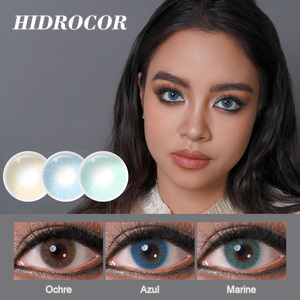
The era of exaggerated, opaque graphic diameters is shifting toward micro-diameter natural tones. Importers in Tokyo, Seoul, London, and New York report explosive growth for 13.0mm to 13.4mm Graphic Diameters (GDIA). Consumers demand "barely-there" eye enhancement, featuring desaturated ash greys, translucent olive greens, and subtle milky browns that blend seamlessly with Asian and Caucasian dark brown irises without unnatural borders.
Daily Disposable (1-Day) Dominance Trend #2
While monthly and annual vials historically anchored wholesale volume across emerging markets, mature markets have migrated decisively toward Daily Disposables. Driven by consumer awareness regarding ocular hygiene and convenience, B2B orders for 10-pack and 30-pack daily blisters have surged by over 42% year-over-year. China factories equipped with automated blister packaging and high-speed secondary cartoning lines offer significant economies of scale.
Agile Small-Batch Re-orders Trend #3
Brand vulnerability stems from holding obsolete seasonal inventory. Modern B2B buyers favor China manufacturers providing a dual-track fulfillment model: low Minimum Order Quantities (50 to 500 units) on fast-moving stock SKUs combined with scalable custom run capabilities (3,000+ units) once a color pattern achieves social media virality on TikTok or Instagram.
Regulatory Traceability & UDI Compliance Trend #4
Stringent enforcement by international customs requires full Unique Device Identification (UDI) barcodes, laser lot coding on blister foils, and validated sterilizer logs. Professional importers no longer trade with uncertified workshops; verified cleanroom facilities holding ISO 13485 and complete Design Dossiers represent the only viable partners for sustainable brand building.
Technological Frontiers
Technological Innovations in Color Lens Manufacturing
China’s top-tier manufacturers are pioneering advanced photo-optical engineering, redefining visual acuity, UV filtering, and digital-era cosmetic applications.
The convergence of consumer electronics and visual wellness has catalyzed unprecedented R&D into functional colored contacts. Lensesgoo is actively scaling several next-generation manufacturing platforms:
Dual Class II UV & HEV Blue Filtering
Integrating photostable UV blockers (blocking >95% UVB and >70% UVA) directly within the monomer formulation, safeguarding intraocular structures from photo-aging without yellow color distortion.
Toric Cosmetic Lens Matrices
Overcoming the historical challenge of rotational stability in cosmetic toric lenses through dynamic prism ballast stabilization, delivering sharp astigmatic correction (-0.75D to -2.75D) alongside vivid iris cosmetic styling.
Aspheric Aberration-Control Optic Zones
Modifying back-surface curvature profiles to counteract inherent ocular spherical aberrations, preserving pupil responsiveness and maintaining crisp contrast in low-light environments.
Shenzhen Lensesgoo Co., Ltd bridges the gap between high-volume manufacturing rigor and flexible, high-aesthetic branding services tailored to global retail success.
Rapid 7-Day Fulfillment
We maintain an active buffer inventory of over 500,000 blister units across hundreds of popular natural, cosplay FX, and mini-sclera variants, ensuring 7-day dispatch to global logistics hubs.
Turnkey OEM / ODM Lab
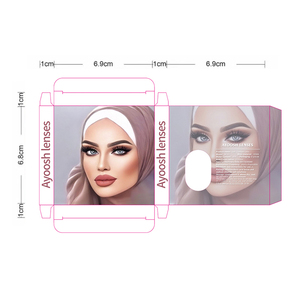
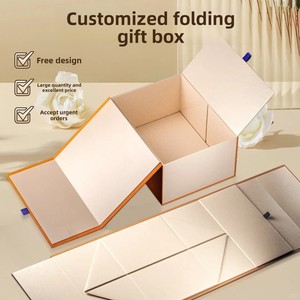
Complete in-house structural and graphic packaging design. From anti-counterfeit holographic folding boxes to Japanese PMDA-compliant medical leaflets, we take your brand concept from vector to retail shelf.
Expansive Diameter Spectrum
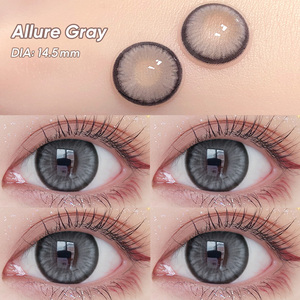
Unrivaled product breadth: standard natural cosmetics (14.0mm - 14.5mm), specialized anime/theatrical contacts, 17mm mini-sclera, and professional 22mm full-sclera hand-crafted FX lenses.
Japanese MAH Support
Extensive experience supplying technical documentation, biocompatibility test data, stability test logs, and master batch records required by Japanese Marketing Authorization Holders under PMD Act Class III rules.
Small-to-Medium Growth Program
We eliminate capital barriers for emerging boutique brands, allowing cross-catalog SKU mixing and matched sample allocations to derisk market testing before committing to container-level scale.
100% Autoclave Sterility Assurance
Every single blister pack and sealed vial undergoes validated moist-heat steam autoclaving at 121°C for 20 minutes, yielding an industry-standard Sterility Assurance Level (SAL) of 10-6.
Ready to Scale Your Color Contact Lens Line?
Connect with our technical optical sales engineering team. Request physical sample sets, review cleanroom audit reports, or receive a confidential pricing matrix tailored to your projected distribution volume.
Frequently Asked Questions for Global Lens Importers
Detailed, transparent engineering and regulatory answers covering order minimums, customs classifications, technical files, and manufacturing lead times.
What is the standard Minimum Order Quantity (MOQ) for OEM private label manufacturing?
For catalog stock designs packaged under your custom private label carton and blister foil, our flexible entry tier begins at just 500 to 1,000 pairs total, with low per-color minimums (as low as 50 pairs per power/color). For fully bespoke ODM pattern designs requiring custom laser photo-etching and steel injection tooling, the baseline production batch is typically 3,000 to 5,000 pairs per run to optimize cast-molding economy.
How does your factory support regulatory clearance under Japan's PMD Act?
Under Japan’s Pharmaceutical and Medical Devices (PMD) Act, cosmetic contact lenses are strictly regulated as Class III highly controlled medical devices. While only a locally registered Japanese Marketing Authorization Holder (MAH) can officially hold product approval, Shenzhen Lensesgoo supplies the full spectrum of technical dossiers: biological evaluation reports (ISO 10993), leachability assays, stability data, accelerated aging tests, and raw material safety datasheets (MSDS) required by your MAH partner for successful PMDA submission.
What are the differences between blister packaging and glass vial packaging?
Glass vials are traditionally favored for extended-wear lenses (yearly replacements) in developing optical markets due to perceived durability and low capital setup cost. Polypropylene (PP) thermoformed blisters with medical-grade heat-sealed aluminum foil lids are the undisputed global standard for 1-Day, 1-Month, and 3-Month modalities. Blisters reduce total shipping weight by approximately 65%, prevent breakage during international air freight, and integrate directly with high-speed automated carton packing machines.
What is the standard production timeline and dispatch workflow?
Orders selecting from our existing finished warehouse stocks dispatch within 7 business days following payment confirmation. Custom private-label runs—including printed outer gift cartons, localized multilingual instruction leaflets (IFUs), and custom foil coding—are typically completed within 20 to 25 calendar days. Shipments to Japan, North America, and Europe are handled via priority temperature-controlled express or dedicated air cargo forwarders.
Can you provide custom corrective optical powers (diopters) for colored lenses?
Yes. We produce both cosmetic plano lenses (0.00 diopter) for aesthetic wear and corrective prescription color lenses ranging from -0.50D to -8.00D (in 0.25D increments up to -6.00D, and 0.50D increments from -6.00D to -8.00D), with select series supporting hyperopic powers (+1.00D to +4.00D) or extreme myopic powers down to -10.00D upon OEM consultation.
What quality testing is performed prior to batch release?
Every batch undergoes rigorous quality gate audits adhering to ISO 18369 standards: dimensional verification (Total Diameter, Base Curve, Center Thickness) via optical projection comparators; water content verification via refractometry; oxygen permeability testing; pigment seal integrity testing (organic solvent rub and extraction tests); and USP / ISO microbial bioburden and sterility release verification.