7 Days
Catalog Stock Dispatch Speed
~20 Days
Private Label Custom Turnaround
100%
Medical Device Quality Inspection
50+
Global Regulatory Markets Served
Engineered Optical Portfolio: High-Demand Series
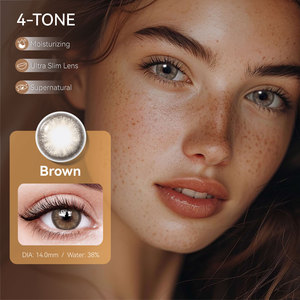
Formulated with advanced hydrogel polymers, high Dk/t oxygen transmissibility, and proprietary Sandwich pigmentation technology for superior ocular comfort and distinct aesthetics.
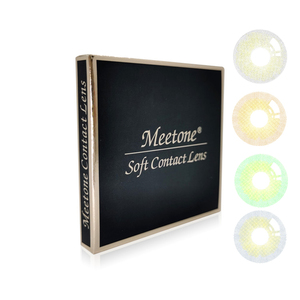
Factory Direct Wholesale
MIIEMO Fashion Contact Lenses Manufacturer High Quality Factory Direct Price
Product Specifications →
Why Source from Us: Strategic Manufacturing Strengths
Combining cleanroom precision engineering, compliance-ready medical documentation, and agile supply chain architectures to serve demanding optical brand owners worldwide.
Full Compliance & PMD/CE Quality
Contact lenses are highly regulated Class III medical devices. We provide full technical documentation, biocompatibility testing data, and quality dossiers essential for your domestic Marketing Authorization Holder (MAH) filings.
Proprietary Sandwich Printing
Color pigments are chemically micro-encapsulated between two sterile hydrophilic layers. Pigments never make direct contact with cornea or conjunctival tissue, preventing mechanical micro-abrasions and ensuring color stability.
Agile MOQ & Fast Stock Dispatch
We solve the traditional high-inventory barrier. Benefit from our catalog stock dispatch within 7 days, mixed-SKU ordering, and bespoke private-label packaging completed within 20 days, lowering capital risk for growing retailers.
Full Turnkey OEM / ODM Suite
From diopter range (-0.00 to -10.00D), custom base curves, diameter variations (14.0mm to 22.0mm full sclera) to multi-language compliant blister packaging, outer boxes, and multilingual inserts, we engineer end-to-end solutions.
Global Sourcing Intelligence: The Evolution of China’s Contact Lens Manufacturing
The global contact lens landscape has shifted decisively over the past decade. Previously dominated by legacy multi-nationals and specialized Taiwanese foundries, mainland China has emerged as an innovation leader in cast-molding polymer chemistry, cleanroom robotics, and hyper-responsive cosmetic pattern engineering. For corporate buyers, procurement managers, and beauty brand directors, sourcing contact lenses from China is no longer merely an exercise in margin optimization—it is a critical imperative for agile product lifecycles and accelerated speed-to-market.
Technical Paradigms: Precision Cast Molding vs. Lathe Cutting
Modern medical-grade soft lenses rely primarily on high-precision cast molding. By injecting polymer blends—such as HEMA (2-Hydroxyethyl methacrylate), NVP (N-Vinylpyrrolidone), and silicone macromers—into optical-grade quartz or specialized steel dies, China's modern manufacturing facilities achieve sub-micron curve repeatability. This guarantees that parameters like Base Curve (BC 8.5 to 8.7 mm) and Center Thickness (typically 0.06 to 0.08 mm for -3.00D) remain invariant across batch sizes exceeding tens of millions of units.
Compared to legacy lathe cutting—which often introduces micro-surface roughness and limits cosmetic multi-tonal stratification—cast molding enables seamless integration of Sandwich Color Locking Technology. In this process, the color matrix is pad-printed onto the front optical curve, then locked by a continuous hydrophilic polymer outer film. This structural encapsulation prevents color leaching, protects oxygen channels, and preserves surface wettability.
Silicone Hydrogel (SiHy) and Surface Wettability Advancements
A primary technological trend in contact lens procurement is the continuous migration from conventional hydrogels (with oxygen permeability Dk values around 15–25 Barrers) toward third-generation silicone hydrogel compounds boasting Dk/t ratings of 80 to 140+ Barrers. Historically, silicone hydrogel posed manufacturing challenges for cosmetic lenses: the hydrophobic nature of silicone monomers often caused surface drying and lipid accumulation, requiring plasma oxidation treatments. Modern Chinese engineering facilities utilize internal wetting agents (such as integrated PVP macromolecular networks) that bypass post-treatment delamination risks, offering all-day wear comfort even in air-conditioned or digital-screen environments.
Strategic OEM vs. ODM Sourcing Models for Importers
When engineering an international brand entry, determining whether to deploy an OEM or ODM model impacts both regulatory lead times and initial capital expenditure:
- OEM (Original Equipment Manufacturer): Importers select verified optical formulas, established base curves, and pre-audited blister packaging protocols, while applying their proprietary aesthetic branding, barcoding, and local clinical labeling. This reduces product testing cycles and allows rapid launches in beauty retail, optical chains, and cross-border e-commerce.
- ODM (Original Design Manufacturer): Involves custom-engineered iris diameters (Graphic Diameter / GDIA 11.9 mm to 14.2 mm), bespoke color dot matrices (such as gradient limbal rings, translucent undertones, or theatrical SFX), specialized edge geometries, or novel polymer formulations. ODM projects involve master mold tooling, clinical evaluation batches, and customized packaging geometry.
Strategic Sourcing Trends: The Next 5-Year Horizon
Navigating the key regulatory, technological, and demographic shifts shaping international contact lens procurement.
Daily Disposable (1-Day) Dominance
Global consumer demand is pivoting away from annual and quarterly replacement modalities toward Daily Disposables. Driven by ocular health awareness and travel convenience, procurers must secure high-speed automated packaging lines capable of high-volume blister-pack sealing at competitive per-unit economics.
Micro-Nuance & Natural Pupil Enhancers
Cosmetic preferences in mature markets (such as Japan, Korea, and Western Europe) have matured past stark, artificial block colors. Sourcing requirements now prioritize translucent watercolor gradients, feather-soft ash browns, olived greiges, and fine limbal rings that integrate organically with natural iris hues.
Therapeutic & Smart Contact Lenses
The boundary between vision correction, cosmetics, and active ocular health is blurring. Emerging procurement trends show escalating capital deployment into blue-light filtering monomers, UV-absorbing matrices (Class 1 & 2 blocking), and drug-eluting hydrogels for post-surgical therapy.
Manufacturer Quality Control Matrix: Optical Standards Verification
When selecting a primary China contact lens exporter, strict adherence to traceable quality standards is required to withstand regulatory audits by the US FDA, EU MDR, and Japan PMDA. The following parameter matrix establishes our baseline factory quality benchmarks:
| Inspection Parameter | Standard Range / Tolerance | Verification Methodology | Clinical Importance |
|---|---|---|---|
| Base Curve (BC) | 8.50 mm – 8.70 mm (±0.2 mm) | Optical Sagitta Measurement / Non-Contact Sensor | Corneal alignment, tear pump function, lens mobility. |
| Diameter (DIA) | 14.0 mm – 14.5 mm (±0.2 mm) | Automated Image Video Metrology | Corneal coverage, limbal comfort, visual field clearance. |
| Water Content | 38% – 58% (±2%) | Refractometric / Gravimetric Analysis | Equilibrium hydration, tear film preservation, anti-drying. |
| Dioptric Power (Rx) | 0.00 to -6.00 (±0.25D); to -10.00 (±0.50D) | Automated Focimeter / Wavefront Aberrometer | Refractive acuity, optical clarity, spherical control. |
| Sterilization Level | SAL 10-6 Assurance | High-Pressure Steam Autoclave Cycle Traceability | Eliminates Acanthamoeba, Pseudomonas aeruginosa, fungi. |
*Note: All production batches undergo double-blind 100% optical projection inspection to detect surface edge notches, tears, micro-bubbles, or print off-centering prior to automated blister packaging.
Buyer's Technical & Procurement FAQ
Clear answers to frequent questions regarding certification, regulatory compliance, custom packaging, and supply-chain logistics.
What are the typical Minimum Order Quantities (MOQ) for catalog vs. custom OEM orders?
For stock catalog styles across our in-house collections, we support small and medium brands with low starting MOQs (as low as 50 to 100 pairs) with flexible mix-and-match sizing and diopters. For complete OEM private-label production—which includes custom blister printing, bespoke multi-color foil backing, and dedicated CMYK paper boxes—the typical MOQ starts around 1,000 to 3,000 pieces per SKU depending on dioptric power stratification.
How does your factory ensure compliance with Class III medical device standards?
Our cleanrooms operate under strict Class 100,000 (ISO 8) and Class 10,000 (ISO 7) standards. Our quality management systems are certified to ISO 13485:2016 for medical devices. We supply full testing documentation—including cytotoxicity testing, systemic toxicity studies, ocular irritation assessments, shelf-life real-time stability reports, and high-pressure autoclave sterilization profiles—to support your local Marketing Authorization Holder (MAH) or 510(k) submissions.
What is Sandwich Technology and why is it critical for cosmetic color contact lenses?
Sandwich Technology (Micro-Encapsulation) is an advanced manufacturing methodology where pigments and tone layers are completely enclosed inside the hydrogel polymer matrix. In uncertified low-end manufacturing, color dyes are directly exposed to the cornea or eyelids, causing friction, surface staining, and keratitis. Our sandwich locking ensures zero contact between biological tissue and color pigments while keeping the lens surface wettable and smooth.
What is the typical production timeline from artwork approval to shipping?
In-stock styles are packed and dispatched within 5 to 7 business days via international air express. For bespoke private-label OEM orders, mold preparation, automated casting, secondary hydration, blister packaging, and sterilization require approximately 20 to 25 business days following final die-cut and artwork confirmation.
Can you manufacture non-standard lenses such as 17mm mini-sclera or 22mm full-sclera lenses?
Yes. We possess specialized lathe and precision compression molding tooling capable of engineering specialty diameters from standard 14.0mm/14.5mm cosmetic lenses up to 17mm mini-sclera and 22mm full-sclera SFX costume contacts. Because large diameters completely bridge the cornea and rest entirely on the bulbar conjunctiva, our engineering team ensures optimal base curves and edge lift for ocular fluid circulation.
Can you print localized language packaging (Japanese, French, Arabic, German)?
Yes. We provide complete dieline design templates and support multi-language retail packaging. We routinely produce regulatory-compliant Japanese packaging (accommodating PMD Act labeling requirements), European MDR-compliant labeling with symbol codes, and Middle Eastern multilingual inserts, ensuring smooth domestic customs clearance.