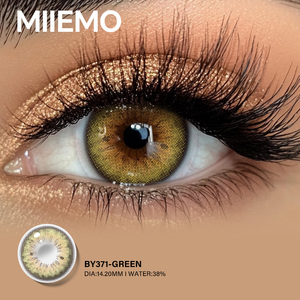
Natural Aesthetics · Rx & Planno
Explore verified factory-direct SKUs spanning natural daily aesthetics, vivid costume FX, high-pigment 3-tone optics, and medical-grade blister packaging manufactured under cleanroom conditions.
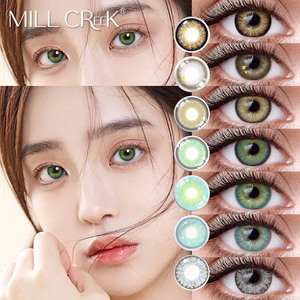
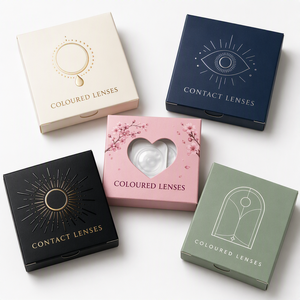
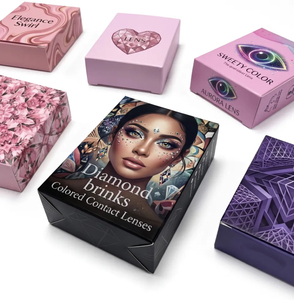
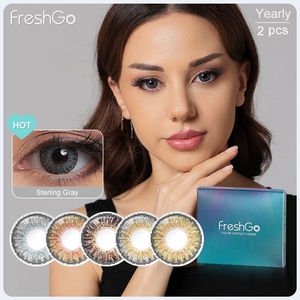
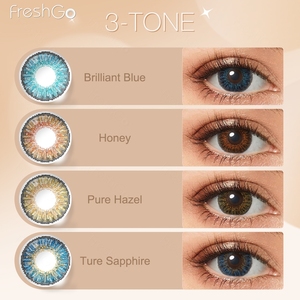
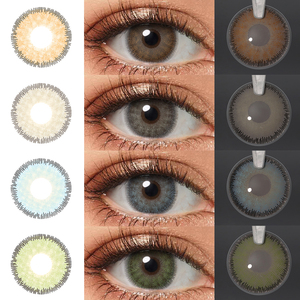
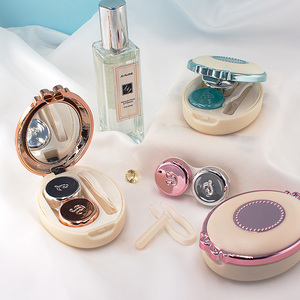
The global optical and color contact lens (カラコン) marketplace has undergone an irreversible structural transformation over the past decade. Historically reliant on localized European lathe-cutting laboratories or high-cost OEM factories in Korea and Japan, multinational distributors and fast-growing digital beauty brands now overwhelmingly source from Tier-1 Chinese manufacturing ecosystems. This transition is not merely cost-driven; it is rooted in advanced cast-molding automation, stringent adherence to Class III medical device standards, and unprecedented chemical formulation engineering.
Headquartered in high-precision technology centers such as Shenzhen and Jiangsu, modern Chinese contact lens facilities deploy automated cast-molding infrastructure capable of producing millions of daily, monthly, and yearly disposable units monthly with micron-level center thickness uniformity. By integrating full-process robotic de-molding, automated optical inspection (AOI) algorithms for micro-bubble and flash detection, and automated cleanroom blister packaging, premier manufacturers ensure medical stability that complies with European CE MDR (2017/745), US FDA 510(k), and Japan’s rigorous PMD Act (Class III highly controlled medical devices).
For enterprise procurement officers, brand incubators, and medical supply importers, partner selection hinges on navigating two critical metrics: ocular safety architecture (such as pigment leaching prevention) and agile supply-chain elasticity. As cosmetic contact lenses increasingly converge with mainstream fast beauty and cosplay fandoms, the capability to execute customized dot-matrix ink layering while guaranteeing zero cytotoxic exposure defines operational success.
A deep technical breakdown of why sandwich printing technologies, gas permeability ratios, and hydrogel viscoelastic properties represent the non-negotiable benchmark in color lens safety.
Unlike primitive surface-printed lenses where pigments come into direct contact with the palpebral conjunctiva and corneal epithelium, our factories utilize Dual-Coat Semi-Permeable Sandwich Technology.
Formulating soft lenses demands an intricate balance between water content and evaporative dehydration resistance across diverse wearing conditions.
Corneal avascularity mandates continuous oxygen delivery through the lens matrix to prevent stromal edema and epithelial compromise.
Direct manufacturing specifications across our core cosmetic, theatrical, and therapeutic OEM portfolio.
| Product Category | Base Curve (BC) | Diameter (DIA) | Graphic DIA (GDIA) | Polymer Chemistry | Water Content | Recommended Sales Channels |
|---|---|---|---|---|---|---|
| Natural Nuance Cosmetic | 8.50 - 8.60 mm | 14.0 - 14.2 mm | 12.8 - 13.4 mm | PolyHEMA / NVP Copolymer | 38% - 42% | Drugstores, Beauty Retailers, E-commerce |
| Enlarging 3-Tone Doll Look | 8.60 mm | 14.5 mm | 13.8 - 14.0 mm | PolyHEMA Hydrogel | 38% - 40% | Boutique Salons, Social Influencer Brands |
| Clear Prescription Rx | 8.60 - 8.80 mm | 14.0 - 14.2 mm | Clear (Planno to -10.00D) | High-Dk/t Hydrogel / Si-Hy | 42% - 55% | Optical Chains, Eye Care Practices |
| Anime & Cosplay FX | 8.60 mm | 14.5 mm | 13.6 - 14.0 mm | Opaque Sandwich HEMA | 38% - 42% | Costume Stores, Comic-Con Retail, Party Wholesalers |
| 17mm Mini Sclera | 8.80 - 9.00 mm | 17.0 mm | 16.0 - 16.5 mm | Crosslinked Hydrophilic HEMA | 38% | Theatrical Supply, SFX Makeup Studios, Halloween |
| 22mm Full Sclera | Custom Vaulted | 22.0 mm | 21.0 - 22.0 mm | Lathe-Cut Cast Medical Polymer | 38% | Film & Television SFX, Professional Stunt Makeup |
| Sterile Blister Care Solution | N/A (pH 7.2 - 7.4) | 10ml - 120ml | Borate / Saline Buffer | Hyaluronic Acid + Poloxamer | Isotonic | Cross-Selling Add-On, Care Kit Bundles |
Strategic market intelligence for procurement directors seeking to future-proof their supply chains against evolving consumer habits and regulatory shifts.
While yearly lenses dominated historical B2B shipments due to unit-economics, high-value consumer markets are transitioning toward daily disposable (1-day) color formats.
The holy grail of cosmetic contacts is silicone hydrogel matrices with Dk/t exceeding 80–100, combined with locked color dot-matrix pigmenting.
Broad, unnatural rim rings are being superseded by delicate “water-light” gradient patterns and micro-limbal gradations favored by East Asian and European luxury demographics.
Environmental regulations across the EU and North America are forcing brand owners to evaluate the circularity of secondary and primary packaging.
Operating as an integrated optical research, manufacturing, and international export company, Shenzhen Lensesgoo Co., Ltd bridges the gap between precision high-volume manufacturing and agile brand incubation. Whether you are an established medical device importer navigating PMDA registration in Japan or a direct-to-consumer beauty brand seeking low-MOQ rapid launches, our vertically integrated infrastructure provides end-to-end accountability.
We maintain high ready-to-ship inventories of our proprietary brands (including Freshgo, Magister, and Pseyeche). Stocked across hundreds of certified natural and FX styles, orders dispatch within 7 business days via global air express.
From custom blister design, localized multilingual foil printing, and barcode assignment to customized CE/FDA compliant box packaging, we manufacture, autoclave, test, and package custom brands within an industry-leading ~20-day timeframe.
Work directly with our optical engineers to generate proprietary iris designs, unique chromatic transitions, and tailored diameters that cannot be replicated by market competitors, ensuring distinctive brand defensibility.
We recognize that global beauty giants start with focused test batches. Our tiered scaling models permit mix-and-match SKU selection at low starting thresholds, enabling emerging entrepreneurs to validate regional demand without holding excess inventory.
All production occurs in Class 100,000 cleanrooms under automated climatic and HEPA filtration controls. Every production batch undergoes rigorous microbiological bioburden analysis, autoclave steam sterilization validation (SAL 10⁻⁶), tensile elongation assessment, and spectral transmittance verification before entering distribution streams.
Color contact lenses are medical devices governed by strict national safety regimes. Below is an overview of compliance requirements supported by our documentation systems.
| Regulatory Body / Jurisdiction | Classification | Required Audits & Documentation | Shenzhen Lensesgoo Co., Ltd Support Capability |
|---|---|---|---|
| Japan (PMDA / MHLW) | Class III Highly Controlled Medical Device | Foreign Manufacturer Registration (FMR), QMS audit, Marketing Authorization Holder (MAH) approval. | Full technical dossier supply, raw material biocompatibility data, and Japanese-language compliant artwork execution for your local MAH. |
| European Union (CE MDR) | Class IIa / Class IIb (Medical Device Regulation) | Notified Body Technical File Review, ISO 13485:2016 Certification, Post-Market Clinical Follow-up. | Complete ISO 13485 quality management compliance, biocompatibility extractable testing records, and EU Authorized Representative (EC REP) coordination. |
| United States (US FDA) | Class II Medical Device (510k Clearance) | Premarket Notification 510(k), Current Good Manufacturing Practice (cGMP), UDI serialization tracking. | Device Master File support, optical power verification, accelerated aging stability studies, and standardized tamper-evident blister labeling. |
| Latin America (COFEPRIS / ANVISA) | Class II / Class III Medical Device | Certificate of Free Sale (CFS), GMP inspection clearance, Spanish/Portuguese retail labeling. | Apostilled manufacturer declarations, batch release certificates (CoA), and localized bilingual carton design adaptation. |
Key operational, regulatory, and logistical considerations answered directly by our factory engineering and commercial export divisions.
For ready-to-ship catalog stock across our signature lines (Freshgo, Magister, etc.), minimum order quantities start as low as 50 to 100 pairs, allowing you to mix and match multiple colors and diopter strengths. For custom turnkey private-label (OEM) production featuring your own brand logo, branded blister seals, and custom retail packaging boxes, MOQ typically begins at 500 to 1,000 pairs per color style depending on customized graphic complexity and blister pack customization.
Ocular safety is governed by our proprietary Sandwich Printing Process. The color pigments (formulated from biocompatible metal oxides and organic colorants) are cast-molded strictly within the central substrate layer of the polyHEMA hydrogel matrix. The outer surfaces that contact both the cornea and the palpebral conjunctiva consist of 100% pure, unpigmented optical polymer. Every batch undergoes accelerated mechanical friction tests and chemical solvent extraction testing to prove zero pigment leaching over the complete product shelf life.
Yes. While medical device regulations mandate that the legal importer or Marketing Authorization Holder (MAH) must reside within the destination jurisdiction (for example, a licensed Japanese MAH under the PMD Act), Shenzhen Lensesgoo Co., Ltd provides all necessary technical documentation required for local submissions. This includes ISO 13485:2016 certificates, Certificates of Analysis (CoA), material biocompatibility reports (ISO 10993), stability test data, and factory audit verifications.
Glass vials with rubber stoppers and aluminum crimp seals are traditional, durable containers that provide excellent long-term storage (up to 5 years) and are widely accepted for yearly costume and theatrical lenses. PP (polypropylene) blister packs with heat-sealed peelable medical foil lids represent the gold standard for contemporary retail, daily/monthly disposables, and cosmetic drugstore displays. Blister packs reduce shipping weight by up to 60%, lower logistics freight fees, and fit cleanly into modern slim retail cardboard cartons.
We manufacture both Planno (0.00 diopter for cosmetic enhancement only) and corrective prescription powers ranging from -0.50D to -8.00D (in 0.25D increments up to -6.00D, and 0.50D increments from -6.00D to -8.00D), with select lines supporting up to -10.00D. Custom astigmatic toric lenses for astigmatism correction and hyperopic (+) plus powers are available via our custom bespoken OEM manufacturing contracts upon review of order volume.
For stocked inventory orders, products are inspected, packaged, and dispatched within 3 to 7 business days. For customized OEM private-label production runs, total turnaround time is typically 20 to 25 calendar days, including packaging printing, blister autoclaving, and final quality control release. Shipments are transported worldwide via major air express carriers (DHL, FedEx, UPS) for fast delivery (3–5 business days), or via dedicated air cargo and sea freight for high-volume containerized wholesale consignments.
Partner directly with Shenzhen Lensesgoo Co., Ltd for factory-direct wholesale pricing, free sample swatch evaluation, and turnkey private-label OEM manufacturing solutions.
Inquire Now