Featured Wholesale & Private-Label Contact Lens Solutions
Engineered to meet rigorous optical standards, our specialized cosmetic contact lenses, sterile packaging, and peripheral ocular accessories offer medical-grade reliability, low trial MOQs, and turnkey OEM design support.
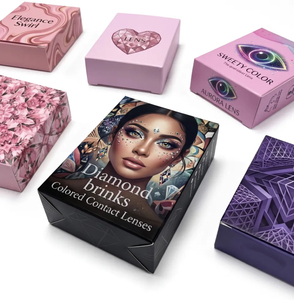
Recyclable Stamped Paper Box for Contact Lenses, Cosmetic Organizer & Personal Care Wholesale
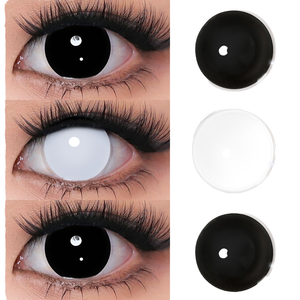
MIIEMO Halloween Crazy Soft Contact Lenses Cosplay Colored Eye Contacts 49 Models
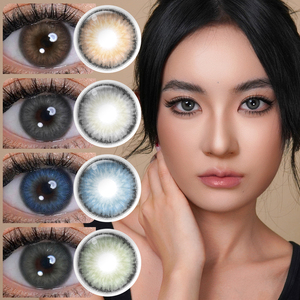
Free Sample Freshgo Eye Lens Colored Contact Lenses Iris Eye Contact 1 Year Softlens
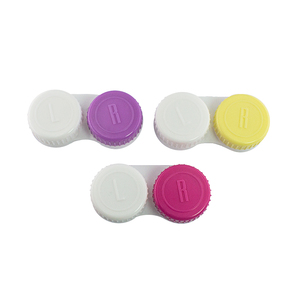
CHANXIN DC-9001 Classical Solid Color Hard Plastic 10g Lightweight Portable Lens Case
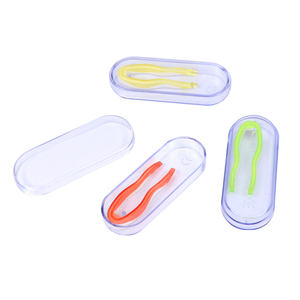
Eyekan Cosmetic Custom Logo Contact Lens Fashion Eye Care Set Container Box
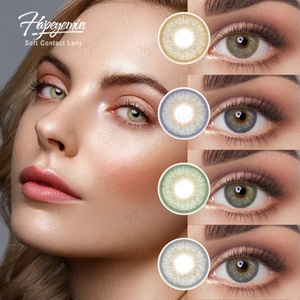
Haipurecon Taylor and Pola Series Yearly Color Contact Lenses BeautyLens OEM ODM
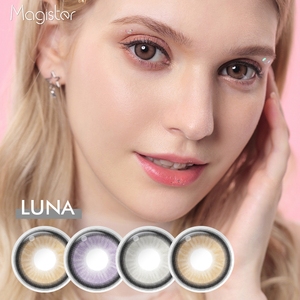
Free Shipping Magister Contacts Lenses Color Fashion Comfortable Contact Lenses
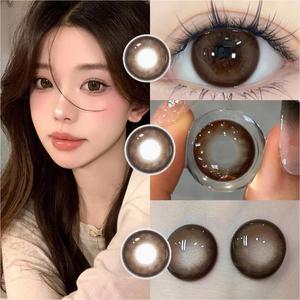
Haipurecon Natural 3 Tone Colored Contact Lenses 14.5mm Yearly Big Eye Soft Lenses
Industrial Excellence & Turnkey Supply Ecosystem
As a dedicated international colored contact lens manufacturer, exporter, and primary wholesaler, Shenzhen Lensesgoo Co., Ltd bridges cutting-edge polymer engineering with stringent international medical device governance, providing global distributors with unmatched supply velocity and safety documentation.
Sandwich Encapsulation Process
Unlike outdated direct-surface printing methods that risk pigment flaking onto corneal epithelium, our cleanroom facilities utilize proprietary 3-Layer Semi-Cast Sandwich Molding. Medical-grade colorants are permanently sealed between two homogeneous optical polymer matrix layers, guaranteeing that color pigments never directly touch ocular tissue.
Full Japan MAH Compliance Support
Cosmetic colored contact lenses (カラコン) are classified as Highly Controlled (Class III) Medical Devices under the Japanese Pharmaceutical and Medical Device Act (PMD Act). We equip your Japanese Marketing Authorization Holder (MAH) with complete Master Files, biocompatibility profiles, ISO 13485 test logs, and customized Japanese-compliant blister labels.
Agile SMB Incubation & Low MOQs
We eliminate conventional capital barriers for emerging boutique brands, e-commerce retailers, and optical practices. Through our structured SMB Growth Program, buyers can access mixed-variant small batch orders, off-the-shelf branded inventories, turnkey blister packaging, and express direct-to-warehouse international freight handling.
B2B Manufacturing Parameter & Tolerance Matrix
Precise geometric uniformity ensures consistent sagittal height, central lens thickness, and peripheral tear exchange dynamics across diverse international demographic profiles.
| Product Category | Standard Base Curve (BC) | Total Diameter (DIA) | Graphic DIA (GDIA) | Water Content & Material | Power Range (Diopters) | Replacement Schedule |
|---|---|---|---|---|---|---|
| Natural Circle Lenses | 8.50 mm – 8.65 mm (±0.02) | 14.0 mm – 14.2 mm | 12.8 mm – 13.5 mm | 38% – 42% Poly-HEMA / NVP | 0.00D to -8.00D (0.25/0.50 steps) | Daily / Monthly / Yearly |
| Big Eye Limbal Series | 8.60 mm (±0.02) | 14.5 mm | 13.6 mm – 13.9 mm | 40% – 43% HEMA Hydrogel | 0.00D to -10.00D | Monthly / 6 Months / 1 Year |
| Cosplay & Theatrical FX | 8.60 mm – 8.80 mm | 14.5 mm | 13.8 mm – 14.2 mm | 38% Hydrogel Polymer | Plano (0.00D) up to -6.00D | 1 Year Unopened / 1 Year Wear |
| Mini Sclera Contacts | 8.80 mm – 9.00 mm | 17.0 mm | 16.0 mm (Full Visual Field) | 38% High-Elastic Hydrogel | Plano (0.00D) | Theatrical / Event Wear |
| Full Sclera SFX Lenses | Custom Toric Fit (Vaulted) | 22.0 mm | 22.0 mm (Complete Coverage) | 38% Rigid-Stable Hydrogel | Plano (Custom Rx on request) | Professional Stage & Film |
| Clear Prescription Rx | 8.40 mm – 8.60 mm | 14.0 mm – 14.2 mm | N/A (Optical Clarity Center) | 42% – 58% Silicone Hydrogel | +6.00D to -12.00D | 1-Day Disposable / 1-Month |
Technological Evolution of Circle Contact Lens Manufacturing
From basic lathe-cutting to automated micro-injection cast molding and bio-compatible wet polymers, the cosmetic contact lens industry has evolved from theatrical novelty into high-frequency daily cosmetics.
1. Third-Generation Silicone Hydrogel
Traditional Poly-HEMA lenses restricted oxygen flow to roughly 15–25 Dk/t. Modern R&D incorporates hydrophilic fluorosilicone macromers, elevating oxygen transmissibility (Dk/t) beyond 80–110. This eradicates hypoxic corneal swelling during extended wear while preserving high pigment stability.
2. Sub-Micron Digital Dot Matrix
Older generation circle lenses featured harsh, pixelated outer limbal rings. Current factory capabilities deploy high-precision 4000-DPI automated micro-dot transfer, simulating the intricate multi-depth trabecular meshwork of human irises for a nuanced, hyper-realistic enlarging transition.
3. Biomimetic Moisture Locks (HA/MPC)
By copolymerizing biological hydration agents such as Sodium Hyaluronate (HA) and 2-Methacryloyloxyethyl Phosphorylcholine (MPC) directly into the monomer formulation, our lenses maintain moisture levels without leaching ocular tear film proteins throughout 14+ hours of continuous wear.
4. Class 1 UV Filtering Matrix
Integral spectral monomers block >95% of harmful UVB (280–315nm) and >70% of UVA (316–380nm) radiation. This clinical-grade defense protects vulnerable internal structures—including the crystalline lens and retinal nerve fibers—against cumulative phototoxic degradation.
Future Procurement Trends for B2B Contact Lens Importers
Forward-thinking distributors, pharmacy chains, and beauty e-commerce platforms must align purchasing strategies with five overarching tectonic shifts shaping international markets through 2026–2030.
The Global Shift to 1-Day Disposables
Driven by preventative ophthalmic health awareness, consumers in leading Asian and European markets are migrating from annual or 6-month lenses toward 1-Day daily disposable modalities. Daily lenses mitigate protein accumulation, eliminate recurring cleansing solution expenses, and drastically minimize infectious microbial keratitis risks.
Rise of Soft “Nuance” Pigment Aesthetics
Overtly synthetic, single-tone high-contrast circle contacts have been eclipsed by subtle “translucent watercolor” aesthetics. Tonal shades such as misty olive, ash beige, greige, and soft hazel that meld seamlessly with dark brown or light blue natural irises dominate current retail checkout statistics worldwide.
Circular Eco-Packaging Mandates
Global regulatory frameworks—including EU Single-Use Plastics Directives and Japanese Green Packaging Laws—are penalizing virgin plastic excess. Procurement leaders are transitioning to FSC-certified unbleached outer boxes, water-soluble soy inks, and ultra-thin polypropylene blister shells with a 40% reduced plastic footprint.
Cross-Border Regulatory Synchronization
Authorities like the US FDA, European MDR (Medical Device Regulation 2017/745), and Japanese PMDA have aligned post-market clinical surveillance requirements. Wholesalers must procure exclusively from manufacturers with validated ISO 13485:2016 audit reports and pre-compiled Unique Device Identification (UDI) tagging.
Omnichannel Private-Label Customization
Social commerce and influencer brands require dynamic SKU agility. Traditional high-MOQ contractual models (50,000+ units per SKU) are being replaced by modular contract manufacturing partnerships offering localized language printing, customized blister foil stamping, and rapid batch replenishment.
Frequently Asked Questions for Wholesale & OEM Buyers
Critical compliance, production logistics, testing parameters, and import criteria answered transparently by our industrial manufacturing team.
Partner with a Globally Certified Circle Lens Manufacturer
Connect with our technical OEM engineering and wholesale distribution team to request our 2026 product catalogs, initiate regulatory file reviews, or secure high-margin supply contracts for your brand.